Cosmic Revelation: Our Galaxy's Surprising Dark Matter Bedrock
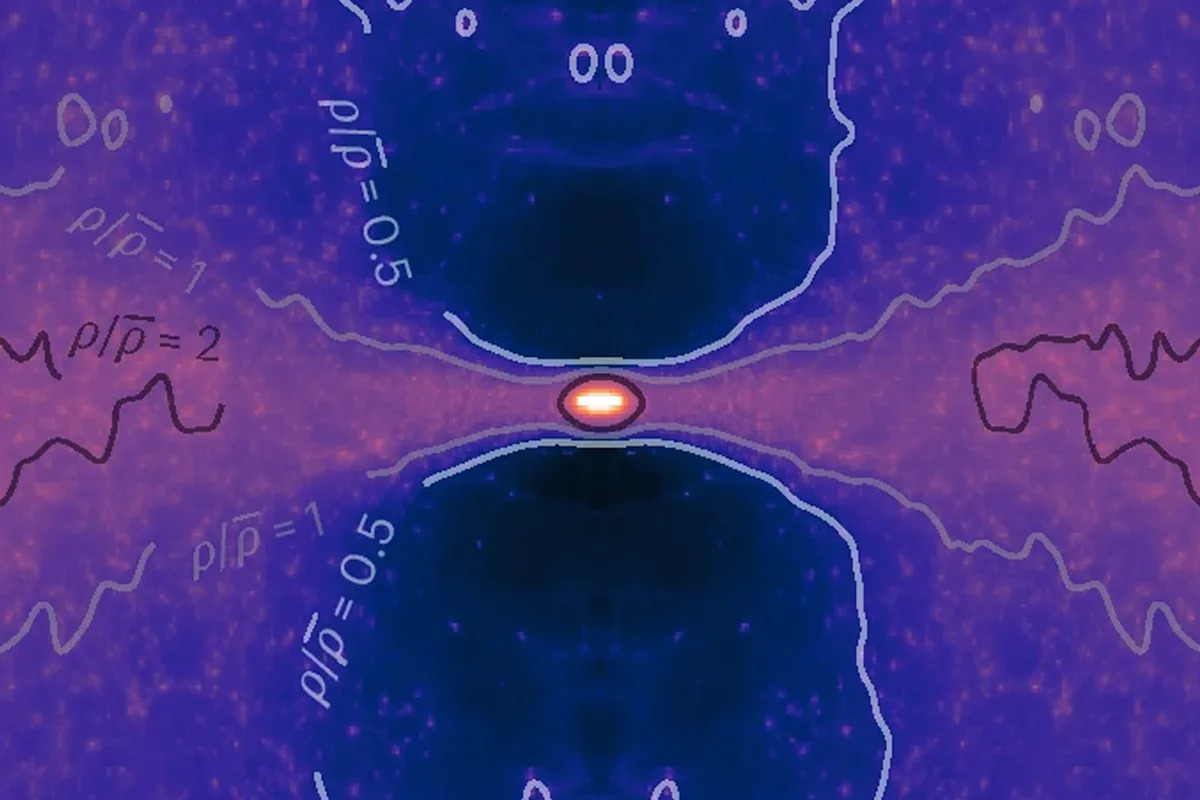
For decades, humanity has gazed upon the Milky Way, our magnificent home galaxy, and pondered its place in the vast cosmic tapestry. New research, however, offers a startling perspective: our entire galactic neighborhood isn't merely drifting through space; it appears to be firmly embedded within a colossal, unseen sheet of dark matter, flanked by immense cosmic voids. This discovery reshapes our understanding of our cosmic address and the fundamental architecture of the universe itself.
The Invisible Hand: Understanding Dark Matter
Before delving into this groundbreaking finding, it's crucial to understand the enigmatic force at its core: dark matter. Unlike the 'normal' matter that makes up stars, planets, and ourselves, dark matter does not emit, absorb, or reflect light, making it entirely invisible to conventional telescopes. Yet, its gravitational pull is undeniable, playing a pivotal role in the formation and evolution of galaxies and the large-scale structure of the universe. Cosmologists estimate that dark matter constitutes about 27% of the universe's total mass-energy content, vastly outweighing visible matter.
Our Galactic Neighborhood: The Local Group
Our Milky Way galaxy is not alone. It's part of a cluster of over 50 galaxies known as the Local Group, which also includes the Andromeda Galaxy – our closest large galactic neighbor – and numerous smaller dwarf galaxies. These galaxies are bound together by their mutual gravitational attraction, slowly moving towards each other and influencing one another's cosmic dance. For a long time, the Local Group was imagined as a relatively isolated island in the cosmic sea, its gravitational interactions dictating its internal dynamics.
The Unveiling: A Dark Matter Sheet and Cosmic Voids
The latest research challenges this traditional view. Utilizing sophisticated simulations and observational data, scientists have pieced together evidence suggesting that the Local Group, including the Milky Way, is not simply an independent entity but is firmly lodged within a vast, extended sheet of dark matter. This immense structure acts like a cosmic bedrock, providing a gravitational scaffold for the galaxies within it. Adding another layer of complexity, this dark matter sheet is not free-floating; it is, in turn, flanked on either side by colossal 'cosmic voids' – vast, largely empty regions of space where galaxies and matter are exceedingly rare.
This arrangement paints a picture consistent with the 'cosmic web' theory, which posits that the universe's large-scale structure resembles a colossal spiderweb. Galaxies and galaxy clusters form along luminous filaments and nodes of normal and dark matter, while the vast spaces between these filaments are the cosmic voids. The new finding provides compelling evidence that our immediate cosmic environment is precisely aligned with this grand, universal design.
Profound Implications for Galaxy Formation and Evolution
The discovery of our galaxy's embedding within this dark matter sheet has profound implications. Firstly, it offers a more nuanced understanding of how galaxies form and evolve. The gravitational influence of such a large, extended dark matter structure would have significantly shaped the trajectories and growth of galaxies within the Local Group over billions of years. It could explain certain observed velocities and distributions that were previously harder to reconcile with models assuming a more uniform dark matter halo.
Secondly, the presence of flanking cosmic voids is equally significant. These voids are not merely empty space; their gravitational deficit can also influence the matter distribution in their vicinity. The interaction between the dense dark matter sheet and the surrounding voids likely creates a delicate balance, channeling matter and energy in ways that directly impact the Local Group's dynamics and long-term future. It suggests that our galactic environment is less isolated and more dynamically integrated into the broader cosmic architecture than previously thought.
The Road Ahead: Future Research and Unanswered Questions
This research opens exciting new avenues for cosmological investigation. Scientists will now seek to refine their models to account for this specific configuration, potentially leading to more accurate simulations of galaxy formation and the cosmic web. Future observations, particularly with next-generation telescopes capable of probing distant cosmic structures, will be crucial in confirming and further characterizing these dark matter sheets and their interaction with cosmic voids.
Moreover, the discovery prompts deeper questions: Are similar dark matter sheets common across the universe? How precisely do these structures dictate the 'birth' and 'death' of galaxies? And what are the ultimate limits of our ability to map and understand the invisible scaffolding that holds our universe together?
Conclusion: Our Place in a Darker, Deeper Universe
The notion that our entire galactic home is nestled within a colossal, unseen sheet of dark matter is a humbling and awe-inspiring thought. It underscores the profound mysteries that still lie hidden in the cosmos and reminds us that our understanding of the universe's fundamental structure is continuously evolving. Far from being a mere void, our world, indeed our entire galaxy, is embedded in a dark, dynamic, and endlessly fascinating cosmic reality. As NovaPress continues to report on these incredible discoveries, we invite our readers to ponder the ever-expanding depths of our scientific frontier and our increasingly complex, yet captivating, cosmic address.