Beyond the Fairing: Unpacking Japan's H3 Rocket Blunder and its Aerospace Ambitions
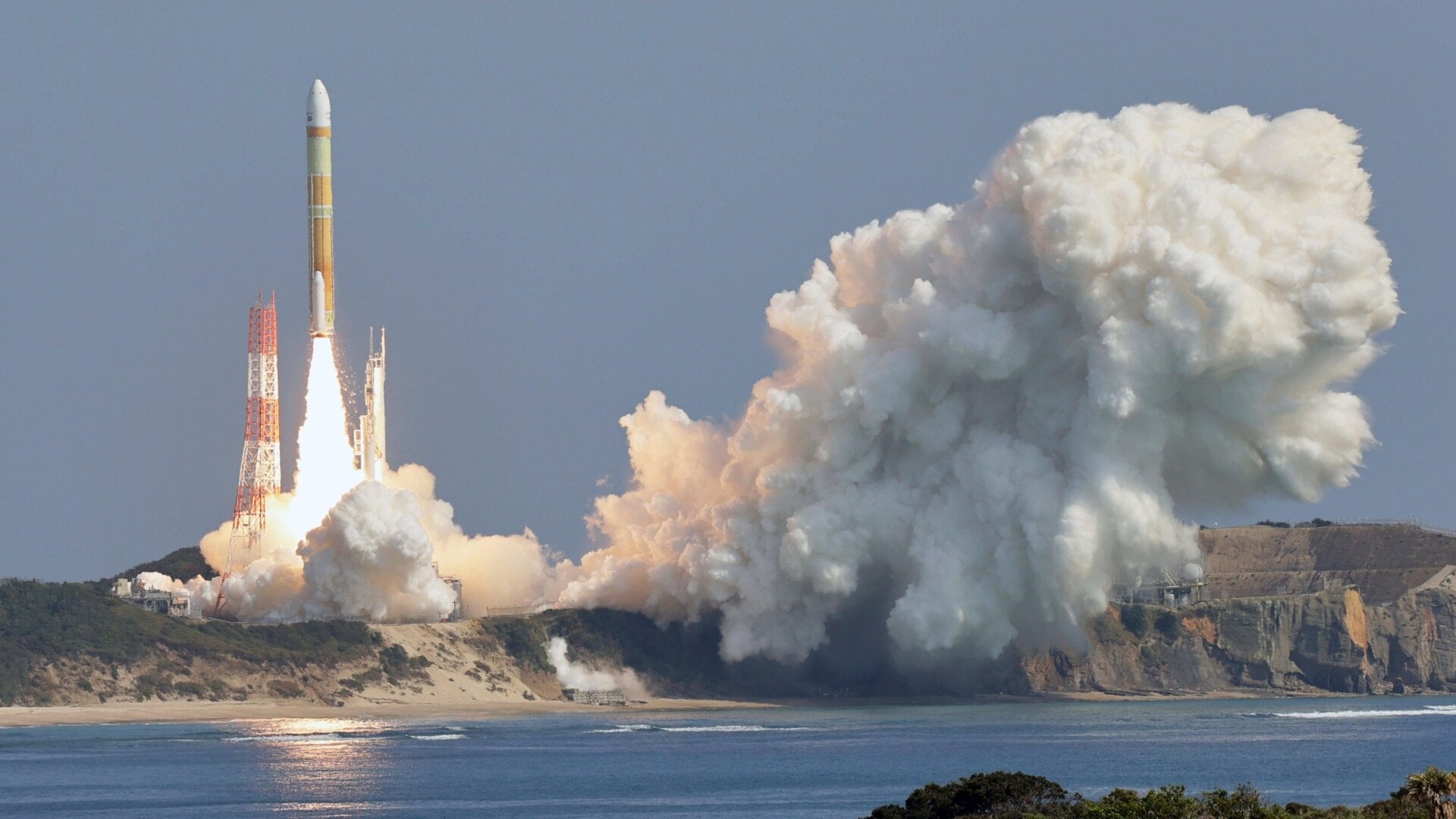
The world watched with anticipation as Japan's H3 rocket, the nation's new flagship launch vehicle, lifted off last month. Touted as a more cost-effective and reliable successor to the venerable H-IIA, the H3 was meant to solidify Japan's standing in the increasingly competitive global space race. However, what transpired just four minutes into its flight was a bizarre and catastrophic failure: the premature loss of the payload fairing, leaving a critical navigation satellite exposed to the harsh vacuum of space and effectively dooming the mission. This incident, described as one of the weirdest ways a satellite has ever been lost, sends ripples across Japan's ambitious space program, prompting a deep dive into the implications for its technological prowess and future aspirations.
The Promise of the H3: A New Era for JAXA
The H3 rocket project, spearheaded by the Japan Aerospace Exploration Agency (JAXA) and Mitsubishi Heavy Industries (MHI), represents a significant investment and a strategic pivot for Japan. Designed for versatility, greater payload capacity, and reduced launch costs – aiming for a 50% cut compared to the H-IIA – the H3 was positioned to become a cornerstone for Japan's domestic satellite deployments, international commercial launches, and deep-space exploration missions. It was intended to be the workhorse that would enable Japan to compete more aggressively with established players like SpaceX and emerging contenders. Multiple test flights and extensive ground simulations had built considerable confidence, making the ultimate failure all the more perplexing and disheartening.
Four Minutes to Catastrophe: The Fairing Fiasco
The core of the recent H3 failure lies in the premature separation of its payload fairing. For those unfamiliar with rocket anatomy, the fairing is the aerodynamic nose cone that protects the delicate satellite payload during the tumultuous ascent through Earth's atmosphere. It shields the satellite from intense aerodynamic stress, heat, and vibrations. Once the rocket has cleared the densest parts of the atmosphere, the fairing is designed to jettison in two halves, revealing the satellite for its deployment into orbit. In this ill-fated H3 launch, however, the fairing detached approximately four minutes into the flight, long before the rocket had reached the safety of space. This catastrophic event immediately exposed the navigation satellite, not only to the vacuum but also to potentially damaging aerodynamic forces at an altitude and speed where it was never meant to be unprotected. While the exact technical sequence of events leading to the fairing's early separation is still under rigorous investigation by JAXA, such a failure points to a critical flaw in either the fairing's structural integrity, the separation mechanism, or the command and control software.
Beyond the Loss: The Wider Ramifications
The failure extends far beyond the monetary loss of the rocket and its navigation satellite payload. For JAXA, it's a significant reputational blow in an industry where reliability is paramount. The H3 was meant to be Japan's answer to global demands for reliable and affordable access to space. This incident will undoubtedly lead to delays in subsequent H3 launches, impacting not only Japan's own satellite deployment schedules but also potential commercial contracts that were eyeing the H3 as a viable option. Confidence in the new design must be painstakingly rebuilt, a process that requires transparent investigations, identified root causes, and verified corrective measures.
Furthermore, the specific loss of a navigation satellite highlights a potential setback for Japan's independent satellite navigation capabilities or contributions to regional systems. Precision navigation is critical for a host of applications, from daily civilian use to defense and scientific research. Such failures underscore the intricate interdependencies within a nation's space infrastructure and the ripple effect of even a single launch anomaly.
Resilience and the Path Forward
Despite this major setback, Japan's space program has a history of resilience and meticulous engineering. JAXA is known for its thorough investigation processes, often sharing detailed findings with the international community to advance spaceflight safety. The agency will undoubtedly embark on a comprehensive analysis, scrutinizing every piece of telemetry data, every component, and every procedural step. Lessons learned from this H3 incident will be crucial not only for the future of the H3 itself but for the broader evolution of launch vehicle technology.
The path forward will involve meticulous redesigns, extensive re-testing, and a commitment to restoring confidence. While the premature fairing separation was a public and peculiar failure, it serves as a stark reminder of the immense challenges and unforgiving nature of space exploration. Japan's space ambitions are far from over; this incident is a crucible that will test its resolve and ultimately shape the future trajectory of its innovative aerospace industry.