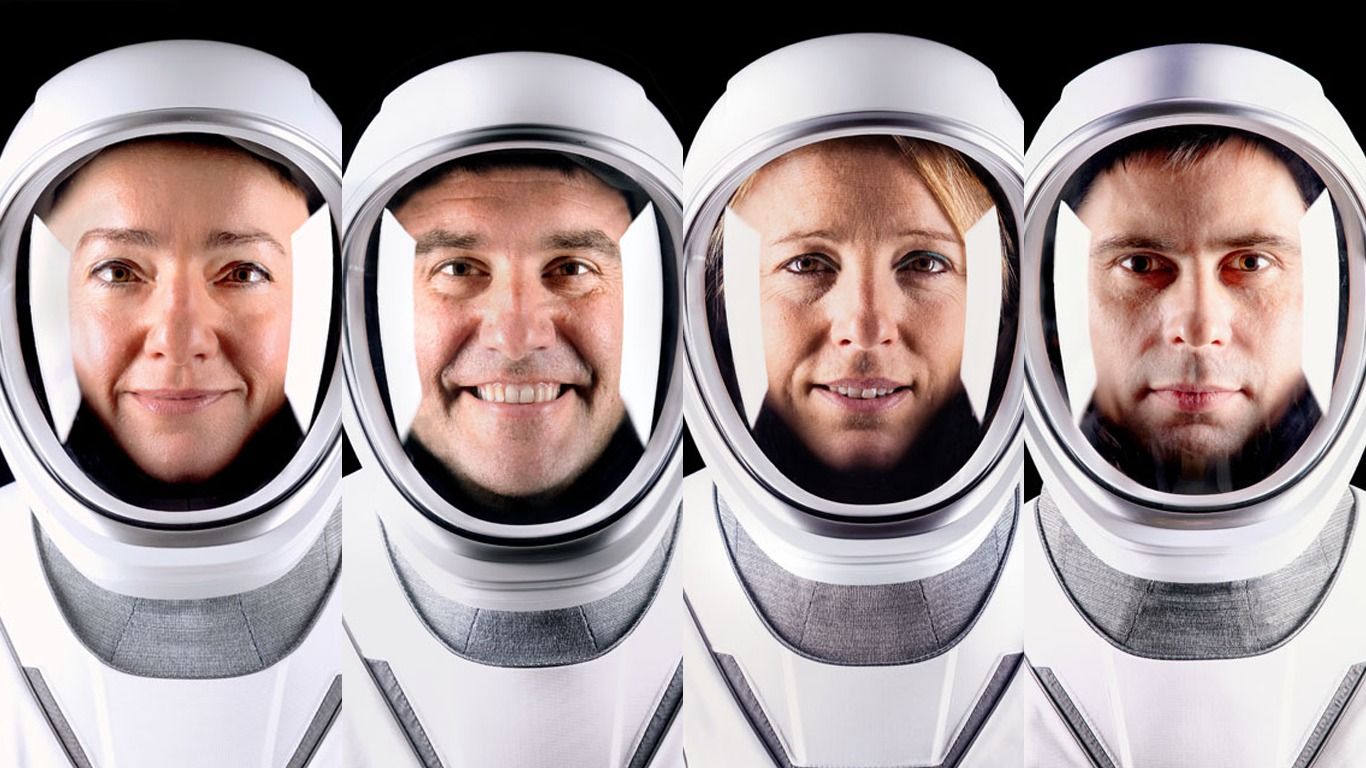
It is the best of times, and it is (far from, actually,) the worst of time for NASA, as two monumental astronaut launches converge towards the same week. This unprecedented scheduling confluence, already a logistical marvel, is further complicated by the unwelcome arrival of a rare Arctic cold front, pushing mission schedules to their very limits and casting a spotlight on the agency's primary focus: the Artemis program.
Artemis 2: The Moon's Magnetic Pull
At the heart of this intricate celestial ballet is the Artemis 2 mission, a pivotal step in humanity's return to the Moon. Positioned as NASA's unequivocal priority, Artemis 2 is set to send four astronauts on a lunar flyby, laying critical groundwork for future lunar landings and eventual sustained presence. This mission isn't just a re-enactment of Apollo; it's a stepping stone towards Mars, designed to test the Orion spacecraft’s systems with a crew aboard before the ambitious Artemis 3 landing. The stakes are astronomically high, with meticulous planning spanning years and billions invested into the Space Launch System (SLS) rocket and Orion capsule. The agency's laser focus on Artemis underscores its commitment to re-establishing human deep-space exploration leadership, pushing the boundaries of scientific discovery and technological innovation.
Crew-12: The Steadfast Sentinel of Low Earth Orbit
Simultaneously, the SpaceX Crew-12 mission represents the bedrock of ongoing human presence in low Earth orbit. Carrying a fresh crew to the International Space Station (ISS), this launch, facilitated by NASA's commercial crew program, is a testament to the success of public-private partnerships. While perhaps less spectacular in its immediate objective compared to a lunar journey, Crew-12 is no less critical. It ensures the continuous manning of the ISS, a vital laboratory for microgravity research, international collaboration, and testing technologies for future deep-space missions. The consistent cadence of these commercial resupply and crew missions has become a routine, albeit essential, element of NASA's operational rhythm, highlighting its dual commitment to groundbreaking exploration and reliable orbital access.
The Delicate Dance: Navigating Concurrent Complexity
Managing two high-profile astronaut launches within the same tight timeframe demands extraordinary coordination, resource allocation, and risk management. This "delicate dance" involves intricate choreography between launch teams, mission control centers, and countless support personnel. Every decision, from fuel loading to final crew ingress, must be synchronized to prevent conflicts in airspace, range availability, and critical ground support. The convergence itself poses unique challenges, potentially stretching personnel and resources thin, and demanding impeccable execution under immense pressure. It highlights NASA's evolving operational model, capable of orchestrating both monumental exploration efforts and sustained orbital operations simultaneously.
The Uninvited Guest: Arctic Cold Front's Impact
Adding a layer of unexpected complexity is the "uninvited guest" – a rare Arctic cold front sweeping across key launch sites. Such weather phenomena are not just minor inconveniences; they can significantly impact launch windows due to stringent temperature limits for rockets, ground systems, and astronaut safety. Icy conditions can affect fuel lines, hydraulic systems, and even launchpad structures. Furthermore, crew comfort and safety during transport and pre-launch procedures are paramount. This cold front forces launch schedulers into an even tighter corner, demanding flexibility and potentially leading to last-minute scrubs or delays, underscoring the formidable challenges posed by Earth's dynamic environment even as humanity reaches for the stars.
Future Implications: A Glimpse into NASA's Evolving Strategy
This convergence of Artemis 2 and Crew-12, coupled with external pressures, offers a fascinating glimpse into NASA's strategic direction. It demonstrates an agency grappling with ambitious deep-space goals while maintaining vital low Earth orbit operations. The priority given to Artemis is clear, yet the reliance on commercial partners for routine spaceflight is equally evident. This dual approach signifies a maturation of space exploration: where government agencies lead the charge into the unknown, and commercial entities provide the reliable infrastructure for access and presence in nearer space. The lessons learned from managing this delicate dance will undoubtedly inform future missions, refining protocols for simultaneous high-stakes endeavors and optimizing resource deployment.
The Human Element: Pushing Boundaries, Managing Risks
Ultimately, behind every launch window, every complex system, and every weather delay, stands the human element. The astronauts, engineers, scientists, and technicians are pushing the boundaries of what's possible, navigating immense risks with unparalleled expertise. This period of intense activity for NASA is not just a testament to technological prowess, but also to human resilience, adaptability, and the unwavering spirit of exploration. As the world watches these missions unfold, it serves as a powerful reminder of humanity's relentless quest to understand our place in the cosmos, one launch, one cold front, and one giant leap at a time.