Nintendo's Definitive Stance on 'Visual Censorship' in Dispatch: A New Era for Player Agency on Switch and Beyond?
The gaming world often grapples with the delicate balance between creative freedom, platform holder guidelines, and player expectations. Recently, the release of AdHoc Studio's superhero comedy Dispatch on Nintendo Switch and the upcoming Switch 2 brought this debate back into sharp focus, largely due to its intriguing 'Visual Censorship' toggle. Following initial reviews and developer discussions, Nintendo has issued an official statement, potentially signaling a significant shift in its approach to content moderation and player choice.
The 'Dispatch' Controversy: A Toggle of Content
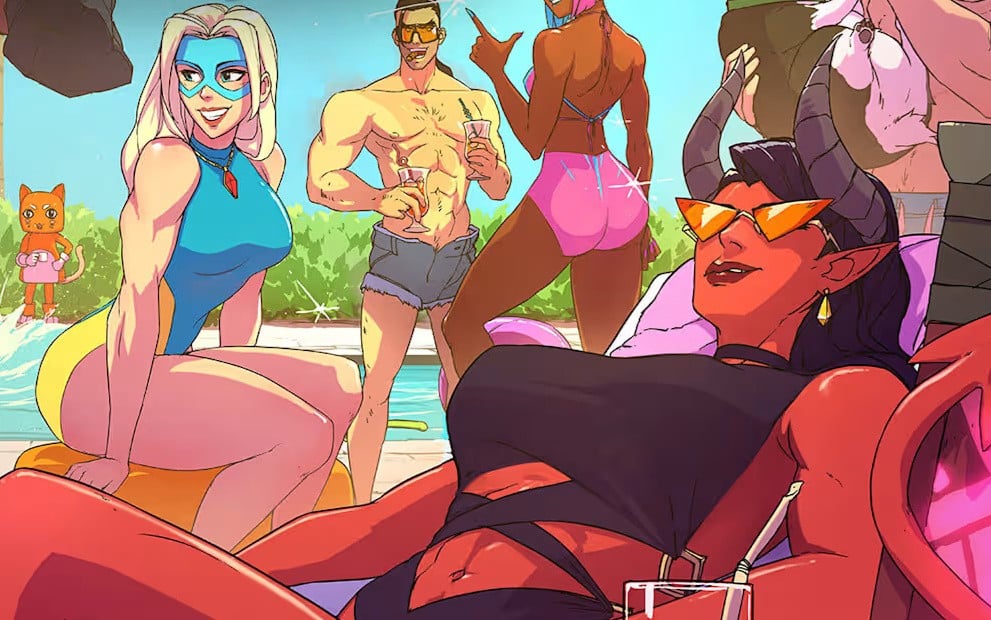
Upon its launch, Dispatch garnered attention not just for its gameplay and comedic elements, but for a specific feature highlighted in reviews: a 'Visual Censorship' toggle. This option allows players to switch between an unedited version of the game's visuals and a more 'censored' rendition. While the specifics of what exactly is altered by this toggle remain somewhat nuanced – often involving minor graphical adjustments rather than wholesale content removal – its mere presence sparked discussions. Was this a developer's proactive measure? A response to potential platform requirements? Or a genuine embrace of player preference?
Nintendo's Official Response: Upholding Developer Autonomy?
In the wake of this discussion, and following a direct response from AdHoc Studio, Nintendo has provided an official statement. While the full text of Nintendo's statement isn't provided in the source, the context from Nintendo Life's headline, "Nintendo Responds To Dispatch Switch Censorship With Official Statement," strongly implies that Nintendo is acknowledging and likely sanctioning the developer's decision to include such a toggle. This is a critical development. Historically, Nintendo has maintained a reputation for strict content guidelines, often leading to games being altered or outright rejected if they didn't meet their family-friendly standards.
This official response suggests a more hands-off, or at least a more nuanced, approach. Instead of dictating a singular version, Nintendo appears to be allowing developers like AdHoc Studio the flexibility to implement player-controlled content filters. This could be interpreted as an evolution in Nintendo's policy, perhaps recognizing the diverse audience of its platforms and the importance of developer creative control.
The Broader Implications: Player Agency and Future Titles
The 'Visual Censorship' toggle in Dispatch, now implicitly endorsed by Nintendo's statement, sets a fascinating precedent. For players, it's a win for agency. The ability to choose how they experience a game's content, rather than having a platform holder make that decision unilaterally, is a powerful form of empowerment. It allows individuals to tailor their gaming experience to their comfort levels, without necessarily diminishing the artistic vision of the creators for others.
For developers, especially independent studios, this could open new doors. It suggests that if a game contains content that might push traditional boundaries, a well-implemented, transparent content toggle could be a viable path to publishing on Nintendo platforms, including the highly anticipated Switch 2. This could foster greater creative freedom and allow a wider array of games to reach Nintendo's extensive player base.
The 'Switch 2' Factor
The mention of Dispatch being out on "Switch and Switch 2" is particularly noteworthy. If this policy holds for the next-generation console, it indicates a forward-thinking strategy by Nintendo. As the gaming industry matures and content becomes more varied, an adaptable approach to content moderation will be crucial for platform holders looking to attract a broad spectrum of developers and players. The Switch 2, therefore, could inherit a more flexible content framework from its inception, marking a significant evolution in Nintendo's platform philosophy.
Conclusion: A Potential Shift in the Gaming Landscape
Nintendo's response to the Dispatch 'Visual Censorship' toggle is more than just a footnote in a game's release. It represents a potential philosophical shift from one of the industry's most influential players. By seemingly embracing the concept of developer-implemented content toggles, Nintendo is signaling a move towards greater player agency and developer autonomy. This could herald a new era where content flexibility, rather than rigid censorship, becomes a standard, fostering a more inclusive and creatively diverse ecosystem across the Nintendo Switch family of consoles.