Giants Among Us: Australia's 130-Million-Year-Old Footprints Rewrite Dinosaur History
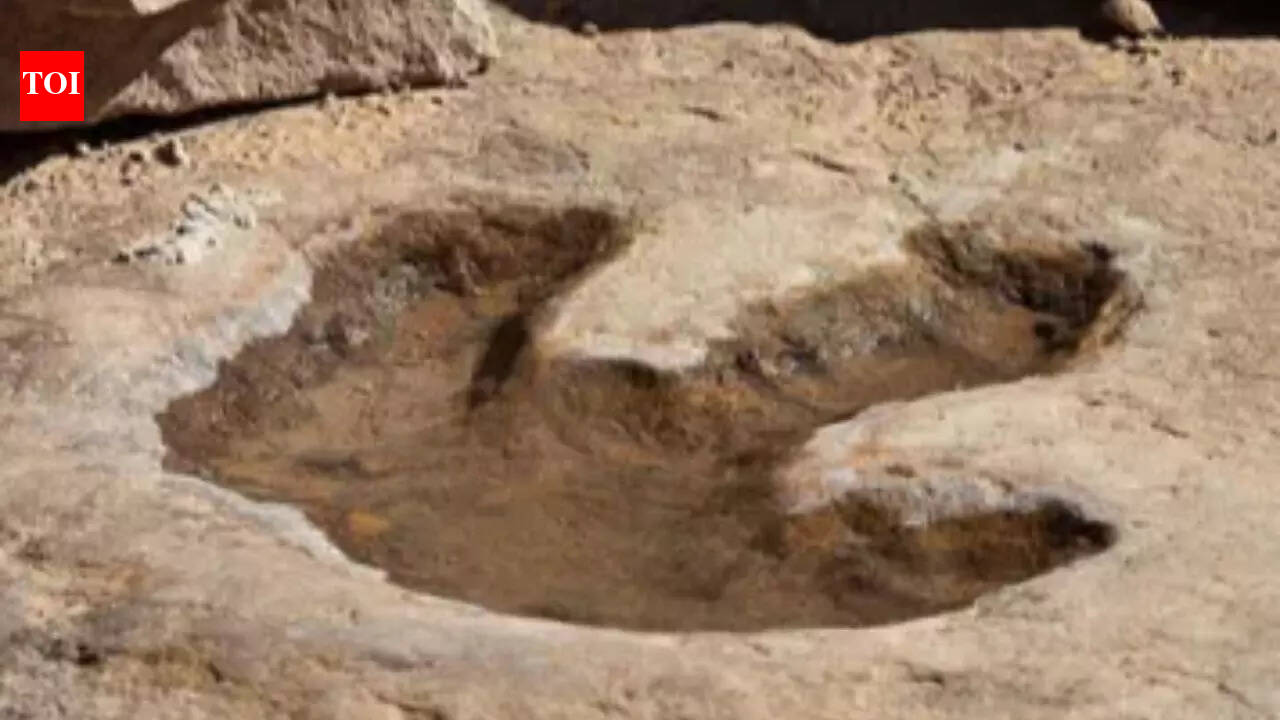
In a discovery that echoes through the annals of geological time, researchers in Australia have unearthed a staggering collection of dinosaur footprints, some of which are being hailed as the largest ever found. Dating back approximately 130 million years to the Early Cretaceous period, these colossal imprints offer an unprecedented window into a world ruled by magnificent beasts, challenging our understanding of their scale and behavior. Imagine a footprint so vast, an adult human could comfortably curl up within its ancient confines – this is the awe-inspiring reality now facing paleontologists.
A Glimpse into Australia's Prehistoric Past
While the exact location details provided in the source are sparse, similar monumental discoveries have frequently emerged from Australia's rugged coastlines, particularly around the Dampier Peninsula in Western Australia. This region is renowned for its exceptional dinosaur trackways, often preserved in ancient tidal flats and river deltas that have since turned to stone. The sheer scale of these newly discovered prints suggests the presence of some of the largest land animals to ever walk the Earth, likely sauropods – the long-necked, herbivorous behemoths that could weigh upwards of 50 tons. However, the presence of multiple types of prints in such an area hints at a diverse ecosystem, potentially including formidable theropods and even more agile ornithopods, painting a richer picture of a vibrant prehistoric landscape.
More Than Just Footprints: Stories in Stone
These trace fossils – evidence of ancient life activity rather than preserved remains – are invaluable. Unlike skeletal remains that tell us about an animal's anatomy, footprints provide dynamic insights into their locomotion, gait, speed, and even social behavior. The immense size of these tracks indicates not just massive individual dinosaurs, but potentially entire herds of them traversing ancient Australia. Researchers can meticulously analyze the spacing between prints, the depth of the impressions, and the angles of the toes to reconstruct how these leviathans moved across their environment. Were they solitary wanderers or did they move in protective groups? Did they lumber slowly or were they capable of surprising bursts of speed? Each impression is a data point in a grand, 130-million-year-old narrative.
Technological Advancements in Paleontological Discovery
Modern paleontology is increasingly leveraging cutting-edge technology to unlock the secrets held within these ancient sites. Drones equipped with high-resolution cameras can map vast areas quickly, identifying potential trackways that might be overlooked by ground surveys. 3D photogrammetry and laser scanning allow researchers to create highly accurate digital models of the footprints, enabling detailed analysis without disturbing the delicate natural formations. This digital preservation is crucial, as many coastal trackways are vulnerable to erosion from tides and weather. Such techniques not only aid in discovery but also in the long-term study and conservation of these irreplaceable natural heritage sites.
Implications for Our Understanding of Earth's History
The discovery fundamentally reshapes our understanding of the Early Cretaceous period in Australia. It confirms the presence of incredibly large dinosaurs during a time when continental drift was still actively shaping the globe. This period saw the supercontinent Gondwana breaking apart, with Australia slowly separating from Antarctica. The discovery of such massive herbivores suggests a lush, abundant environment capable of sustaining vast populations of colossal animals. It provides critical data points for paleogeographical reconstructions, climate modeling, and understanding the evolutionary pathways of various dinosaur lineages. Future research will undoubtedly focus on identifying the specific species responsible for these prints, further refining our understanding of Australian prehistoric biodiversity.
Protecting Priceless Legacies
Such significant paleontological finds come with the immense responsibility of preservation. These footprints are not just scientific curiosities; they are part of Australia's natural and cultural heritage, offering tangible links to an almost unimaginable past. Efforts will be crucial to protect these sites from both natural degradation and human impact. Public awareness campaigns, collaborative conservation projects, and potentially even designated protected areas will be essential to ensure that these incredible records of ancient life remain accessible for future generations of scientists and enthusiasts alike. They stand as a powerful reminder of the incredible history etched into our planet's very foundations.
The unearthing of the world’s largest dinosaur footprints in Australia is more than just a headline-grabbing discovery; it is a profound revelation. It invites us to ponder the sheer scale of life that once thrived on Earth and deepens our appreciation for the intricate stories preserved within stone. As research continues, these ancient imprints will undoubtedly unveil even more secrets, ensuring that the legacy of Australia's prehistoric giants continues to captivate and educate for centuries to come.