Io Unleashed: NASA Detects Most Powerful Volcanic Eruption Ever on Jupiter's Fiery Moon
Jupiter's enigmatic moon Io has once again reminded humanity of its unparalleled ferocity, with NASA detecting the most powerful volcanic eruption ever observed on its surface. This monumental event, unfolding in the deep reaches of our solar system, presents a startling testament to the extreme geological forces at play beyond Earth, pushing the boundaries of our understanding of planetary dynamics.
A Cataclysmic Scale: Larger Than Lake Superior, Six Times Earth's Power Output
The sheer scale of this newly detected eruption is almost incomprehensible. Scientists report that the volcanic hot spot responsible for this colossal discharge is larger than North America's Lake Superior, a freshwater body spanning over 31,000 square miles. More astonishingly, the energy spewed forth by this single event is estimated to be six times the total energy output of all of the world's power plants combined. This isn't merely a large eruption; it's a planetary-scale event that dwarfs anything recorded in recent terrestrial history, offering a rare glimpse into the raw, untamed power that shapes celestial bodies.
Io: The Solar System's Volcanic Engine
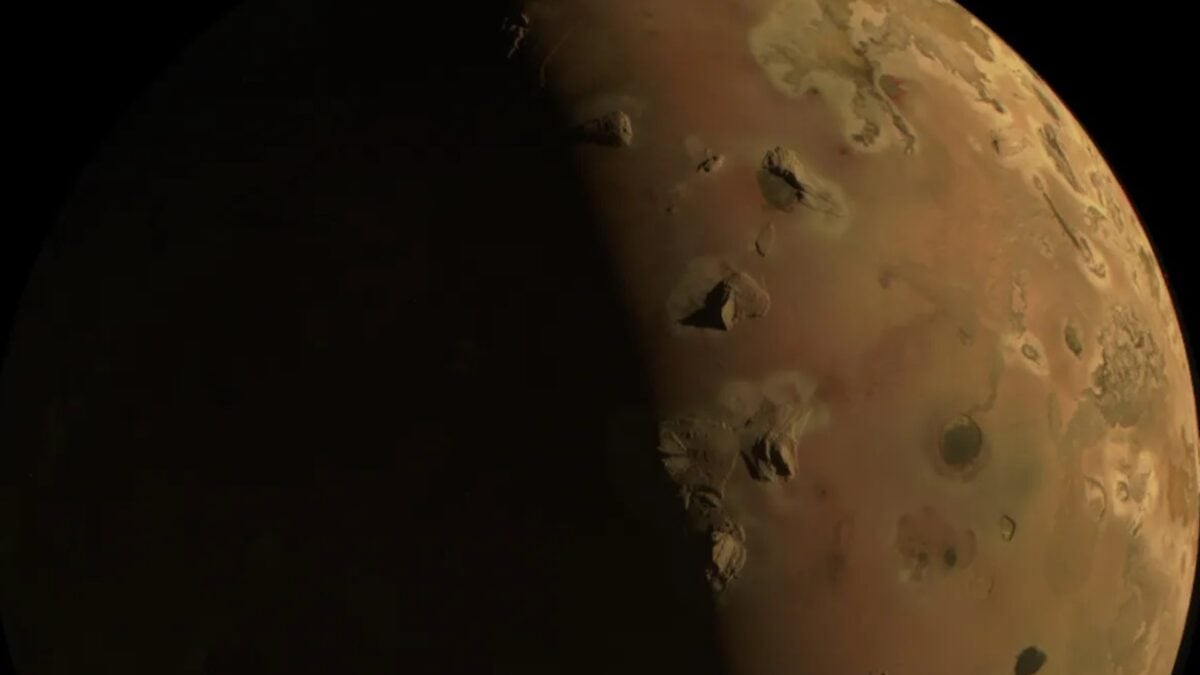
Io stands alone as the most volcanically active body in our solar system, a true geological marvel. Covered in hundreds of volcanoes, its surface is a dynamic canvas constantly being reshaped by fountains of lava that reach astonishing heights and scorching molten lakes that refill impact craters with molten rock. This ceaseless activity is not random; it's a direct consequence of immense tidal heating generated by Jupiter's colossal gravitational pull and the orbital resonances with its sister moons, Europa and Ganymede. This constant gravitational tug-of-war flexes Io's interior, generating frictional heat that melts its rocky mantle, creating vast reservoirs of magma eager to erupt.
The discovery of this extreme volcanic event was made possible through sophisticated infrared observations, likely utilizing ground-based telescopes and data from missions like NASA's Juno spacecraft, which continues its extended mission around Jupiter. Such observations allow scientists to measure the heat signatures emanating from Io's surface, revealing the location, intensity, and scale of these volcanic outbursts.
Deep Analysis: Unraveling Planetary Interiors and Extreme Environments
This latest eruption provides invaluable data for planetary scientists. Deep analysis of its characteristics can help refine models of Io's interior structure, including the depth and composition of its magma ocean, and the mechanisms by which heat is transported from its core to its surface. Understanding such extreme volcanism on Io offers a unique natural laboratory for:
- Magma Dynamics: Insights into how magma moves through a planetary crust under conditions vastly different from Earth's.
- Tidal Heating: A better grasp of how gravitational forces can generate enough internal heat to sustain such incredible geological activity, a process potentially vital for the existence of subsurface oceans on other icy moons like Europa and Enceladus.
- Atmospheric Interactions: How massive eruptions inject vast quantities of gases and dust into Io's thin atmosphere, influencing its chemistry and interaction with Jupiter's magnetosphere.
Furthermore, studying Io's extreme environment aids in comparative planetology, allowing us to contrast its runaway volcanism with the more subdued, yet still powerful, volcanic activity seen on Earth, Mars, and Venus. It helps us appreciate the diverse paths planetary evolution can take and the myriad ways celestial bodies express their internal heat.
Future Implications and the Search for Extremes
The ongoing monitoring of Io's activity is crucial. With missions like Juno still gathering data, and future proposed missions potentially targeting the Jovian system, our ability to observe and analyze these events will only improve. This particular eruption underscores the necessity of continuous observation campaigns and advanced instrumentation to fully capture the dynamic nature of our solar system.
Beyond the immediate scientific value, such discoveries ignite the public imagination, reminding us of the incredible forces at play in the cosmos and our species' relentless drive to explore and understand them. Io, with its ever-changing, violently active surface, remains a key to unlocking secrets about planetary formation, the limits of geological activity, and the very definition of an extreme world.
As NovaPress, we stand in awe of Io's power and commend NASA's continued dedication to observing these distant wonders. Each eruption, each plume of fire, tells a story of an alien world shaped by forces almost beyond human comprehension, urging us to look further and dream bigger.