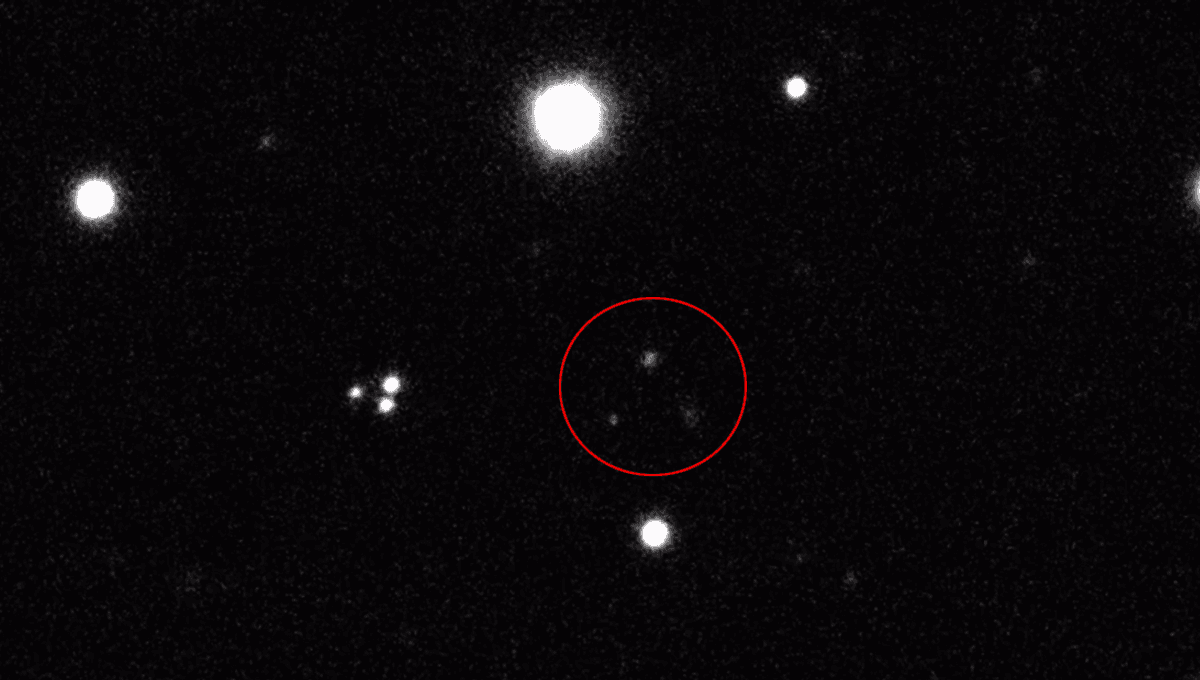
In the vast theater of our solar system, rarely do we get a front-row seat to an event of truly cosmic proportions. But if current astronomical predictions hold, humanity is on the cusp of witnessing an unprecedented spectacle in 2032: the most energetic lunar impact event ever recorded in human history. The protagonist in this celestial drama is Asteroid 2024 YR4, and its potential collision with our Moon offers an extraordinary, albeit violent, opportunity for scientific discovery.
A Date with Destiny: Unpacking the 2032 Lunar Collision
First detected in 2024, Asteroid 2024 YR4 has been on the radar of astronomers since its discovery. While its exact size and composition are still being refined, trajectory models indicate a significant probability of impact with the Moon in 2032. What makes this particular event so compelling isn't just the impact itself, but its predicted energy release. Researchers estimate the kinetic energy involved could far surpass any lunar impact event observed in the modern era, promising a profound disturbance to the lunar surface.
The term "most energetic" isn't thrown around lightly. Past lunar impacts have been observed, ranging from minor meteoroid strikes to more substantial events that leave visible craters. However, 2024 YR4's potential impact is modeled to generate an explosion equivalent to tens or even hundreds of kilotons of TNT, leaving a crater potentially kilometers wide. This level of impact would not only be visible from Earth through telescopes but could also generate seismic activity detectable by lunar landers or orbiters.
The Scientific Windfall: What Astronomers Hope to Learn
For the scientific community, this impending event is a tantalizing prospect, a natural laboratory operating on an unparalleled scale. Teams of astronomers, planetary scientists, and engineers are already formulating plans for observation and data collection. The potential scientific gains are immense:
- Crater Formation Dynamics: Direct observation of a large crater's formation will provide invaluable data to refine models of impact physics, helping us understand how celestial bodies are shaped by collisions.
- Lunar Geophysics: The impact will send seismic waves through the Moon's interior. Monitoring these waves could offer unprecedented insights into the Moon's internal structure, composition, and thermal state, supplementing data gathered during the Apollo missions.
- Ejecta Plume Analysis: A massive plume of lunar material will be ejected into space. Analyzing its composition and trajectory could reveal details about the Moon's subsurface geology and the dynamics of material transfer in a vacuum.
- Regolith Disturbance: Understanding how such a powerful impact disturbs the lunar regolith (soil) is crucial for future lunar missions, especially those aiming for long-term human presence.
Global Preparation and Observational Strategies
Preparations are multifaceted. Earth-based observatories, including powerful ground telescopes, will be pointed towards the Moon to capture the visual spectacle. Space-based assets, like the Hubble Space Telescope and potentially the James Webb Space Telescope, could offer high-resolution imagery and spectroscopic analysis of the impact plume. Crucially, existing lunar orbiters, such as NASA's Lunar Reconnaissance Orbiter (LRO), are poised to provide close-up data before, during, and after the event, mapping the pre-impact surface and then imaging the fresh crater and its surroundings.
This event also serves as a critical test for planetary defense protocols, even though the asteroid poses no threat to Earth. Observing how 2024 YR4 behaves and studying the effects of its impact on the Moon will refine our understanding of asteroid trajectories, impact energy, and the subsequent effects on celestial bodies – knowledge that is paramount for protecting our own planet from future threats.
A Glimpse into the Past and Future
The surface of the Moon is a testament to billions of years of cosmic bombardment, pockmarked with countless craters. Observing the formation of a new, substantial crater in real-time offers a unique window into the processes that shaped not just our Moon, but all rocky bodies in the solar system, including Earth in its early history. It’s a rare chance to bridge theoretical models with direct empirical evidence.
While there's always a degree of uncertainty in long-range predictions, the anticipation among the scientific community is palpable. The potential impact of Asteroid 2024 YR4 in 2032 represents more than just a destructive collision; it is a profound scientific opportunity, a chance to gather data that could redefine our understanding of lunar geology, planetary defense, and the violent ballet of cosmic evolution.