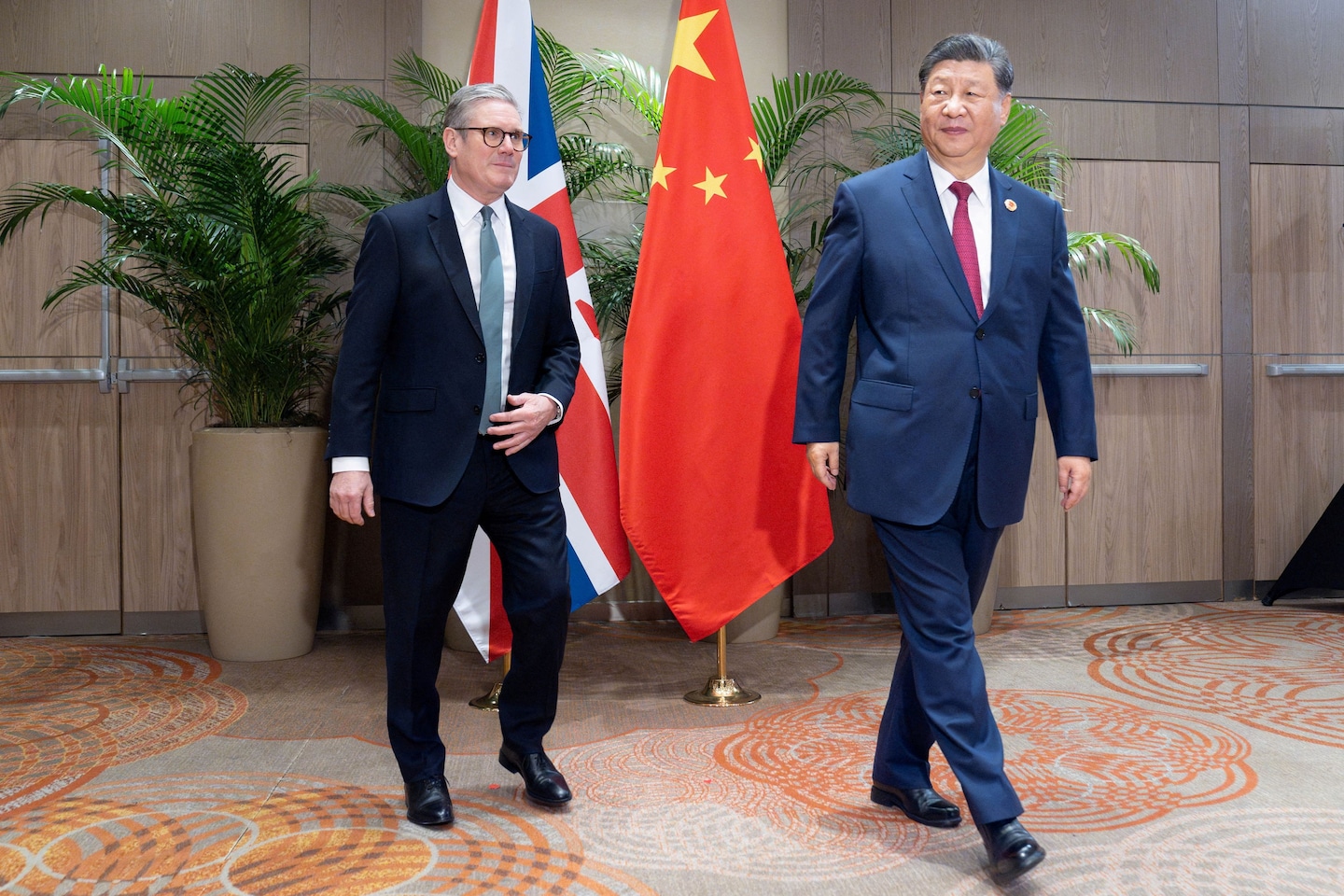
UK's Risky Pivot: Starmer Heads to China Amidst Trump's Geopolitical Tremors
LONDON — In a move poised to reshape Britain's global standing and potentially ignite a diplomatic firestorm, Prime Minister Keir Starmer is embarking on a high-stakes visit to China this week. His mission: to forge a more consistent and pragmatic relationship with Beijing, a strategy that underscores a broader realignment among 'intermediate powers' in response to an increasingly unpredictable global order, largely orchestrated by former — and potentially future — US President Donald Trump.
The New Global Chessboard: Europe Looks East
Starmer's visit is not an isolated event but part of a discernible flurry of diplomatic activity between European nations and China. Leaders across the continent are grappling with the complex reality of China's economic might and geopolitical ambition, seeking to balance engagement with concerns over human rights, trade imbalances, and regional security. This renewed European focus on Beijing comes at a time when traditional transatlantic alliances are under strain, a sentiment exacerbated by the 'America First' rhetoric and actions of the Trump era, which fundamentally challenged the multilateral framework that underpinned post-Cold War stability.
For the United Kingdom, still navigating its post-Brexit identity, the imperative to diversify its international partnerships is particularly acute. While the 'special relationship' with the United States remains a cornerstone of British foreign policy, the prospect of a second Trump presidency looms large, prompting a proactive reassessment of strategic autonomy and economic resilience. Beijing, with its vast markets and influence, presents an undeniable opportunity, albeit one fraught with peril.
Starmer's Pragmatic Pursuit: Balancing Act on a Tightrope
The stated aim of Starmer's trip – to establish a "consistent, pragmatic relationship" – reflects a desire to move beyond the fluctuating, often reactive, stance that has characterised UK-China relations in recent years. This pragmatism likely encompasses a range of objectives: bolstering trade and investment, seeking cooperation on global challenges like climate change and pandemic preparedness, and potentially finding common ground on regional stability. The UK's pivot also reflects a recognition of China's indispensable role in global supply chains and its growing technological prowess.
However, this pursuit of pragmatism is a tightrope walk. Starmer's government will face immense pressure to address contentious issues such as China's human rights record in Xinjiang and Hong Kong, intellectual property theft, and its increasingly assertive posture in the South China Sea. Any perception of 'selling out' on these principles for economic gain could lead to significant domestic and international criticism, particularly from staunch allies in Washington and within the broader Western alliance.
The Trump Factor: A Shadow Over Diplomacy
Perhaps the most potent dimension of Starmer's visit is the inherent risk of "angering President Donald Trump." During his first term, Trump adopted an often confrontational stance towards China, initiating a trade war and pressuring allies to decouple from Chinese technology. Should he return to the White House, a UK government seen as too eager to engage with Beijing could find itself in Washington's crosshairs, potentially jeopardizing future trade deals or security cooperation. The US has historically viewed overtures to China by its closest allies with suspicion, particularly when such moves appear to undermine a united Western front.
This delicate balancing act highlights a fundamental challenge for the UK and other European powers: how to assert their own interests and values in a multipolar world without alienating key partners or inadvertently fueling a new era of great power rivalry. Starmer's success will be measured not just by the immediate outcomes of his visit, but by his ability to navigate these complex geopolitical currents, preserving strategic relationships while carving out a distinct and influential role for Britain on the world stage.
Future Implications: A New Era of British Foreign Policy?
The long-term implications of Starmer's Beijing gambit could be profound. A successful, albeit nuanced, engagement with China could signal a new direction for British foreign policy, one that is more globally agile and less reliant on traditional alignments. It could also encourage other European nations to deepen their own engagements, potentially fracturing a united Western approach to China. Conversely, a misstep could alienate the US, undermine Britain's moral authority, and yield few concrete gains from Beijing.
As the global order continues its rapid shuffle, Starmer's journey to Beijing represents more than just a bilateral meeting; it is a microcosm of the larger geopolitical struggles unfolding, where intermediate powers seek agency in a world increasingly shaped by two superpowers and the disruptive influence of figures like Donald Trump. The world watches to see if Britain can walk this tightrope successfully.