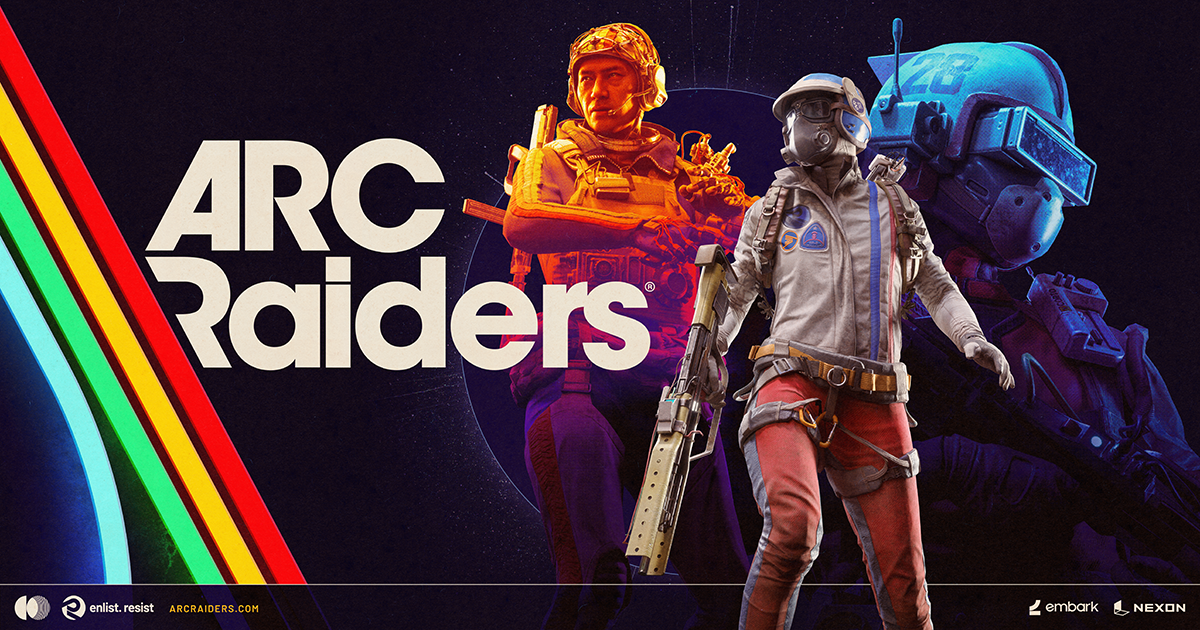
ARC Raiders: Navigating a Lethal Future Earth and the Evolving Landscape of Online Gaming
NovaPress Exclusive Analysis
Embark Studios' ARC Raiders, a multiplayer extraction adventure, continues to carve out its niche in the competitive gaming landscape with its latest January Update 1.13.0. Set against the backdrop of a "lethal future earth, ravaged by a mysterious mechanized threat known as ARC," the game promises high stakes, cooperative action, and a relentless struggle for survival. But beyond the immediate thrill of combat and extraction, ARC Raiders also stands as a potent example of the complex digital ecosystem players must navigate in modern online gaming.
The Desperate World of ARC Raiders: A Battle for Survival
The core appeal of ARC Raiders lies in its grim yet compelling premise. Players are thrust into a post-apocalyptic world where humanity faces an existential threat from an enigmatic mechanical foe. This setting isn't merely cosmetic; it dictates the very rhythm of gameplay. As an extraction shooter, every mission is a perilous journey into hostile territory, collecting valuable resources and data while constantly fending off the omnipresent ARC. The "lethal future earth" isn't just a tagline; it's a promise of unforgiving environments, scarce resources, and the ever-present danger of losing everything you've collected if you fail to extract.
This genre thrives on tension, tactical decision-making, and the camaraderie (or betrayal) among teammates. The success of ARC Raiders will heavily depend on how effectively it balances these elements, creating a world where every decision, from loadout choice to escape route, carries significant weight. The "mysterious mechanized threat" hints at lore depth and evolving enemy types, which could keep the experience fresh and challenging for the long haul.
Beyond the Battlefield: The Digital Gatekeepers
While the action on the ground is paramount, ARC Raiders also highlights an increasingly standard, yet often overlooked, aspect of modern online gaming: the stringent requirements for entry. To play, users must have an internet connection, an Embark ID user account (with a +13 age restriction), a third-party platform account, and critically, the acceptance of both the Embark Terms of Service and End User License Agreement (EULA).
These requirements are not unique to ARC Raiders, but their cumulative nature underscores a broader trend. An Embark ID creates a centralized player profile within the studio's ecosystem, allowing for cross-game progression, unified social features, and streamlined data collection. The reliance on a "third-party platform account" (e.g., Steam, Epic Games Store, Xbox, PlayStation) adds another layer of digital gatekeeping, linking a player's identity across various services. While convenient for distribution and friend management, it also fragments player data across multiple entities, raising questions about privacy and data security.
The acceptance of lengthy Terms of Service and EULAs, often clicked through without full comprehension, grants developers and publishers significant control over player data, content usage, and even dispute resolution. For a game like ARC Raiders that relies on an ongoing live service model, these agreements are foundational, governing everything from account suspension policies to the legality of fan-made content. Players, in essence, trade a degree of autonomy for access to these digital worlds.
The Live Service Imperative: What 1.13.0 Means
The fact that ARC Raiders is receiving regular updates, such as the January Update 1.13.0, signals its commitment to a live service model. This approach, while demanding for developers, offers immense potential for longevity and community building. Regular updates introduce new content, balance changes, bug fixes, and often, seasonal events that keep players engaged and invested.
For ARC Raiders, this means a continuously evolving threat landscape, potentially new zones, weapons, and cooperative mechanics that will prevent the core extraction loop from becoming stale. However, the success of a live service game hinges on consistent quality and a responsive development team. Poor updates, slow fixes, or a perceived lack of communication can quickly erode player trust and lead to a dwindling player base.
Future Implications: A Balancing Act
As ARC Raiders continues its journey, its success will not solely be measured by its engaging gameplay or innovative mechanics. It will also be defined by how Embark Studios navigates the delicate balance between creating a captivating digital experience and managing the complex digital rights and user expectations inherent in modern online gaming.
The game represents both the thrilling potential of shared online adventures and the increasing layers of digital bureaucracy players must accept to participate. As we delve deeper into this "lethal future earth," players and developers alike must remain vigilant: ensuring the terms of engagement are fair, transparent, and ultimately, serve to enhance the adventure, not detract from it. ARC Raiders is more than just a game; it's a microcosm of the evolving digital frontier.