Magnetic Shields of Super-Earths: A New Hope for Extraterrestrial Life
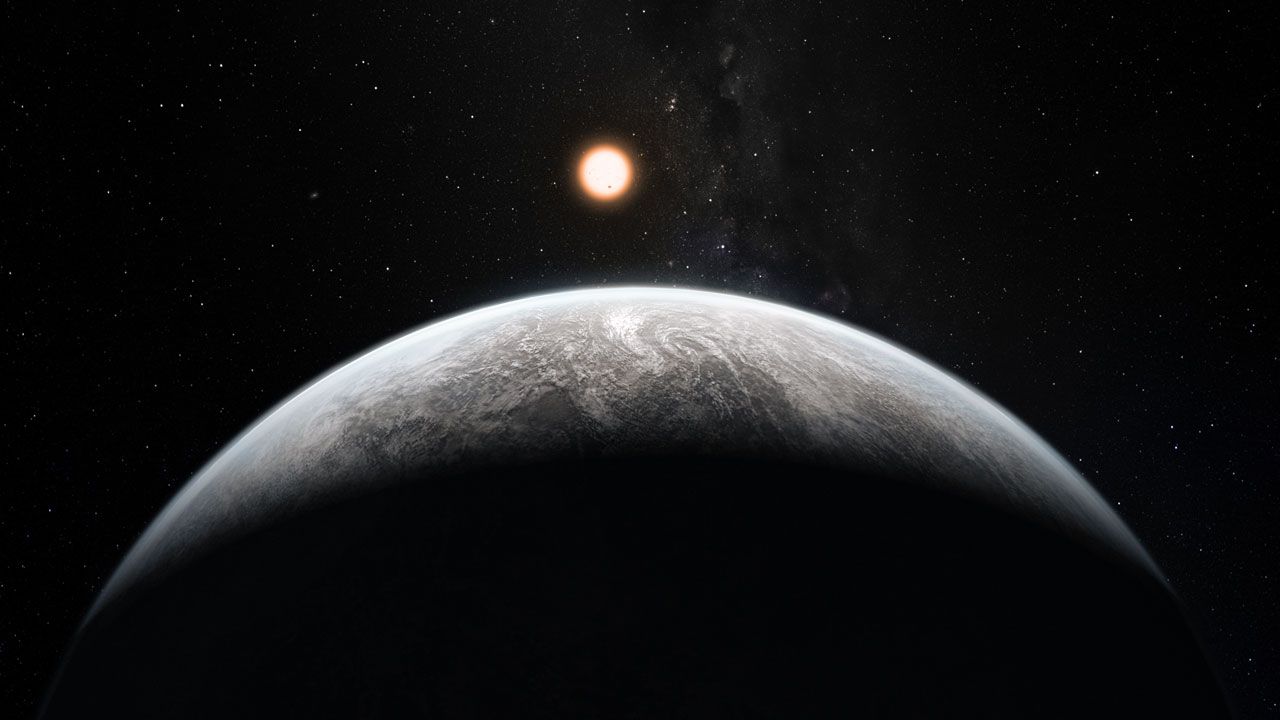
In the vast cosmic ocean, the search for life beyond Earth often focuses on planets orbiting their stars in the "Goldilocks zone" – where temperatures are just right for liquid water to exist. However, habitability is far more complex than mere temperature, with one critical factor often overlooked in popular discourse: a planet's intrinsic magnetic field. New, groundbreaking research suggests that a class of exoplanets known as "Super-Earths" might possess an inherent, robust defense mechanism, drastically improving their prospects for hosting life.
The Unseen Guardian: Why Magnetic Fields Are Life's Best Friend
For life to flourish, a planet needs more than just a warm glow; it needs a shield. On Earth, this shield is our magnetosphere, generated by the churning liquid iron in our planet's outer core. This protective bubble deflects harmful charged particles from the solar wind and cosmic rays, preventing them from stripping away our atmosphere or irradiating surface life. Without it, our planet would resemble Mars – a world whose thin atmosphere was long ago eroded by the sun, leaving a barren, radiation-scorched landscape. A strong magnetic field is, indeed, very important for life on a planet, acting as a crucial prerequisite for long-term habitability and the evolution of complex organisms.
Super-Earths: A Different Kind of Dynamo
Super-Earths, planets between one and ten times Earth's mass, are the most common type of exoplanet discovered to date. Their internal structures and dynamics have long been subjects of intense speculation. Recent research, however, offers a compelling scenario: these massive worlds may be natural dynamos, generating powerful magnetic fields from their deep, churning magma. Unlike Earth's predominantly liquid iron core, the extreme pressures and temperatures within Super-Earths could lead to unique states of matter and convection patterns in their mantles and cores.
The studies propose that the sheer scale and internal heat of these larger planets could drive more vigorous and stable convection currents over geological timescales. This enhanced "super-dynamo" effect would not only create magnetic fields but potentially fields far stronger and more persistent than Earth's. Their larger mass means they retain internal heat for longer, ensuring the longevity of these life-protecting fields for billions of years – ample time for life to emerge and evolve.
Beyond Earth: The Advantages of a Super-Earth's Core
While Earth's magnetic field is a marvel, it has experienced reversals and fluctuations throughout its history. Super-Earths, due to their different internal compositions and pressure regimes, might offer a more stable magnetosphere. Some models suggest that their deeper, denser cores, possibly combined with different mantle compositions, could result in multiple layers of convection or more efficient heat transfer mechanisms, all contributing to a more robust and consistent magnetic field generation process. This inherent stability could provide an unparalleled environment for the steady development of life without the stresses of magnetic field weakening or collapse.
Reshaping the Search for Life Beyond Our Solar System
The implications of this research are profound. It means that Super-Earths, once viewed with a degree of uncertainty regarding their internal protection, could be among the most promising candidates for extraterrestrial life. This understanding refines our strategy for detecting and characterizing potentially habitable worlds. Future observations with instruments like the James Webb Space Telescope and forthcoming direct imaging missions will not only look for atmospheric biosignatures but also for clues about a planet's internal dynamics, such as atmospheric composition consistent with long-term magnetic protection.
This research underscores the intricate interplay of planetary science and astrobiology. It reminds us that habitability is a multifaceted puzzle, and a planet's interior is just as crucial as its surface conditions or its position relative to its star. The possibility that many common exoplanets come equipped with their own built-in cosmic shields offers a thrilling prospect: the universe might be even more teeming with protected, potentially habitable worlds than we previously dared to imagine.