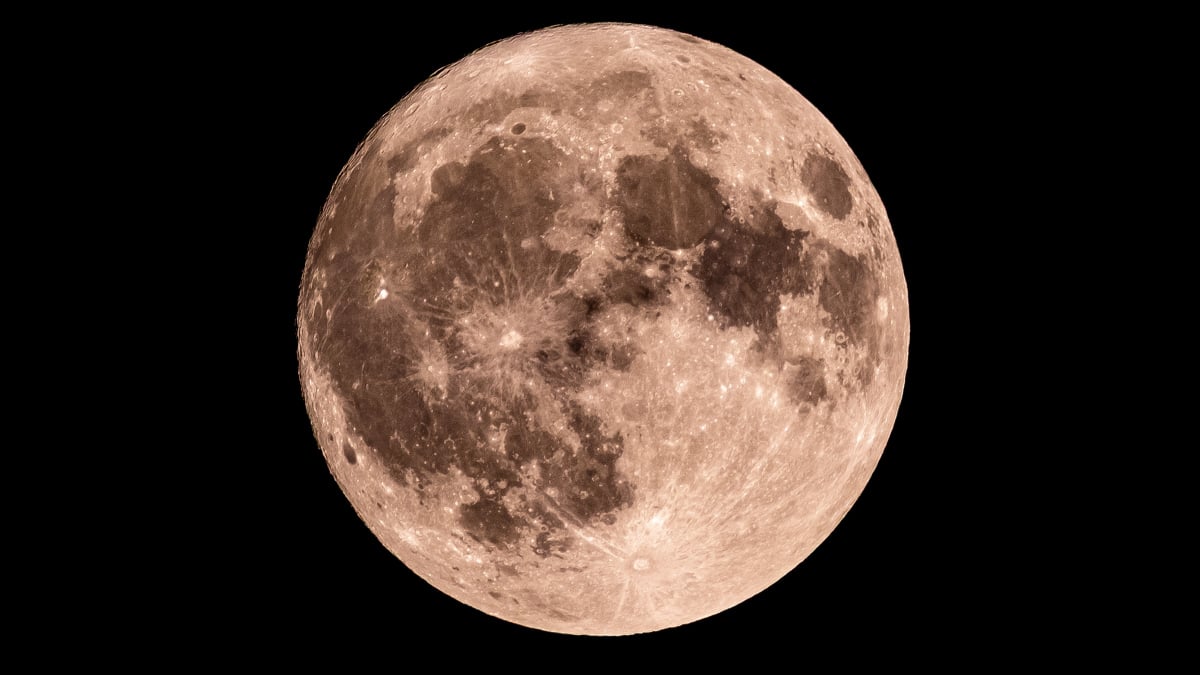
The night sky offers a perpetual spectacle, and few celestial bodies command our attention quite like the Moon. On December 7th, stargazers and casual observers alike peered upwards, curious about the particular phase that illuminated our world. While seemingly just a daily occurrence, the Moon's appearance on any given night, such as the Waning Gibbous phase likely visible that evening, is a profound reminder of cosmic mechanics, ancient history, and our very human connection to the universe.
Understanding the Waning Gibbous: A Celestial Decline
On December 7th, for many across the globe, the Moon presented itself as a Waning Gibbous. This phase occurs after the Full Moon and before the Last Quarter. In simple terms, it means more than half of the Moon's face was still illuminated, but the lit portion was visibly shrinking each night as it headed towards the New Moon. From Earth, we witnessed a gradual recession of light from the right side of the lunar disk, a subtle but persistent dance orchestrated by the Moon's orbit around our planet and its position relative to the Sun.
This specific phase, like all others, is a direct consequence of the ever-changing angles at which we view the Sun's light reflecting off the lunar surface. As the Moon continues its 29.5-day synodic period, it cycles through new moon, waxing crescent, first quarter, waxing gibbous, full moon, waning gibbous, last quarter, and waning crescent, before returning to new. The Waning Gibbous, therefore, isn't just a visual; it's a point in a grand, predictable celestial ballet.
More Than Just Light: The Moon's Profound Influence
The Moon's phases have been central to human civilization for millennia. Beyond its aesthetic appeal, its regular cycle has dictated tides, guided agriculture, and served as the earliest form of calendar keeping. Ancient cultures meticulously tracked lunar phases, weaving them into mythologies, religious practices, and navigational techniques. The Waning Gibbous, for instance, might have signaled a time for introspection or the drawing near of the month's end in various historical contexts.
Scientifically, the Moon's gravitational pull continues to exert a profound influence on Earth. Its tug creates the oceanic tides, vital for marine ecosystems. It also stabilizes Earth's axial tilt, preventing extreme climatic shifts that could render our planet uninhabitable. Without our Moon, the very rhythm of life on Earth would be dramatically different.
Peering Ahead: The Future of Lunar Observation and Exploration
Our fascination with the Moon is far from diminishing. In fact, we are entering a new era of lunar ambition. Missions like NASA's Artemis program aim to return humans to the Moon, with sights set on establishing a sustained human presence. This time, the focus isn't just on flags and footprints but on understanding the Moon's resources, setting up scientific outposts, and using it as a stepping stone for deeper space exploration, particularly to Mars.
Future observations won't just be about appreciating a Waning Gibbous from afar; they will involve advanced telescopes, lunar bases, and even space tourism. Imagine witnessing Earthrise from a lunar outpost, or observing the intricate dance of phases from a wholly different perspective. The data gathered from these endeavors will undoubtedly reshape our understanding of planetary formation, the origins of life, and the potential for extraterrestrial habitation.
The Enduring Mystery and Call to Gaze
As the Moon moved past its Waning Gibbous on December 7th and continued its journey towards the New Moon, it left us with a fresh perspective on its constant, yet ever-changing, presence. Each phase is a chapter in an ongoing story, connecting us to the vastness of space and the legacy of human curiosity.
So, the next time you glance up at the night sky, remember that the Moon is more than just a distant rock. It is a timekeeper, a scientific marvel, a cultural touchstone, and an evolving frontier. Its silent journey overhead invites us to ponder our place in the cosmos and to dream of the discoveries yet to come.