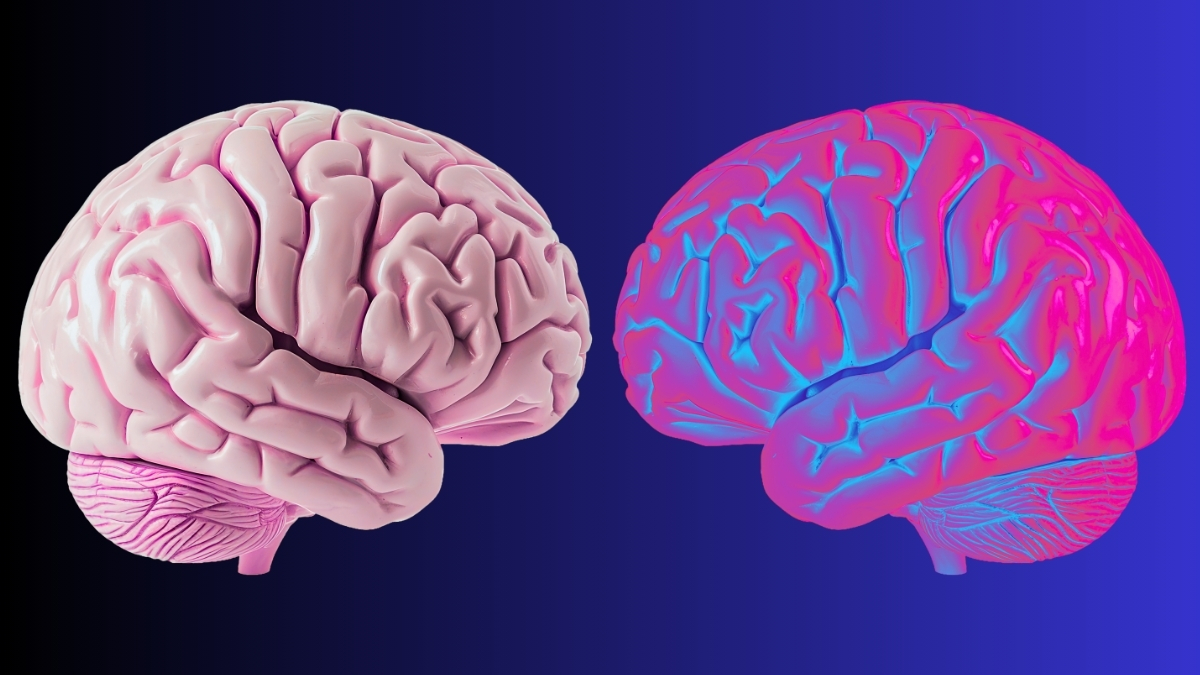
At first glance, the question, "Where do 'you' end and the outside world begin?" seems to have a trivial answer. The skin, perhaps? But for the intricate machinery of the human brain, this seemingly simple boundary is a profound computational challenge, one that scientists are only now beginning to unravel through the lens of brain waves. NovaPress delves into the cutting-edge research that is reshaping our understanding of self, perception, and the very fabric of our subjective reality.
The Elusive 'Self' in a World of Stimuli
Our brains are constantly bombarded with information: sights, sounds, textures, internal bodily sensations. To function coherently, it must perform an extraordinary feat – segregating what belongs to our own body and internal state from what originates externally. This isn't merely about distinguishing a touch on our arm from the feeling of a breeze; it extends to complex cognitive processes like agency, ownership of actions, and even the perception of our own thoughts as distinct from external influences. Historically, this has been a philosophical puzzle, but neuroscience is now providing empirical answers.
Brain Waves: The Unseen Architects of Our Boundaries
Recent breakthroughs highlight specific patterns of brain activity – or brain waves – as crucial mediators in this demarcation process. These rhythmic electrical oscillations, measured via techniques like electroencephalography (EEG), are not just random noise; they represent synchronized activity across vast networks of neurons, acting as a dynamic language of the brain. Scientists are identifying particular wave frequencies and their coherence patterns that seem to actively delineate the "self" from the "non-self."
While the source material points to the general concept of "brain waves," the analytical depth required here implies a discussion of how these waves might work. For instance, specific frequencies could be involved in integrating sensory inputs related to one's own body, while filtering out or processing external stimuli differently. This involves intricate feedback loops between sensory cortices, parietal regions involved in body schema, and frontal areas responsible for higher-order self-awareness. The synchronicity or desynchronicity of these waves in response to various inputs can provide real-time indicators of how the brain is constructing its model of the self in relation to its environment.
Implications for Perception, Cognition, and Disorder
Understanding these neural mechanisms has far-reaching implications. For healthy individuals, it sheds light on how we maintain a stable sense of self amidst constant change, how we differentiate our own movements from observed ones, and how our brain creates a coherent, unified experience of being. For those suffering from neurological and psychological conditions, this research offers new avenues for understanding and intervention.
Conditions like schizophrenia, where individuals might experience auditory hallucinations as external voices or feel their thoughts are not their own, could stem from dysregulation in these boundary-defining brain wave patterns. Similarly, phantom limb syndrome, depersonalization/derealization disorders, or even certain forms of autism might involve altered neural processing of self-other distinctions. By identifying the specific brain wave signatures associated with a clear sense of self, researchers might develop targeted neurofeedback therapies or pharmacological treatments to help restore these crucial boundaries.
The Future of Self-Understanding
This research is not merely an academic exercise; it delves into the very core of what it means to be a conscious entity. As we gain a deeper understanding of how the brain constructs and maintains the 'you,' we open doors to enhancing human-computer interfaces, developing more sophisticated prosthetics that feel like natural extensions of the body, and even refining artificial intelligence that could one day comprehend agency and selfhood in a rudimentary way.
The journey to map the neural architecture of self-boundary is complex, but the initial discoveries surrounding brain waves offer a compelling glimpse into the brain's extraordinary capacity to define its own existence within the vastness of the external world. NovaPress will continue to follow these groundbreaking developments as science pushes the frontiers of human self-understanding.