The Alien Metropolis of the Deep: Unearthing the 'Lost City' Beneath the Atlantic
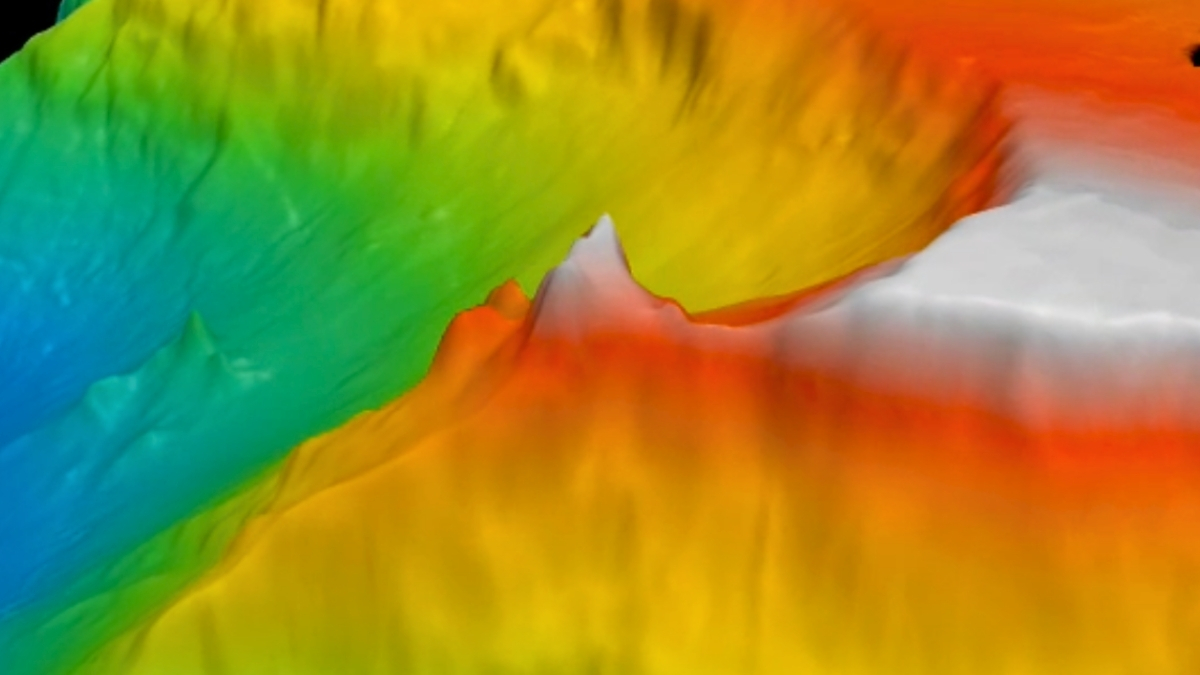
Deep within the abyssal plains, far from the sun's reach and beyond the realm of human exploration, lies a landscape so otherworldly it defies terrestrial comparison. Close to the summit of an underwater mountain west of the Mid-Atlantic Ridge, a jagged panorama of towering structures rises from the perpetual gloom. Dubbed the 'Lost City' Hydrothermal Field, this discovery challenges our understanding of life's origins, Earth's geology, and the potential for life beyond our planet.
A Landscape Forged by Chemistry, Not Fire
Unlike the more commonly known black smoker hydrothermal vents, which erupt superheated, acidic, and metal-rich fluids, the 'Lost City' operates on a fundamentally different principle. Its creamy carbonate walls and columns, appearing a ghostly blue in the dim light of submersibles, are the result of a process called serpentinization. This reaction occurs when seawater percolates deep into the ocean crust, reacting with mantle rocks rich in olivine. The chemical interaction produces hydrogen and methane, which then drive the formation of the towering carbonate structures, some reaching up to 60 meters (nearly 200 feet) tall.
The fluids emanating from these vents are alkaline, relatively cool (around 40-90°C), and rich in hydrogen, methane, and other hydrocarbons. This unique chemistry creates a starkly different environment compared to the acidic, sulfur-rich conditions of black smokers, leading to a distinct and fascinating ecosystem.
An Oasis of Extremophiles: Life Beyond Sunlight
For over 120,000 years, the 'Lost City' has been an active source of chemical energy, fostering a vibrant community of extremophile microbes that thrive in its bizarre conditions. These organisms don't rely on sunlight for energy, but rather chemosynthesis, utilizing the hydrogen and methane produced by serpentinization. Scientists have found a rich diversity of archaea and bacteria, including unique species that consume methane and produce biomass, forming the base of a localized food web.
This distinct biological community offers a rare glimpse into the adaptability of life and its ability to flourish in environments previously thought uninhabitable. The 'Lost City' teems with microscopic life, often forming thick white biofilms, and supports larger organisms like snails, shrimp, and crabs that graze on these microbial mats.
Profound Implications for Life's Origins and Astrobiology
The significance of the 'Lost City' extends far beyond its unique geology and biology on Earth. It holds profound implications for some of humanity's most enduring questions:
- Origin of Life on Earth: The alkaline, hydrogen-rich fluids and the porous carbonate structures of the 'Lost City' bear striking resemblance to theoretical conditions on early Earth when life first emerged. This site is considered a prime natural laboratory for studying abiogenesis – the process by which life arises from non-living matter.
- Astrobiology: The discovery offers a tantalizing analogue for potential extraterrestrial life. Ocean worlds like Europa (moon of Jupiter) and Enceladus (moon of Saturn) are believed to harbor vast subsurface oceans interacting with rocky cores, potentially driving similar hydrothermal processes. The 'Lost City' gives scientists a template for what life might look like and how it could sustain itself on such distant worlds.
- Earth's Deep Carbon Cycle: The processes at 'Lost City' help us understand the deep carbon cycle, the movement of carbon between the Earth's mantle, crust, oceans, and atmosphere, which is crucial for regulating our planet's climate.
Future Exploration and Conservation
The 'Lost City' remains largely unexplored, promising countless future discoveries in microbiology, geology, and biochemistry. Its unique chemical environment could hold the key to novel enzymes or biochemical pathways with biotechnological applications.
However, this remote wonder also faces threats. The potential for deep-sea mining and bioprospecting necessitates robust conservation efforts to protect this irreplaceable scientific treasure. As humanity ventures deeper into the ocean, the responsibility to understand, protect, and learn from such sites becomes paramount.
The 'Lost City' stands as a powerful reminder of the vast, uncharted territories that still exist on our own planet. It is a testament to the ceaseless ingenuity of nature and a beacon of possibility for understanding life's enduring mysteries, both on Earth and potentially beyond.