The Cosmic Crucible: James Webb Reveals How a Dying Star Seeds the Universe for Life
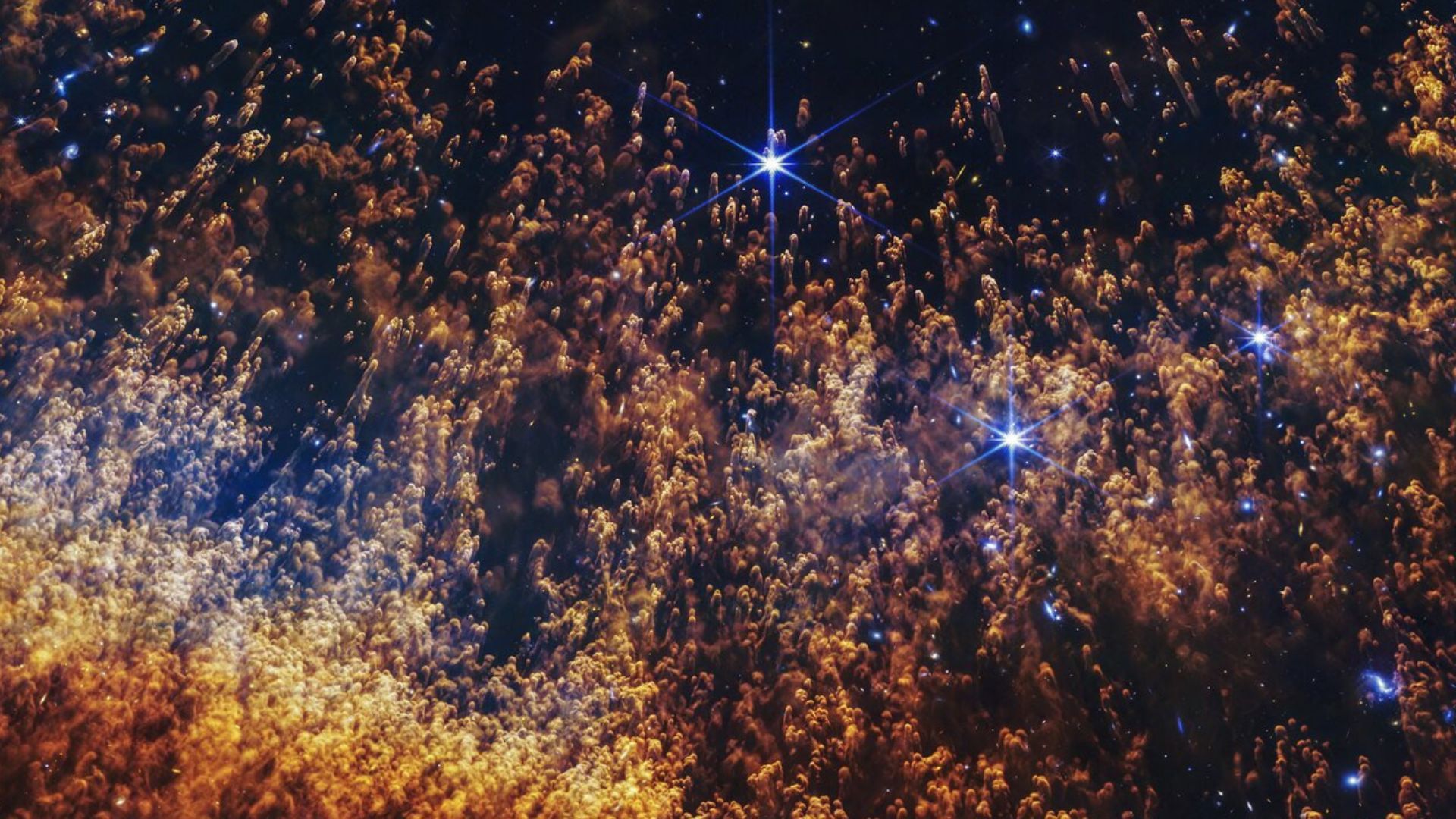
In a breathtaking celestial tableau, the James Webb Space Telescope (JWST) has unveiled the intricate heart of the Helix Nebula, offering humanity a poignant glimpse into the death throes of a sun-like star – and the surprising genesis of life's essential building blocks.
The 'Eye of God': A Stellar Swan Song
Known affectionately as the 'Eye of God' for its striking resemblance to a colossal ocular orb staring back at us from the depths of space, the Helix Nebula (NGC 7293, Caldwell 63) is more than just a cosmic beauty contest winner. Located approximately 655 light-years away in the constellation Aquarius, it represents the final, dramatic act in the life of a star similar to our own Sun. What we are witnessing is a planetary nebula – a misnomer, as it has nothing to do with planets – formed when a red giant star sheds its outer layers into space, exposing its super-hot, dense core.
Unveiling Intricacies with JWST's Infrared Vision
While observed for centuries, the James Webb Space Telescope, with its unparalleled infrared capabilities, has pierced through the nebula's veil of gas and dust like never before. The newly released image, shared on January 20, 2026, is not merely spectacular; it's a trove of scientific data. JWST's instruments are perfectly suited to detect the faint, cool glow of the molecular hydrogen, dust grains, and complex organic molecules that make up the nebula's intricate structures.
The image reveals a breathtaking complexity within the expanding shell of gas: thousands of comet-like 'knots' or 'globules' – dense, finger-like extensions of gas and dust pointing away from the central star. These structures, previously hinted at by Hubble, are now seen in unprecedented detail, allowing astrophysicists to model the dynamic interactions between the super-heated stellar wind from the dying star and the cooler, slower-moving expelled material.
The Ultimate Recycling Program: Forging Life's Elements
Perhaps the most profound implication of the Helix Nebula, and what JWST helps us understand, is its role as a cosmic foundry. As the star violently expels its enriched material into the vastness of interstellar space, it's not just creating a beautiful cosmic spectacle; it's actively enriching the galaxy with the heavy elements essential for life. Carbon, nitrogen, oxygen – these are not forged in the Big Bang, but rather in the cores of stars, and subsequently dispersed into the cosmos during events like the formation of planetary nebulae and supernovae.
This stellar ejecta eventually mixes with primordial hydrogen and helium, cooling and condensing over eons to form new generations of stars, planets, and potentially, life. Every atom of carbon in our bodies, every molecule of oxygen we breathe, was once processed inside a star. The Helix Nebula is a living, glowing testament to this continuous, grand cycle of cosmic creation and recreation.
A Glimpse into Our Sun's Distant Future
For us, the Helix Nebula offers a compelling, if slightly melancholic, preview of our own Sun's fate. In approximately five billion years, our Sun will exhaust its core hydrogen fuel, swell into a red giant, engulfing Mercury and Venus, and perhaps even Earth. It will then shed its outer layers, forming its own planetary nebula, leaving behind a white dwarf remnant – a cosmic ember slowly cooling over trillions of years. The Helix Nebula, therefore, is a cosmic mirror, reflecting our solar system's eventual demise and transformation.
NovaPress Perspective: The JWST's Legacy
The James Webb Space Telescope continues to redefine our understanding of the universe, pushing the boundaries of what is observable. Images like that of the Helix Nebula are not just stunning photographs; they are windows into fundamental astrophysical processes – stellar evolution, galactic chemical enrichment, and the very origins of the elements that constitute everything we know, including ourselves. NovaPress believes that such revelations underscore humanity's insatiable drive for knowledge and our profound connection to the cosmic tapestry.
As we gaze upon the 'Eye of God,' we are reminded that even in death, stars contribute to the vibrant, ongoing story of life in the universe.