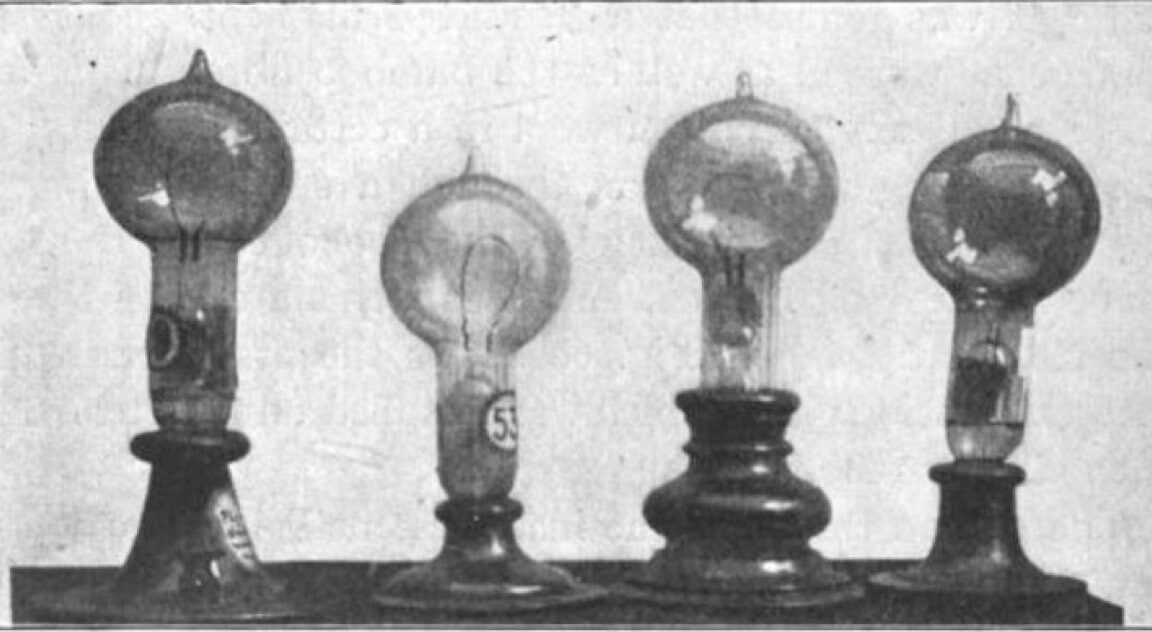
Rewriting History: Did Thomas Edison Accidentally Discover Graphene in 1879?
Imagine a discovery so profound it could redefine an entire era of invention. Now imagine it was made not today, but over a century ago, by one of history's most prolific inventors, and remained unseen until modern science peered closer. This isn't science fiction; it's the tantalizing possibility emerging from Rice University, where chemists replicating Thomas Edison’s seminal 1879 light bulb experiments have unearthed a surprising byproduct: graphene.
Edison's Quest for the Perfect Filament
In his relentless quest for a practical, long-lasting incandescent light bulb filament, Edison experimented with countless materials, from carbonized bamboo to cotton threads. His method involved heating organic materials in an oxygen-depleted environment—a process known as pyrolysis—to create a carbon conductor capable of glowing under electric current. This intensive research was critical to the development of early electrical lighting, a revolution that transformed society. However, the full material implications of his carbon creations were never fully understood, or even sought, by Edison himself. His primary focus was on conductivity and longevity, not the atomic structure of his innovative carbon compounds.
The Modern Replication: A Glimpse into the Past
Fast forward to the present day, where a team of chemists at Rice University, driven by scientific curiosity and a deep understanding of advanced materials, meticulously recreated Edison's process. They didn't just replicate the overall experiment; they specifically focused on the conditions and precursors Edison was known to have used. The goal was to understand the precise chemical transformations occurring during the carbonization process on a nanoscale. What they discovered within the carbonized material, under the discerning eye of electron microscopes, was nothing short of astonishing. They found minuscule, ordered layers of carbon atoms arranged in hexagonal lattices – the unmistakable hallmark of graphene.
Graphene: The Wonder Material of the 21st Century
Graphene, a single layer of carbon atoms arranged in a two-dimensional hexagonal lattice, is often hailed as a “wonder material” of the 21st century. Discovered definitively in 2004 by Andre Geim and Konstantin Novoselov – an achievement that earned them a Nobel Prize in Physics – it boasts unparalleled strength (200 times stronger than steel), exceptional conductivity (better than copper), transparency, and remarkable flexibility. Its potential applications span from ultra-fast electronics and flexible displays to advanced batteries, water purification systems, and cutting-edge medical implants. The thought that such a material might have been inadvertently synthesized by Edison, lying dormant and unrecognized for over a century, is a profound historical irony.
The Unseen Revolution: What If Edison Knew?
Had Edison or his contemporaries possessed the advanced tools and theoretical framework necessary to identify and characterize graphene, the trajectory of materials science and technology could have been dramatically different. Imagine the late 19th and early 20th centuries with access to a material that could revolutionize everything from energy storage to computing. While a full understanding and application of graphene would still require subsequent scientific and engineering breakthroughs, the sheer presence of it in Edison's early work highlights how much of scientific discovery is constrained by the observational and analytical capabilities available at a given time. It’s a compelling 'what if' scenario that bridges centuries of innovation.
Future Implications and New Perspectives
This remarkable finding by the Rice University team isn't just a fascinating historical footnote; it offers tantalizing implications for contemporary materials science. Could ancient, or rather, historical, carbonization methods be revisited as low-cost, scalable routes to graphene production? The conditions Edison used were relatively simple and inexpensive compared to many modern graphene synthesis techniques. Furthermore, this discovery underscores the enduring value of re-examining historical scientific experiments with modern analytical techniques, as they may hold secrets yet to be fully revealed. It's a testament to the fact that even in well-trodden paths of scientific history, new frontiers can still be found.
The possibility that Thomas Edison, the wizard of Menlo Park, might have accidentally conjured the material of the future in his quest for artificial light adds a captivating chapter to the history of invention. While he never knew its name or its full potential, his pioneering spirit, coupled with modern scientific rigor, continues to illuminate unexpected connections across centuries, reminding us that discovery often hides in plain sight, waiting for the right moment—and the right eyes—to be revealed.