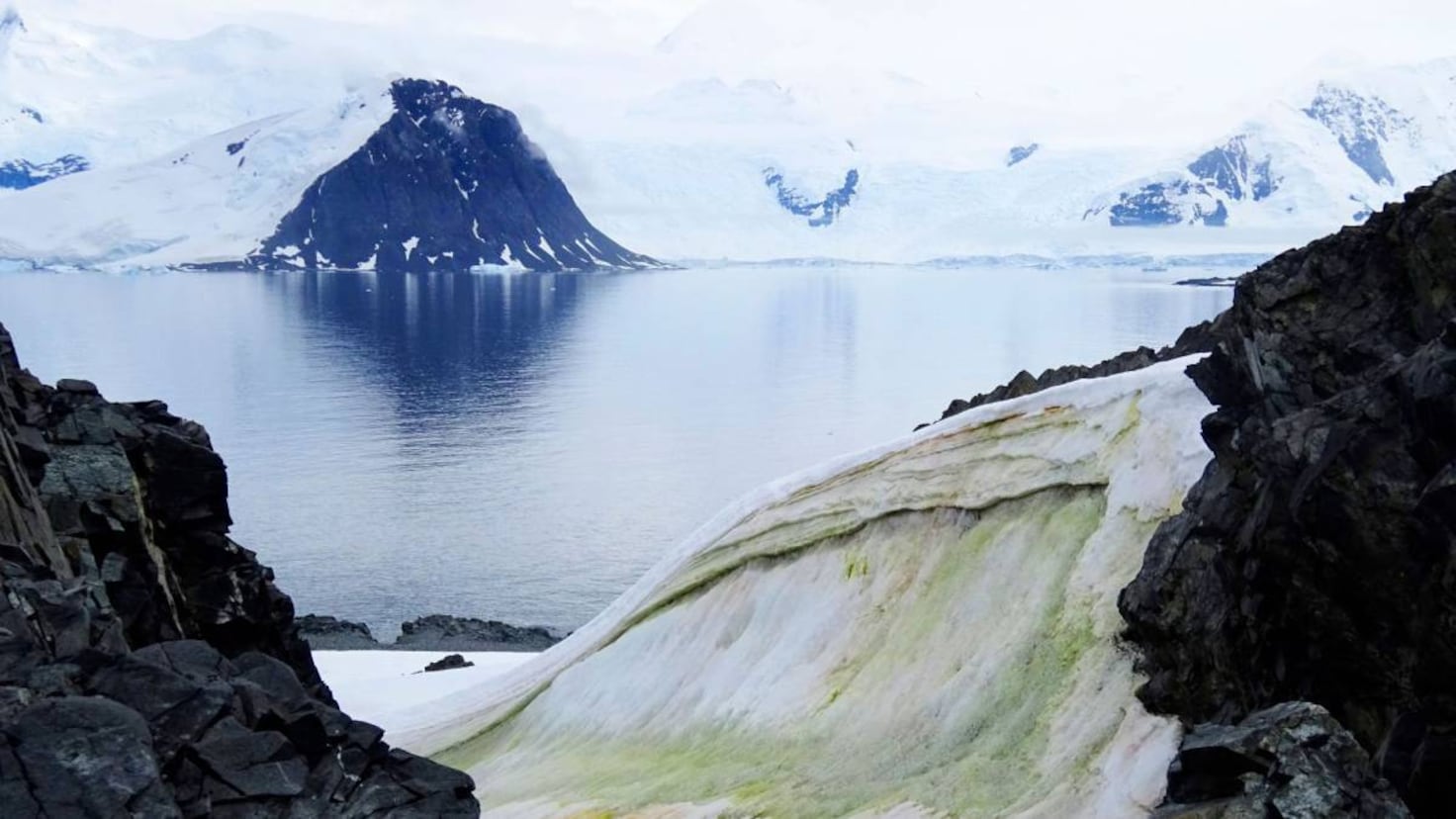
Antarctica's 34-Million-Year-Old Secret: A Time Capsule for Earth's Climate Future
A groundbreaking discovery beneath the Antarctic ice sheet offers an unprecedented glimpse into Earth's ancient past, providing critical insights for navigating our climate-challenged future.
Unveiling a Buried Continent
Imagine a world lost to time, perfectly preserved under miles of ice, waiting to be rediscovered. This isn't science fiction; it's the astounding reality unveiled by the Canadian satellite RADARSAT. Utilizing advanced ice-penetrating radar, scientists have mapped an untouched, sprawling landscape dating back more than 34 million years, hidden beneath over 10 million square kilometers of Antarctic ice. Described as a time capsule
, this discovery promises to redefine our understanding of the continent and its pivotal role in global climate systems.
The Eocene-Oligocene Boundary: A World Transformed
The 34-million-year timeline is not arbitrary; it marks a crucial period in Earth's geological history known as the Eocene-Oligocene transition (EOT). This era witnessed a dramatic shift from a largely ice-free, greenhouse Earth to one dominated by vast polar ice sheets, particularly the burgeoning Antarctic ice sheet. The newly discovered landscape offers a pristine snapshot of Antarctica just as it began its glacial transformation. What did this land look like before the ice entombed it? Geologists postulate it was a world of rivers, valleys, and possibly even forests, far removed from the desolate white expanse we know today.
RADARSAT's radar imagery pierces through the ice, revealing the underlying topography with astonishing detail. Early analysis suggests a complex network of geological features – mountains, vast plains, and ancient river systems – all sculpted by processes that ceased abruptly when the ice sheet advanced. This frozen world offers an unparalleled opportunity to study the continent's geomorphology and ecosystems before its encapsulation.
Unlocking Paleoclimate Secrets
The true power of this discovery lies in its potential to inform our fight against modern climate change. To predict future climate scenarios accurately, scientists need robust data from Earth's past, especially from periods of significant climatic shifts. The EOT is one such period, offering a natural laboratory for understanding how the planet's climate system responds to major changes in atmospheric CO2, ocean currents, and solar radiation.
By analyzing the geological features and, in future, potentially even core samples from this buried landscape, researchers can reconstruct critical details about:
- Ice Sheet Dynamics: How quickly did the Antarctic ice sheet form and expand? What were the conditions that facilitated its growth? This is vital for modeling current and future ice sheet stability.
- Sea Level Response: Understanding the contribution of past ice sheets to global sea levels during periods of formation and melt.
- Paleo-Ecosystems: Insights into the flora and fauna that once thrived on Antarctica, offering clues about ecosystem resilience and adaptation to environmental change.
This historical data is invaluable for refining climate models, making them more accurate in predicting the impacts of ongoing global warming on ice sheets and sea levels worldwide.
Strategies for a Warming World
The description of the source highlights that this research allows for the development of strategies to combat climate change
. By providing concrete evidence of how Antarctica's landscape and ice cover responded to past climate shifts, scientists can offer policymakers more precise projections and guidance.
For instance, if the ancient landscape reveals a rapid ice sheet collapse or formation under specific thermal conditions, it can inform our understanding of tipping points in the modern climate system. This knowledge is crucial for developing robust strategies for coastal protection, resource management, and international climate agreements.
The Road Ahead: Challenges and Promise
While RADARSAT has provided an incredible map, the actual exploration of this hidden continent remains a monumental challenge. Drilling through miles of ice to reach and study this ancient landscape will require unprecedented engineering and scientific collaboration. However, the potential rewards — from understanding fundamental geological processes to uncovering novel microbial life adapted to extreme conditions — are immense.
The discovery under Antarctica is more than just a scientific curiosity; it's a profound connection to Earth's deep past, offering a mirror to our present and a guide for our future. As we grapple with accelerating climate change, these echoes from 34 million years ago provide not just a warning, but also a blueprint for resilience, reminding us of the planet's dynamic history and the urgent need for informed action.