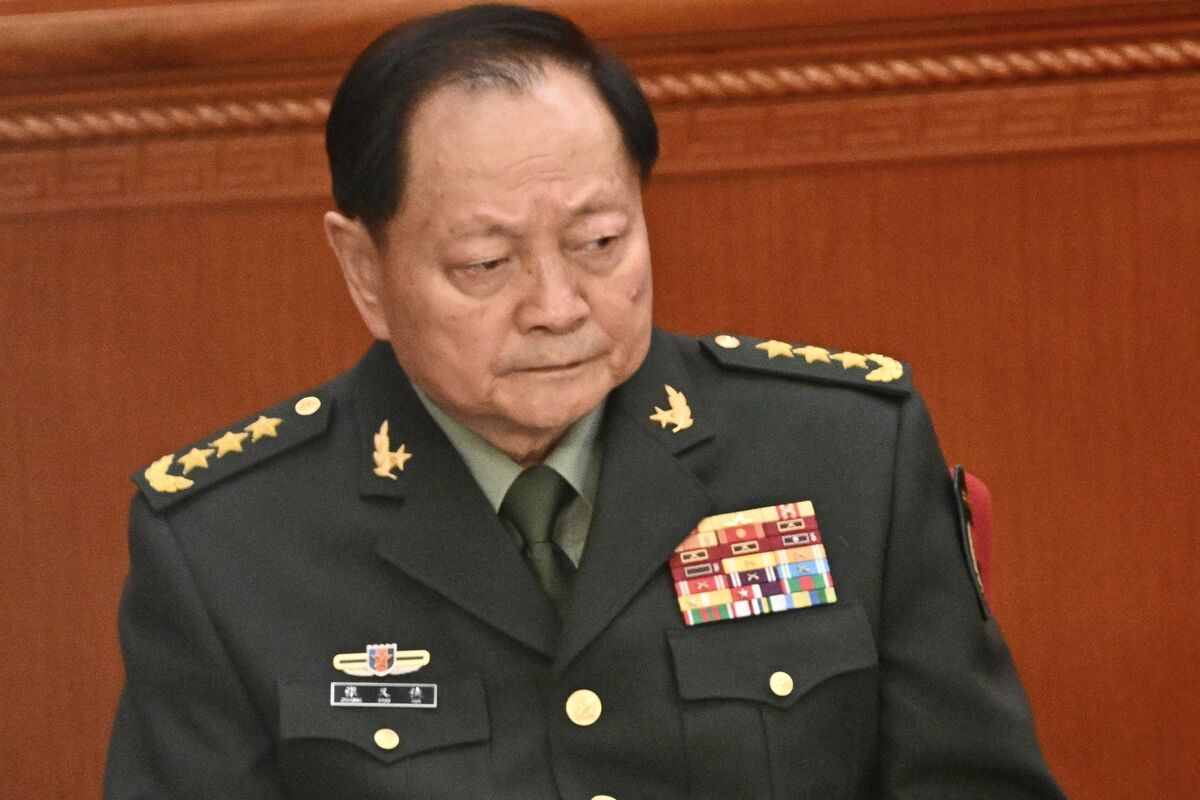
The Deepening Purge: What General Zhang Youxia's Investigation Means for China's Military and Leadership
Beijing’s political landscape is once again roiled by an extraordinary development: the announcement of a probe into General Zhang Youxia. As the country’s No. 1 general, a member of the powerful Politburo, and Vice Chairman of the Central Military Commission (CMC), Zhang’s investigation marks a seismic event, deepening an already unprecedented purge of top military leaders and sending shockwaves through China's most sensitive institutions. This isn't merely another anti-corruption drive; it signifies a pivotal moment in President Xi Jinping's ongoing consolidation of power and his relentless quest for absolute loyalty within the People's Liberation Army (PLA).
A Purge Reaching the Summit
The investigation into General Zhang Youxia is remarkable not just for his rank, but for his deep-seated ties to President Xi Jinping. For years, Zhang has been considered one of Xi's most trusted confidantes, a veteran "princeling" whose father was a revolutionary general and a long-time associate of Xi's own father. This bond, forged over decades and seemingly ironclad, makes his fall all the more startling. It suggests that no individual, regardless of their proximity to the paramount leader or their historical loyalty, is beyond scrutiny as Xi Jinping seeks to reshape the Chinese state and military in his image.
Prior to Zhang, the PLA has been a frequent target of Xi's anti-corruption campaigns, but the scale and speed of recent actions are unparalleled. In the past year alone, several high-profile military figures have vanished from public view, only for their downfall to be confirmed later. Most notably, former Defense Minister Li Shangfu was removed without explanation, following a similar fate for former Foreign Minister Qin Gang. The entire leadership of the PLA Rocket Force, responsible for China's nuclear arsenal, also underwent a sweeping overhaul. These events, once seen as isolated incidents, now appear to be part of a methodical and accelerating campaign to root out perceived disloyalty, corruption, or inefficiency within the military's upper echelons.
The Significance of Zhang Youxia
General Zhang Youxia's role in the Central Military Commission places him at the very heart of China’s military command structure. The CMC, chaired by Xi Jinping himself, is the ultimate decision-making body for the PLA, responsible for everything from strategic planning and resource allocation to military doctrine and personnel appointments. As one of its two vice chairmen, Zhang wielded immense power, overseeing crucial aspects of military modernization, technology acquisition, and operational readiness. His removal or prolonged absence creates a significant vacuum at the top, potentially impacting the execution of China's ambitious military goals, including its stated aim of becoming a "world-class military" by 2049.
His background as a veteran of the Sino-Vietnamese War also lent him considerable gravitas within the PLA, symbolizing a direct link to a more traditional, battle-hardened military. The targeting of such a figure signals a distinct shift: loyalty to the party, and specifically to Xi Jinping, now appears to supersede even long-standing personal relationships or revolutionary heritage.
Behind the Iron Curtain: Potential Motivations
While the official reasons for Zhang's probe will likely remain shrouded in secrecy, several theories are circulating among analysts:
- Unrelenting Anti-Corruption: Corruption has long plagued the PLA, particularly in areas like procurement and promotions. Xi Jinping has used anti-corruption as a powerful tool to eliminate rivals and ensure discipline. Zhang's probe could be a continuation of this drive, targeting high-value individuals to send a clear message.
- Consolidation of Power: Even trusted allies can be seen as potential centers of alternative power or influence. By removing powerful figures like Zhang, Xi further cements his own unchallenged authority over the military and the party. This may be especially pertinent as China faces complex geopolitical challenges and domestic economic headwinds, requiring absolute unity and control.
- Military Readiness and Loyalty: With increasing tensions in the Taiwan Strait and the South China Sea, Xi Jinping demands a PLA that is not only modernized but also absolutely loyal and effective. Any perceived slackness, dissent, or corruption could be seen as a direct threat to national security and Xi's strategic objectives. The purge could be a preemptive measure to ensure the military is fully aligned and capable.
- Internal Factionalism: Despite Xi's dominance, internal power struggles and factional dynamics inevitably exist within the Chinese Communist Party. Zhang's downfall could be a consequence of such internal maneuvering, with other factions or individuals gaining an upper hand.
Implications for China and the World
The investigation into General Zhang Youxia carries profound implications, both domestically and internationally:
- Heightened Uncertainty within the PLA: The ongoing purges will undoubtedly create an atmosphere of fear and caution within the military ranks. While it may enforce discipline and loyalty, it could also stifle initiative and innovation, as officers become more risk-averse.
- Reinforced Civilian Control: The actions unequivocally underscore the Party's, and specifically Xi Jinping's, absolute control over the armed forces. The principle that "the Party commands the gun" is being reasserted with an uncompromising ferocity.
- Impact on Military Modernization: The removal of key leaders responsible for military strategy and procurement could temporarily disrupt ongoing modernization efforts or lead to shifts in strategic priorities. However, it could also be argued that a "cleaner" and more loyal military might ultimately be more effective in Xi's eyes.
- Geopolitical Ramifications: A Chinese military preoccupied with internal purges might appear less cohesive to external observers, potentially impacting regional dynamics and international relations. Conversely, a military purged of disloyalty might be seen as even more formidable and singularly focused on Beijing’s strategic objectives.
Conclusion
General Zhang Youxia's investigation is more than just another headline; it is a critical indicator of the direction of Xi Jinping's China. It demonstrates an unyielding commitment to centralizing power, eliminating potential threats, and ensuring unwavering loyalty across all state institutions, particularly the military. As the "unprecedented purge" continues to deepen, the world watches to see what kind of China will emerge from this period of profound internal restructuring – a China perhaps more unified under one leader, but also one shrouded in greater opacity and potentially more unpredictable in its actions.