The AI Canvas: Microsoft Paint's Unexpected Evolution and the Debate Over User-Centric Innovation
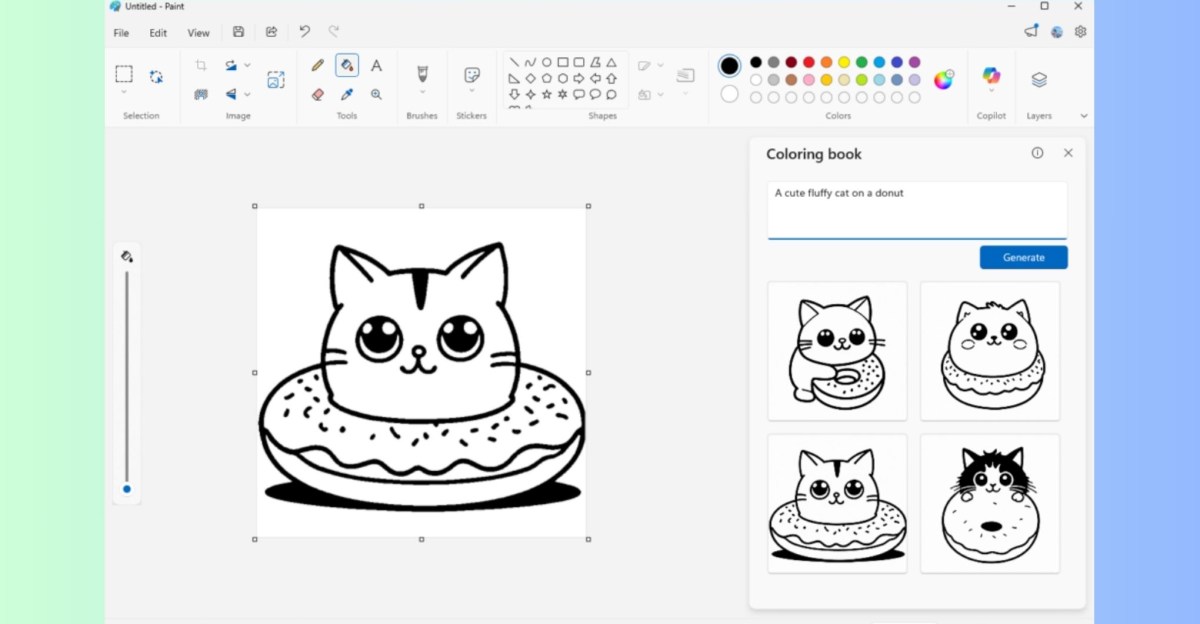
For decades, Microsoft Paint and Notepad have stood as bastions of simplicity within the sprawling complexity of Windows. They were the unsung heroes of quick notes, rudimentary doodles, and the occasional pixelated masterpiece. Now, in a move that signals Microsoft's aggressive push into artificial intelligence, these venerable applications are slated to receive AI capabilities, with Paint's ability to generate AI coloring books grabbing particular attention. The announcement, as noted by The Verge, immediately sparks a poignant question echoing through the tech community: "Is anyone actually asking for this?" NovaPress delves into this intriguing development, exploring its context, implications, and whether it truly represents innovation or merely feature creep.
The Legacy of Simplicity: Paint and Notepad's Enduring Appeal
Before delving into the AI integration, it's crucial to acknowledge the unique place Paint and Notepad hold in the hearts of Windows users. Paint, a rudimentary image editor, has been a gateway to digital art for generations, celebrated for its accessibility and unpretentious functionality. Notepad, similarly, offered an unadorned text editing experience, free from the distractions and formatting complexities of word processors. Their strength lay in their minimalism – they did one thing, and they did it well, without demanding significant system resources or a steep learning curve. This history is vital to understanding the skepticism surrounding their AI transformation.
Microsoft's AI Imperative: A Broader Strategy
The integration of AI into Paint and Notepad is not an isolated incident but rather a natural extension of Microsoft's overarching corporate strategy. Under Satya Nadella, the company has heavily invested in AI, embedding it across its product ecosystem, from Azure cloud services to Microsoft 365 Copilot. The aim is clear: to democratize AI, making sophisticated capabilities accessible to every user, every application. From this vantage point, infusing AI into legacy applications like Paint and Notepad is a logical step, aiming to keep them relevant and enhance their utility in an AI-first world. The "AI coloring books" feature, specifically, leverages generative AI to transform user prompts or existing sketches into outlines suitable for coloring, suggesting a novel way to engage with the age-old act of digital doodling.
The Promise and Peril of AI-Powered Creativity
The prospect of Paint generating AI coloring books offers intriguing possibilities. For casual users or children, it could be a fun, immediate way to create personalized art templates. It might lower the barrier to creative expression, allowing individuals with limited drawing skills to conjure complex scenes for coloring. For educators, it could provide new tools for engaging students in digital art.
However, this innovation comes with potential pitfalls. The fundamental question, "Is anyone actually asking for this?", isn't just about utility; it's about preserving the essence of a tool. Paint's charm has always been its directness, its invitation to manual creation. Introducing AI-generated content might dilute this, shifting the focus from hands-on creation to prompt engineering. There are also concerns about feature bloat: will these new AI layers complicate the user interface or slow down applications known for their lightweight performance? Moreover, the broader ethical implications of generative AI, including copyright and the diminishing value of human-made art, linger in the background of even the simplest AI implementations.
Notepad's Silent Evolution: Beyond Coloring Books
While the "AI coloring books" feature in Paint captures headlines, Notepad's AI enhancements are equally significant, albeit less visually dramatic. The description mentions AI capabilities for "editing text." This likely points to features akin to Copilot, offering summarization, rephrasing, grammar checks, or even content generation directly within the plain text editor. For developers, writers, or anyone frequently using Notepad for quick edits, these features could offer genuine productivity boosts. However, the same questions apply: will these additions compromise Notepad's speed and simplicity, its core appeal as a no-frills text editor?
Future Implications: The AI-ification of Everything
Microsoft's move with Paint and Notepad is a microcosm of a larger industry trend: the relentless integration of AI into every facet of software. This push promises a future where AI assists in mundane tasks, augments creativity, and streamlines workflows. Yet, it also raises critical questions about user control, data privacy, and the potential for a homogenized digital experience. As AI becomes ubiquitous, discerning between truly useful innovations and superfluous features becomes paramount. The longevity and user reception of AI-powered Paint and Notepad will serve as important case studies in this ongoing evolution.
Conclusion: A Balancing Act Between Innovation and User Expectation
Microsoft Paint and Notepad's AI upgrade is a fascinating experiment at the intersection of legacy software and cutting-edge technology. On one hand, it represents Microsoft's commitment to pushing the boundaries of AI integration, potentially unlocking new creative and productive avenues for millions of Windows users. On the other, it challenges the cherished simplicity of these beloved applications, sparking a debate about whether every tool needs AI, and if users are truly yearning for these specific enhancements. The success of these features will hinge not just on their technical prowess, but on their ability to integrate seamlessly without alienating the core user base that has long valued their straightforward charm. As "NovaPress," we believe this development warrants close observation, as it offers a glimpse into a future where even the simplest digital canvases are painted with the brushstrokes of artificial intelligence.