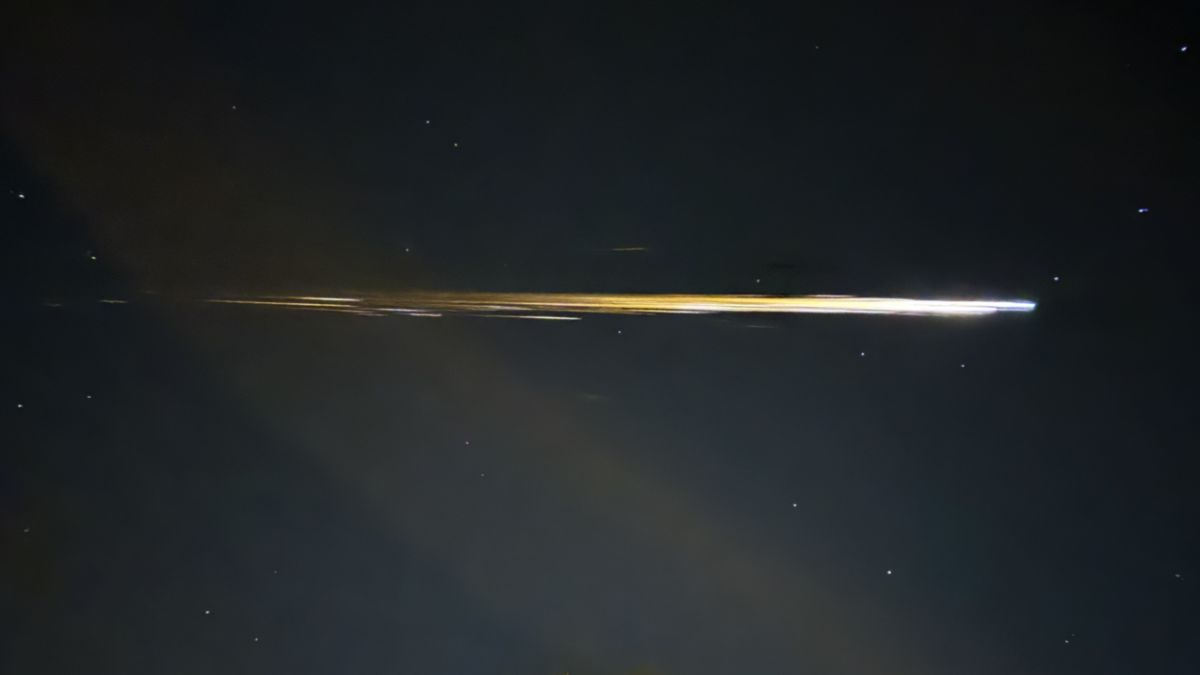
Sonic Sentinels: How Earthquake Sensors Are Revolutionizing Space Junk Tracking
The silent threat of space junk hurtling towards Earth has long been a complex challenge for scientists and space agencies. For decades, tracking these uncontrolled re-entries has relied primarily on radar and optical telescopes, methods often limited by resolution, weather conditions, and the sheer volume of debris. However, a groundbreaking discovery is poised to fundamentally change how we monitor these cosmic castaways: the repurposing of global seismic and infrasound networks as 'sonic sentinels' capable of detecting the atmospheric entry of space debris.
The Growing Menace Above Us
Our orbital highways are increasingly congested. From defunct satellites and spent rocket stages to countless fragments resulting from collisions, the catalog of space debris continues to grow exponentially. Estimates suggest hundreds of thousands of objects larger than a centimeter are currently orbiting Earth, each a potential projectile. While most of these burn up harmlessly in the atmosphere, larger pieces can survive re-entry, posing a non-zero, yet critical, risk to ground populations and infrastructure.
Predicting the precise re-entry path and impact zone of these uncontrolled objects has been a formidable task. Current methods offer broad windows of time and vast geographical corridors, leaving significant uncertainty. This new approach offers a tangible step towards mitigating that risk, transforming the very tools designed to monitor our planet's internal rumblings into vigilant guardians of our skies.
A Symphony of Subsonic Booms
The core of this breakthrough lies in the recognition that objects punching through the atmosphere at hypersonic speeds generate powerful sonic booms. These are not merely local phenomena; the low-frequency sound waves, or infrasound, produced by these events can propagate vast distances through the atmosphere and even couple into the solid Earth, where they can be detected by sensitive seismometers.
Scientists discovered that the global network of infrasound arrays – initially established to monitor nuclear test treaties – and broader seismic stations are exquisitely sensitive to these atmospheric shockwaves. As a chunk of space junk begins its fiery descent, it creates a powerful pressure wave, much like an aircraft breaking the sound barrier, but on a much larger scale. This infrasound signature, below the threshold of human hearing, carries unique characteristics that allow researchers to distinguish it from other natural phenomena like meteor impacts or volcanic eruptions.
Unlocking New Predictive Power
The implications of this discovery are profound. By analyzing the timing and intensity of these sonic booms detected across multiple ground stations, scientists can triangulate the re-entry path and even estimate the size and energy of the incoming debris with unprecedented accuracy. This provides a crucial data point that complements existing space-based and ground-based optical tracking systems.
Imagine a scenario where an uncontrolled satellite is predicted to re-enter. As it begins its descent, infrasound arrays around the world start 'listening.' The signals they pick up can then be fed into predictive models, refining the potential impact zone in near real-time. This improved precision could lead to more timely and accurate warnings for civil aviation, maritime traffic, and even ground populations in affected areas, enhancing public safety significantly.
Beyond Tracking: Scientific Insights and Global Collaboration
Beyond immediate safety concerns, this new methodology also opens doors for deeper scientific understanding. The acoustic signatures of re-entering objects could offer insights into their composition, fragmentation patterns, and the complex atmospheric physics involved in hypervelocity re-entry. It could even help refine models of atmospheric density and dynamics.
Furthermore, this initiative highlights the incredible power of repurposing existing global scientific infrastructure for novel applications. The infrasound network, a testament to international cooperation for arms control, now finds a critical role in safeguarding our space environment. This collaborative spirit will be essential as humanity navigates the increasing challenges of orbital congestion and ensures the long-term sustainability of space activities.
The Path Forward
While still an evolving field, the integration of infrasound and seismic data into a comprehensive space debris tracking system represents a significant leap forward. Researchers will continue to refine algorithms, improve signal processing, and correlate these acoustic detections with other observational data to build a robust and reliable monitoring capability. The era of 'sonic sentinels' has truly begun, offering a fresh perspective and a powerful new tool in our ongoing efforts to manage the debris-strewn frontier of Earth's orbit and protect our planet below.