The Universe's Invisible Dance: How Dark Matter and Neutrino Interactions Could Spark a Cosmic Revolution
For decades, two of the cosmos's most enigmatic residents have existed as separate, yet equally profound, mysteries: dark matter, the unseen gravitational glue holding galaxies together, and neutrinos, the elusive "ghost particles" that rarely interact with anything. Now, tantalizing new evidence suggests these two titans of the unknown might be engaging in an invisible cosmic ballet, a discovery that could herald a "fundamental breakthrough in cosmology and particle physics" and force us to redraw the very blueprints of the universe's evolution.
Unveiling the Universe's Most Elusive Residents
Our standard model of cosmology paints a remarkably successful picture of the universe, from the Big Bang to the formation of stars and galaxies. Yet, it grapples with significant blind spots. Foremost among them is dark matter, an invisible substance accounting for approximately 27% of the universe's mass-energy budget. Its presence is inferred solely through its gravitational effects on visible matter, yet direct detection has remained elusive, leading to a host of theoretical candidates from WIMPs (Weakly Interacting Massive Particles) to axions.
On the other side of the cosmic ledger are neutrinos. Born from nuclear reactions in stars, supernovae, and particle accelerators, these subatomic particles are often dubbed "ghost particles" due to their notorious reluctance to interact with ordinary matter. Trillions of neutrinos pass through our bodies every second, virtually unnoticed. They possess a tiny mass, oscillate between three 'flavors,' and travel at nearly the speed of light, carrying vital clues about the most extreme environments in the universe.
The Whispers of Interaction: A Paradigm Shift?
The groundbreaking suggestion emerging from recent astronomical observations is that these two ethereal components—dark matter and neutrinos—might not be as aloof from each other as previously thought. While the specifics of the interaction are still under investigation, the evidence hints at a subtle, yet profound, force binding them. Imagine dark matter particles, long considered to interact only gravitationally (or very weakly with themselves), now having a direct, albeit faint, channel of communication with neutrinos.
Such an interaction would shatter conventional assumptions. For decades, the leading dark matter candidates, like WIMPs, were thought to interact with neutrinos predominantly through indirect, secondary channels. A direct interaction implies a new fundamental force or a mediating particle yet unknown to the Standard Model of particle physics. This is not merely a tweak to our understanding; it’s a potential re-engineering of the cosmic operating system.
Rewriting Cosmic History and Future Implications
Reshaping Galaxy Formation and Large-Scale Structure
The implications for cosmology are immense. Dark matter plays a critical role in the formation of cosmic structures, from galaxies to vast galaxy clusters. If dark matter can interact with neutrinos, even weakly, it could alter its distribution and behavior, particularly in the early universe when both particle densities were much higher. This could provide elegant solutions to long-standing cosmological puzzles, such as the 'cusp-halo problem' (discrepancies between simulated and observed dark matter distribution in galaxy centers) or the 'missing satellites problem' (the predicted number of small satellite galaxies around large galaxies versus those observed).
New Physics Beyond the Standard Model
From a particle physics perspective, this discovery points towards physics beyond the Standard Model. It suggests the existence of a new force carrier, or perhaps a novel type of dark matter particle whose properties are intrinsically linked to neutrinos. This could open new avenues for experimental searches, encouraging scientists to design detectors sensitive to these specific interactions, potentially leading to the first direct detection of dark matter.
Probing the Early Universe
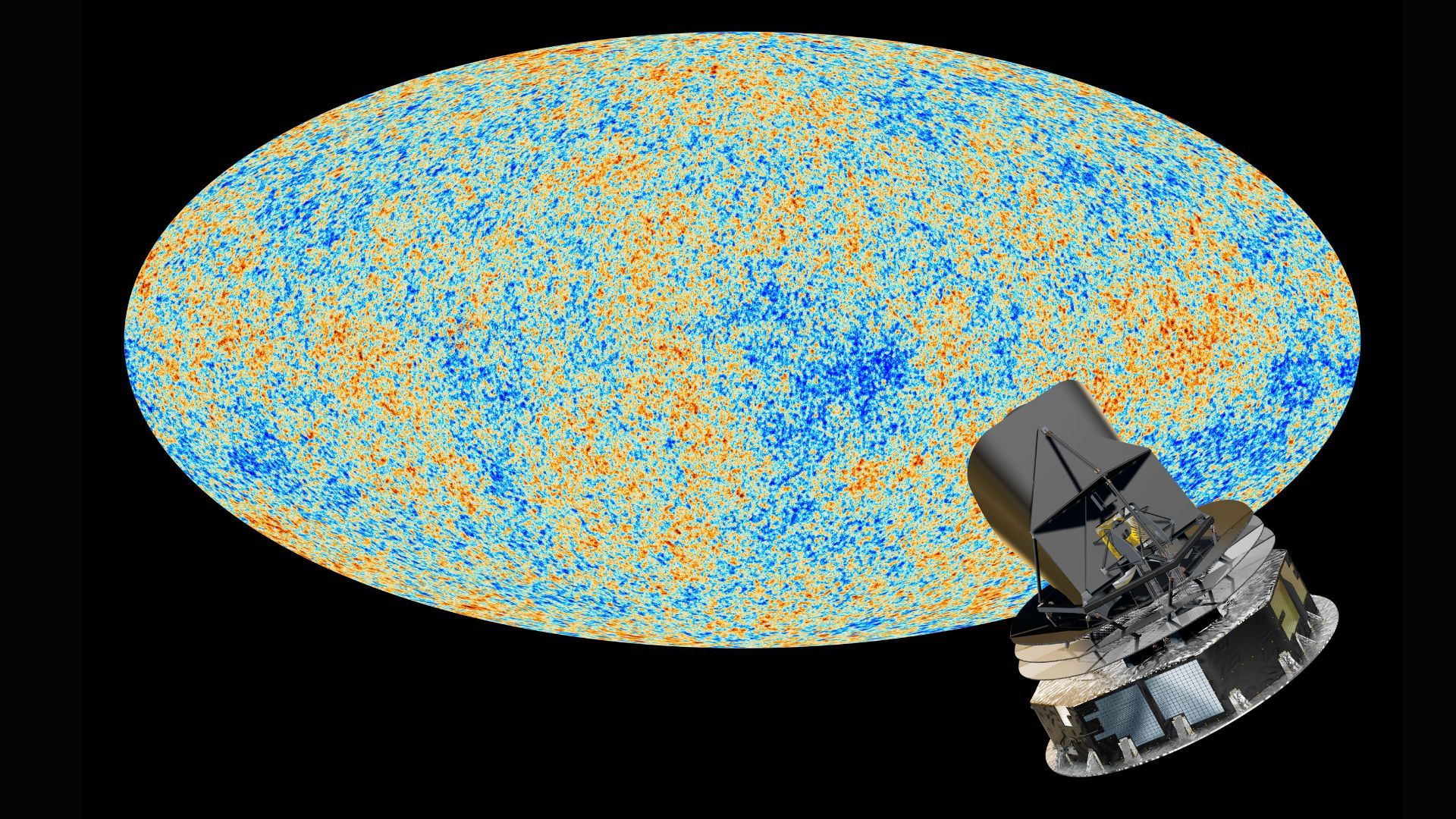
The early universe was a scorching, dense plasma where fundamental interactions were far more prevalent. A dark matter-neutrino coupling could have left observable imprints on the Cosmic Microwave Background (CMB), the afterglow of the Big Bang, affecting its anisotropies and polarization patterns. Future, more precise CMB observations, alongside next-generation neutrino telescopes and dark matter detectors, will be crucial in confirming this hypothesis and quantifying the strength of the interaction.
The Road Ahead: A New Era of Discovery
This potential breakthrough underscores the interconnectedness of the cosmos and the persistent drive of scientific inquiry. If confirmed, the interaction between dark matter and neutrinos would not only resolve lingering inconsistencies in our models but also unlock entirely new vistas for research, bridging the traditionally distinct fields of cosmology and particle physics. We stand at the precipice of a profound realization, where the universe's greatest mysteries may finally begin to speak to each other, revealing a deeper, more intricate reality than we ever imagined. The invisible dance has just begun, and its rhythm promises to reshape our understanding of everything.