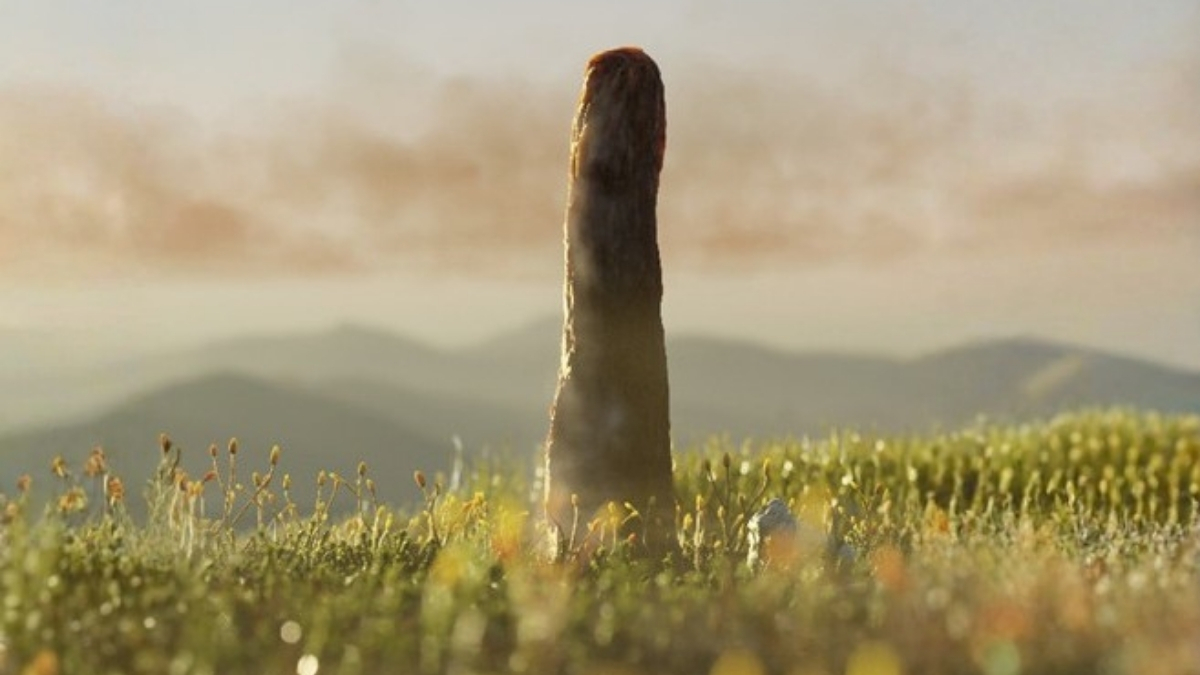
The Colossal Enigma: How Prototaxites Challenges Our Understanding of Life Itself
For over 165 years, the scientific community has grappled with one of Earth's most profound biological mysteries: Prototaxites. These massive fossilized structures, discovered in the mid-19th century, represent an organism so peculiar and so resistant to conventional classification that it continues to defy our established understanding of life's kingdoms. Far from being just another ancient fossil, Prototaxites hints at an entirely lost chapter in the saga of life on Earth, one that could force us to rewrite the textbooks.
A Giant's Footprint in Deep Time
Imagine a world before the dinosaurs, even before the first forests as we know them. During the Silurian and Devonian periods, roughly 420 to 370 million years ago, the land was still nascent, dominated by low-lying plants and primitive arthropods. Yet, towering above this nascent landscape were colossal, pillar-like structures, some reaching up to 8 meters (26 feet) in height and a meter (3 feet) in diameter. These were Prototaxites. Their sheer scale alone makes them an anomaly; they were the largest known terrestrial organisms of their time, dwarfing the early vascular plants that struggled to reach even knee-height.
The Unclassifiable Organism: A Century and a Half of Debate
From the moment of their discovery, Prototaxites specimens have been a paleontological puzzle box. Initially, many researchers believed them to be fossilized tree trunks, an assumption seemingly supported by their size and woody appearance. However, detailed examination of their internal structure revealed a complex, interwoven network of tubes and filaments, utterly unlike the cellular architecture of any known plant. This led to a flurry of alternative hypotheses:
- Giant Fungus: One prominent theory suggested Prototaxites was an enormous mushroom-like fungus, its immense "trunk" a solidified fruiting body. The filamentous internal structure seemed to align with fungal hyphae.
- Massive Alga: Another proposal positioned it as a colossal form of alga, perhaps a type of brown alga, that had somehow adapted to a terrestrial existence.
- Lichen Colossus: Some even entertained the idea of it being a symbiotic lichen, a composite organism of fungi and algae, scaled to unprecedented proportions.
Each hypothesis, while offering intriguing insights, ultimately fell short. Microscopic analysis consistently revealed features that didn't quite fit neatly into any existing biological kingdom. The sheer complexity and unique morphology of Prototaxites screamed 'different,' but without a clear parallel, it remained in biological limbo.
A Fourth Kingdom? Unearthing a Lost Lineage
The most revolutionary hypothesis gaining traction today, particularly among researchers in the UK, suggests something far more profound: Prototaxites may represent an entirely distinct and now-extinct lineage of complex life. This isn't just about reclassifying a species; it's about potentially identifying a new kingdom, or even a higher taxonomic rank, that once thrived on Earth before vanishing without a direct modern descendant.
If Prototaxites indeed belonged to a "lost kingdom," it implies a degree of biological diversity in the early terrestrial environment that we are only just beginning to comprehend. It suggests that the evolutionary paths taken by life were far more varied and experimental than our current phylogenetic trees often depict. What were its metabolic processes? How did it reproduce? What role did it play in shaping the nascent ecosystems of the Silurian and Devonian? These questions open up entire new avenues for research, challenging us to look beyond the familiar categories of plants, animals, fungi, and protists.
Implications for the Present and Future of Biology
The ongoing enigma of Prototaxites serves as a powerful reminder of the vast gaps in our understanding of Earth's ancient past. It forces us to confront the possibility that entire branches of life, as complex and dominant in their time as any modern kingdom, could have risen and fallen without leaving easily recognizable relatives. This has profound implications:
- Rethinking Evolution: It broadens our perspective on the forms life can take and the myriad strategies organisms have evolved to colonize and thrive in different environments.
- Search for Extraterrestrial Life: If Earth hosted such dramatically different life forms in its past, what does this tell us about the potential diversity of life on other planets? The search for alien life might need to consider morphologies and biological strategies far removed from our terrestrial norms.
- Humility in Science: Prototaxites stands as a monument to scientific humility, reminding us that even with centuries of study, the natural world holds secrets capable of overturning our most cherished classifications.
The Enduring Mystery
As research continues, employing advanced analytical techniques from molecular paleontology to comparative morphology, the true identity of Prototaxites might one day be unequivocally established. Until then, these silent giants remain a compelling testament to the boundless ingenuity of evolution and a tantalizing glimpse into a lost world where life took forms we are only just beginning to imagine. The quest to classify Prototaxites is not just about a single organism; it's about pushing the boundaries of what we define as life itself.