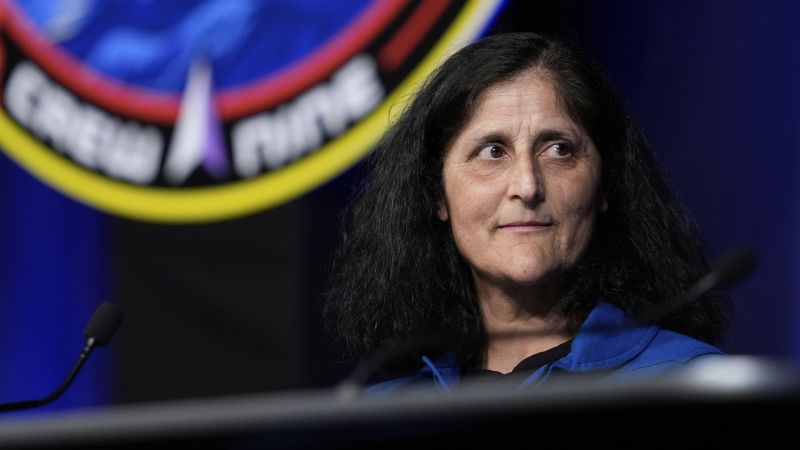
The announcement of veteran NASA astronaut Suni Williams' retirement on Tuesday marks a poignant moment for the agency and the broader commercial space industry. Not only does it signify the end of a decorated career, but it also means that both astronauts who flew on Boeing's beleaguered Starliner Crew Flight Test (CFT) mission have now officially retired from the astronaut corps. Their unexpectedly extended and often challenging final foray into orbit casts a long shadow, prompting critical reflection on the promises, perils, and future trajectory of commercial human spaceflight.
A Legacy Takes Flight – And Ends
Suni Williams and her crewmate, Butch Wilmore, are titans of space exploration. Williams, a U.S. Navy captain, holds records for total spacewalks by a woman and total time spent spacewalking, accumulating over 322 days in space across multiple missions. Wilmore, also a Navy captain and test pilot, boasts significant spaceflight experience, including an extended stay on the International Space Station (ISS). Both were chosen for the Starliner CFT not just for their expertise, but for their ability to provide invaluable feedback on a brand-new spacecraft designed to ferry astronauts to and from the ISS.
The CFT mission was intended to be a routine, albeit critical, test flight – a final hurdle before Starliner could be certified for operational missions. For Williams and Wilmore, it was meant to be a capstone to their illustrious careers, a pioneering journey aboard the latest iteration of American human spaceflight technology. Instead, it became an arduous, extended wait, punctuated by technical issues that delayed their return and ultimately, their farewell to the astronaut corps.
The Promise and Peril of Starliner
Boeing's Starliner is a cornerstone of NASA's Commercial Crew Program, an initiative designed to leverage private industry innovation to provide reliable and cost-effective transportation to the ISS, ending America's reliance on Russian Soyuz rockets. While SpaceX's Crew Dragon has largely fulfilled its part of the bargain, Starliner has been plagued by a series of delays and technical setbacks since its inception. From software glitches during its uncrewed Orbital Flight Test (OFT-1) in 2019 to corrosion of critical valves and wiring issues in subsequent years, the program has faced significant hurdles, costly overruns, and public scrutiny.
The CFT mission itself, launched in June, immediately encountered new problems. Multiple helium leaks, which affect the spacecraft's propulsion system, and the failure of several reaction control system thrusters, extended the astronauts' stay on the ISS well beyond the planned duration. While NASA and Boeing maintain that the issues were manageable and the crew was never in undue danger, the extended period of uncertainty and the need for exhaustive reviews before a safe return underscore the complex and unforgiving nature of space travel, especially with a system still under development.
Beyond the Glitches: Deeper Implications
The retirements of Williams and Wilmore in the wake of the Starliner mission highlight several critical implications for NASA, Boeing, and the commercial space sector:
- For NASA: The Starliner delays have significantly impacted NASA's ability to maintain a robust and redundant crew transport capability. While Crew Dragon has been a success, the program was always envisioned with two independent providers to ensure resilience. The prolonged issues with Boeing put added pressure on SpaceX and potentially restrict mission planning for the ISS.
- For Boeing: This further tarnishes Boeing's reputation in human spaceflight, a sector where the company historically held a dominant position. The financial strain of cost overruns and delays, coupled with ongoing issues in its commercial aircraft division, present a significant challenge for the aerospace giant. Investor confidence and future contract prospects will undoubtedly be scrutinized.
- For Astronauts and Safety Standards: The experience of Williams and Wilmore underscores the human element of spaceflight development. Testing new systems involves inherent risks, but an unexpectedly extended mission due to technical woes places immense physical and psychological strain on the crew. It reinforces the critical balance between pushing technological boundaries and adhering to uncompromising safety protocols.
The Future of Commercial Human Spaceflight
As Starliner undergoes further scrutiny and remediation efforts, its path to full certification remains uncertain. The commercial space industry, while lauded for its innovation and cost-effectiveness, must continually prove its reliability and safety. The Starliner saga serves as a potent reminder that even with the most experienced hands at the helm and billions of dollars invested, the journey to orbit is fraught with challenges.
The retirements of Suni Williams and Butch Wilmore are not just personal milestones; they are bookends to a chapter in commercial spaceflight that needs careful examination. Their incredible careers, culminating in a mission that highlighted both the potential and the pitfalls of next-generation spacecraft, will undoubtedly inform future designs, operational procedures, and the rigorous certification processes essential for safe human exploration.
Conclusion
The departure of these two legendary astronauts leaves a void in NASA's ranks and provides a moment of reflection for the entire space community. While we celebrate their extraordinary contributions, the circumstances surrounding their final flight underscore a critical juncture for Boeing and the commercial space industry at large. The success of future human spaceflight endeavors hinges not just on technological prowess, but on an unwavering commitment to safety, transparency, and learning from every challenge encountered on the path to the stars.