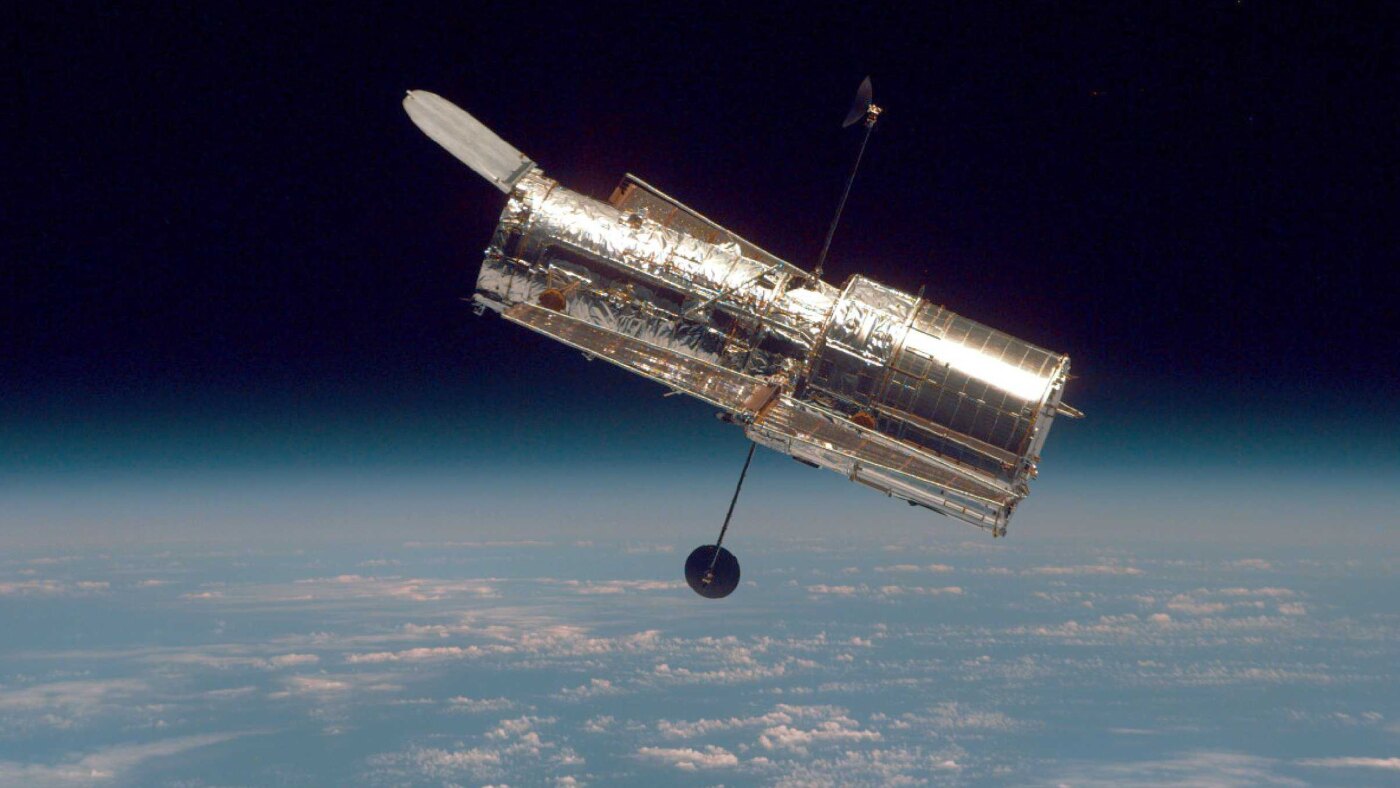
Blinded by the Light: Satellite Reflections Poised to Decimate Space Telescope Imaging
By NovaPress Editorial Board
For decades, humanity has launched its eyes to the stars, orbiting instruments designed to peer into the deepest corners of the cosmos, unhindered by Earth's atmospheric veil. From discovering exoplanets to unraveling the mysteries of dark matter, these orbital observatories have redefined our understanding of the universe. However, a shadow is falling across this pristine view, not from distant nebulae, but from an increasingly crowded celestial neighborhood right above our heads.
The Looming Threat: A 95% Decimation
A groundbreaking NASA-led study has sounded a dire warning: reflections cast by the ever-growing number of satellites orbiting Earth could render more than 95% of images taken by some space telescopes unusable within the next decade. This isn't just an inconvenience; it represents a potential catastrophic loss for astronomical discovery and our collective understanding of the universe.
Astronomers have long grappled with light pollution from ground-based sources, necessitating the construction of observatories in remote, high-altitude locations. But the issue escalating into orbit adds a formidable new dimension. As commercial space ventures launch thousands of satellites – particularly vast "megaconstellations" like SpaceX's Starlink – the cumulative effect of their reflectivity is reaching critical levels, threatening even the most pristine orbital vantage points.
Understanding the Glare: Why Satellites Shine
Satellites, often made of highly reflective materials for thermal management or optimal antenna performance, catch sunlight even when the Earth below is in darkness. For a ground-based observer, these appear as moving 'stars' in the night sky. For a sensitive space telescope, designed to capture incredibly faint light from distant galaxies, nebulae, or exoplanet atmospheres, a satellite passing through its precise field of view can saturate detectors, leaving bright streaks or even completely overexposing entire frames. The problem is akin to trying to photograph a dim candle flame with a flashlight unexpectedly shining into the lens.
The issue is exacerbated by the sheer volume. A single satellite might be manageable, but constellations numbering in the thousands – with plans for tens of thousands more – mean that at any given moment, multiple bright objects could be in a telescope's line of sight, making clean observation windows increasingly rare. The orbital highways are becoming gridlocked with glinting metal, directly impeding our ability to look beyond them.
The Stakes: What We Stand to Lose
- Scientific Discovery: Imagine missing the faintest signals from the early universe, failing to detect potentially hazardous near-Earth asteroids, or losing critical data points in the search for extraterrestrial life. The ability to observe dim, diffuse objects, often at the very edge of current technological capability, is fundamental to modern astrophysics and planetary science. Our capacity to discover the next 'pale blue dot' could be severely diminished.
- Investment & Resources: Billions of dollars are invested globally in designing, building, launching, and operating sophisticated space telescopes. If their operational efficiency is crippled by unavoidable light pollution, it represents an immense waste of resources, human ingenuity, and taxpayer money. Future missions might become prohibitively expensive or simply unfeasible.
- Public Engagement & Inspiration: The breathtaking images from telescopes like Hubble, and more recently James Webb, inspire generations, fueling curiosity about science and our place in the cosmos. A future where these iconic images are consistently marred by satellite streaks diminishes public interest, understanding, and support for crucial scientific endeavors.
Seeking Solutions: A Collective Endeavor
Addressing this challenge requires a multi-faceted approach involving satellite operators, astronomers, policymakers, and international bodies:
- Design Innovation: Satellite companies are actively exploring solutions like darker, less reflective coatings, deployable sunshades (e.g., SpaceX's "VisorSat"), and anti-reflective surfaces to reduce their albedo significantly. While progress is being made, these efforts need to be universally adopted and continually improved.
- Orbital Coordination: Better communication, data sharing, and coordination between satellite operators and astronomical observatories could help schedule observations to avoid conjunctions, much like air traffic control manages flight paths. However, with thousands of objects, this becomes an increasingly complex logistical challenge.
- Software Mitigation: Advanced image processing techniques might be able to partially remove streaks from affected images. However, this is often imperfect, can introduce artifacts, and can degrade the overall quality and scientific integrity of the data, especially for quantitative analysis.
- Regulatory Frameworks: The current regulatory landscape was not designed for the advent of mega-constellations. New international agreements, best practices, and potentially enforceable guidelines are urgently needed to balance commercial interests in space with the preservation of scientific discovery and our collective view of the cosmos.
The Future of Our Cosmic View
The dilemma highlights a profound tension between rapid technological progress and the timeless pursuit of scientific understanding. While global internet access facilitated by satellite constellations offers immense benefits, particularly to underserved regions, it must not come at the irreparable cost of our ability to explore and understand the universe. The night sky, both from Earth and orbit, is a shared heritage of humanity – a source of wonder, knowledge, and inspiration. Protecting its clarity for scientific exploration is a responsibility we cannot afford to neglect. The challenge is immense, but the stakes – nothing less than our window to the cosmos – demand our immediate and concerted attention and collaborative solutions from all stakeholders in the burgeoning space economy.