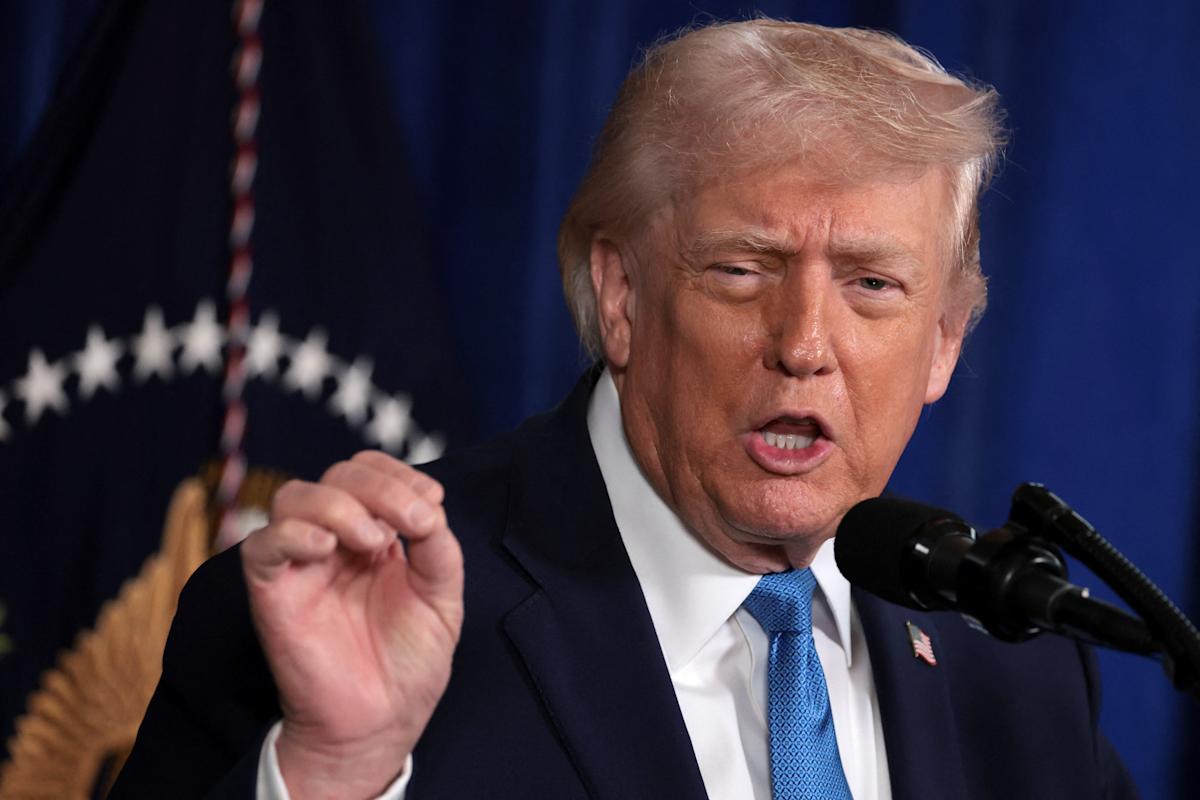
Greenland, Tariffs, and Davos: Unpacking Trump's Geopolitical Gamble
As President Trump heads to the prestigious World Economic Forum in Davos, Switzerland, the global stage is set not for an affirmation of multilateral cooperation, but for a confrontation. His administration's revived tariff threats against European allies, spurred by an unconventional pursuit of Greenland, have sent shockwaves through international markets and dramatically reshaped trading relationships. This unfolding drama encapsulates a distinctive foreign policy approach that prioritizes transactional gains, even at the cost of established alliances and economic stability.
The Strategic Allure of Greenland
The United States' interest in acquiring Greenland, an autonomous territory of Denmark, is not new, tracing back to post-World War II. However, President Trump’s renewed and public pursuit of the vast Arctic island has injected a significant dose of geopolitical tension into transatlantic relations. From Washington’s perspective, Greenland represents a critical strategic asset: its location provides a crucial vantage point for Arctic defense and surveillance, a region increasingly vital due to melting ice caps and renewed great power competition. Furthermore, Greenland is rich in untapped natural resources, including rare earth minerals, which are indispensable for modern technology and defense industries.
Yet, Denmark and the people of Greenland have remained staunchly opposed to any sale, viewing the island as an integral part of their sovereignty and identity. This firm rejection has seemingly fueled the Trump administration's aggressive posture, leading to a diplomatic standoff that now threatens to spill over into economic warfare.
The Tariff Lever: Economic Coercion in Diplomacy
The most immediate and tangible consequence of the Greenland saga has been the re-emergence of tariff threats. President Trump has a well-documented history of employing tariffs as a tool to achieve foreign policy objectives, and European allies are once again in the crosshairs. These threats are not merely rhetoric; they represent a concrete danger to a fragile global economy already grappling with uncertainties. Markets have reacted with predictable volatility, as investors shy away from the instability created by unpredictable trade policies.
The potential imposition of tariffs on European goods would further strain already tense trading relationships, disrupt complex global supply chains, and likely lead to retaliatory measures. Industries from automotive to agriculture, on both sides of the Atlantic, stand to suffer significant economic damage. This tactic risks alienating crucial allies whose economic cooperation is vital for global stability and shared prosperity.
Davos: A Stage for Discord?
The World Economic Forum in Davos traditionally serves as a platform for global leaders to foster collaboration, discuss pressing global challenges, and chart paths toward collective solutions. President Trump’s presence, against the backdrop of the Greenland dispute and tariff threats, transforms this forum into a potential stage for discord rather than consensus. His "America First" agenda often stands in stark contrast to the multilateral spirit of Davos, leading to questions about the effectiveness of such gatherings when major powers are pursuing unilateral and confrontational strategies.
While some may view his attendance as an opportunity for direct engagement and negotiation, others see it as a reinforcement of a transactional worldview that undermines established diplomatic norms and institutions. The discussions in Davos will undoubtedly be overshadowed by the looming threat of a trade war that could escalate beyond the Greenland issue, potentially impacting a broader spectrum of international relations.
Geopolitical Ramifications and Future Implications
The pursuit of Greenland, coupled with the use of tariff threats, carries profound geopolitical ramifications. It signals a willingness by the US to leverage economic power aggressively, even against long-standing allies. This approach risks weakening transatlantic alliances, particularly NATO, at a time when collective security challenges, from Russia to China, demand a united front.
The long-term implications are concerning. A consistent pattern of transactional diplomacy could erode trust, encourage other nations to seek alternative alliances, and ultimately fragment the existing global order. For European allies, it raises critical questions about their economic and strategic dependence on the US, potentially accelerating efforts towards greater European autonomy. The global economy, too, faces an uncertain future where trade is increasingly weaponized, leading to less predictability and higher risks for businesses and consumers worldwide.
Conclusion
President Trump's journey to Davos, overshadowed by the Greenland controversy and escalating tariff threats, underscores a pivotal moment in international relations. His administration's blend of assertive nationalism and economic coercion is testing the resilience of global alliances and the principles of free trade. While the immediate focus remains on de-escalating the current trade tensions, the deeper analysis reveals a shifting landscape where geopolitical ambition and economic power are intertwined in unprecedented ways, leaving a legacy of uncertainty for the future of global cooperation and stability.