The Giant Awakens: Artemis II Stands Poised for Humanity's Return to the Moon
Published: January 18, 2026
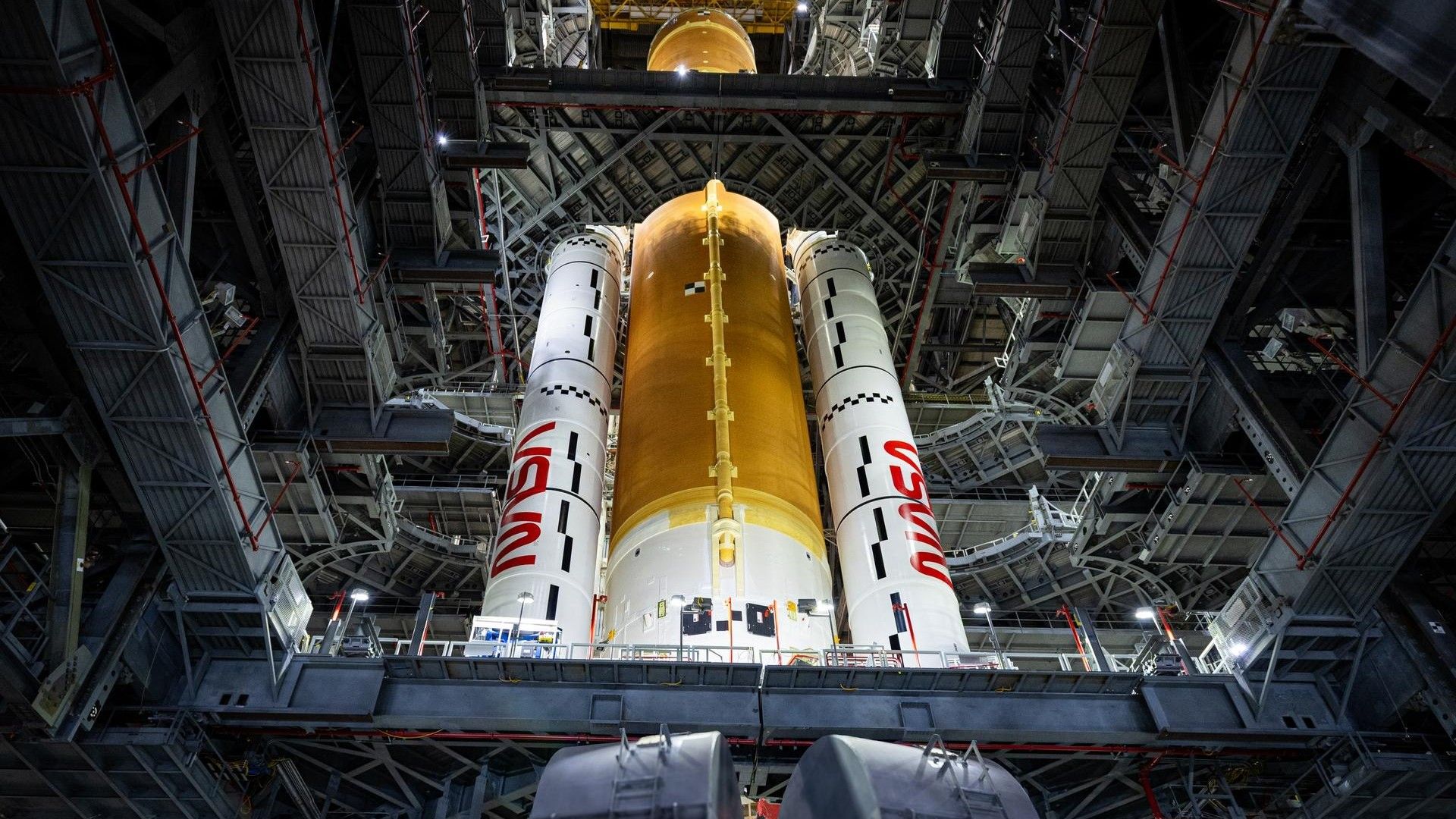
Saturday, January 17, 2026, marked a momentous occasion for space exploration. NASA's colossal Artemis II rocket, comprising the powerful Space Launch System (SLS) and the state-of-the-art Orion spacecraft, completed its methodical rollout and now stands proudly at Launch Complex 39B at Kennedy Space Center. This isn't merely the movement of a massive piece of hardware; it is a profound symbol of humanity's renewed ambition to venture beyond Earth's orbit and establish a sustained presence on the Moon.
Artemis II: Charting the Next Lunar Chapter
The Artemis program represents a paradigm shift from the 'flags and footprints' era of Apollo. While Apollo demonstrated humanity's capability to reach the Moon, Artemis aims for a sustainable lunar presence, paving the way for eventual missions to Mars. Artemis II is pivotal to this vision. Unlike its uncrewed predecessor, Artemis I, this mission will carry a crew of four astronauts on a daring journey around the Moon and back, serving as a critical dress rehearsal for future lunar landings.
The mission's primary objective is to test the Orion spacecraft's systems with humans aboard in the deep-space environment. This includes life support, navigation, communications, and re-entry procedures – all vital components that must function flawlessly for the safety of future lunar explorers. The data gathered from Artemis II will be instrumental in refining the technologies and strategies required for Artemis III, which aims to land humans on the Moon for the first time in over five decades.
An Engineering Marvel: The SLS and Orion Synergy
At the heart of Artemis II's capability lies the Space Launch System, currently the most powerful rocket ever built. Taller than the Statue of Liberty and capable of generating 8.8 million pounds of thrust, the SLS is designed to hurl massive payloads and crewed spacecraft beyond Earth's gravitational pull with unprecedented efficiency. Its development has been a testament to engineering ingenuity, overcoming numerous technical hurdles and delays to deliver a vehicle capable of deep-space exploration.
Crowning the SLS is the Orion spacecraft, humanity's deep-space exploration vehicle. Designed to withstand the harsh radiation of space, provide life support for extended missions, and safely return its crew through Earth's atmosphere at incredibly high speeds, Orion is a marvel of modern aerospace engineering. Together, the SLS and Orion represent a meticulously crafted system, years in the making, ready to push the boundaries of human endurance and technological prowess.
Beyond the Moon: Strategic Implications and Future Horizons
The rollout of Artemis II carries implications far beyond the realm of scientific discovery. In an increasingly competitive global space landscape, with nations like China also setting their sights on lunar exploration, the Artemis program reaffirms American leadership and international collaboration in space. It signifies a commitment to expanding humanity's reach, fostering groundbreaking scientific research – particularly concerning the lunar poles and their potential water ice resources – and laying the groundwork for a burgeoning lunar economy.
The Artemis program isn't just about returning to the Moon; it's a stepping stone to Mars. Lessons learned from lunar missions, the establishment of the Gateway lunar outpost, and the development of advanced in-space capabilities are all crucial precursors for the audacious goal of sending humans to the Red Planet. The sight of Artemis II on its launch pad serves as a potent reminder that the human drive to explore, to innovate, and to reach for the stars remains an indomitable force, inspiring new generations of scientists, engineers, and dreamers.
The Countdown Begins
As Artemis II stands tall against the Florida sky, the world watches with bated breath. Its presence on the launch pad signals that the countdown to humanity's next giant leap has truly begun. NovaPress will continue to provide in-depth coverage as NASA prepares for this historic mission, ushering in a new era of human exploration that promises to redefine our place in the cosmos.