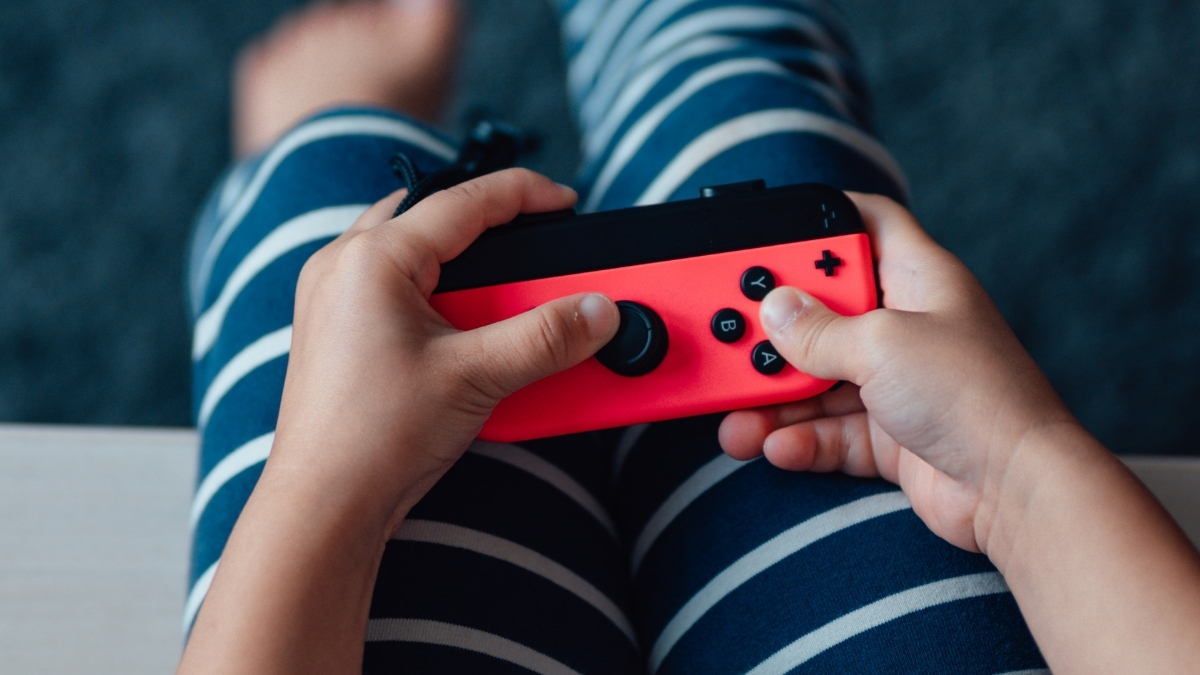
Rewriting the Rulebook: Groundbreaking Research Links Video Games to Enhanced Child IQ
For decades, video games have been a lightning rod in discussions about child development. Often cast as villains that hinder academic performance, social skills, and cognitive growth, screen time has become a source of parental anxiety worldwide. Yet, a new study is poised to dramatically shift this entrenched narrative, presenting compelling evidence that challenges our long-held assumptions. Researchers have linked increased time spent playing video games with a measurable boost in intelligence among children, suggesting that the digital playgrounds of today might actually be shaping brighter minds.
The Study That's Changing Minds
The groundbreaking research, published recently, dives deep into the cognitive effects of gaming on young individuals. Unlike previous studies that often focused on negative correlations or specific skill development, this investigation sought to establish a broader link to overall intelligence. By analyzing a substantial cohort of children over a period, researchers meticulously tracked gaming habits alongside comprehensive intelligence assessments. The findings were unequivocal: children who engaged in more video game play exhibited higher scores in various intelligence metrics, including processing speed, working memory, and reasoning abilities. This correlation persisted even after accounting for other socio-economic factors, highlighting gaming as a significant independent variable.
Dismantling the "Gaming is Bad" Narrative
The traditional narrative surrounding video games and children has long been one of caution, if not outright alarm. Concerns about addiction, exposure to violence, reduced physical activity, and social isolation have dominated public discourse. Parents have been advised to limit screen time stringently, often viewing gaming as a necessary evil to be endured rather than an activity with potential benefits. This new study directly confronts these entrenched fears, providing a scientific counter-argument that demands reconsideration of our preconceived notions.
"The long-standing narrative that gaming is detrimental to young minds is finally being challenged by robust empirical evidence. We're seeing a nuanced picture emerge where certain types of digital engagement can actively contribute to cognitive development."
It’s a powerful validation for countless children and teenagers who have passionately defended their hobby against adult skepticism. Rather than being a passive time-sink, gaming, under certain conditions, appears to be an active cognitive workout.
Unpacking the Cognitive Boost: How Games Sharpen Young Minds
So, how exactly could video games be contributing to a boost in IQ? The researchers propose several mechanisms:
Problem-Solving and Strategic Thinking
Many modern video games, from intricate strategy titles to puzzle-solving adventures, demand complex problem-solving skills. Players must analyze situations, formulate hypotheses, test solutions, and adapt to rapidly changing environments. This iterative process of challenge and resolution mirrors real-world learning, strengthening neural pathways associated with critical thinking.
Enhanced Spatial Reasoning and Visual Processing
Games, especially those in 3D environments, require players to navigate complex virtual worlds, interpret visual cues, and track multiple objects simultaneously. This constant engagement sharpens spatial reasoning — the ability to understand and remember the relationships between objects in space — a skill highly correlated with mathematical and scientific aptitude.
Improved Attention and Focus
Sustained engagement in video games often demands intense focus and the ability to filter out distractions. Players must pay attention to details, anticipate actions, and react swiftly, thereby training their attention spans and selective attention capabilities.
Multitasking and Decision-Making Under Pressure
Fast-paced action or strategy games often require players to juggle multiple objectives, process vast amounts of information, and make split-second decisions with immediate consequences. This hones multitasking abilities and refines decision-making processes under high-pressure scenarios.
Navigating the Nuance: Responsible Gaming and Future Perspectives
While this study offers a refreshing perspective, it's crucial to approach these findings with nuance. Not all games are created equal, and the benefits likely vary depending on the genre, complexity, and overall context of play. The research doesn't advocate for unlimited screen time or suggest abandoning other vital developmental activities like reading, physical exercise, and social interaction.
Instead, it invites a more balanced and informed approach to children's digital engagement. Parents and educators might consider the quality of screen time alongside the quantity. Selecting games that emphasize strategy, creativity, and problem-solving over purely repetitive or passive entertainment could maximize potential cognitive gains.
Implications for Education and Parenting
The implications of this research are far-reaching. For parents, it could alleviate some of the guilt associated with children's gaming habits, encouraging a more open dialogue about digital play. For educators, it opens doors to exploring gamified learning approaches and integrating certain game-based challenges into curricula to enhance cognitive skills. For game developers, it underscores the potential for creating truly enriching and educational experiences, moving beyond mere entertainment.
This study marks a pivotal moment in understanding the complex relationship between technology and human development. It suggests that, when approached thoughtfully, video games are not just a source of entertainment but potentially a powerful tool for cognitive enhancement, helping to cultivate a generation of sharper, more agile thinkers. The screen, once viewed as a barrier to intelligence, might just be its unexpected forge.