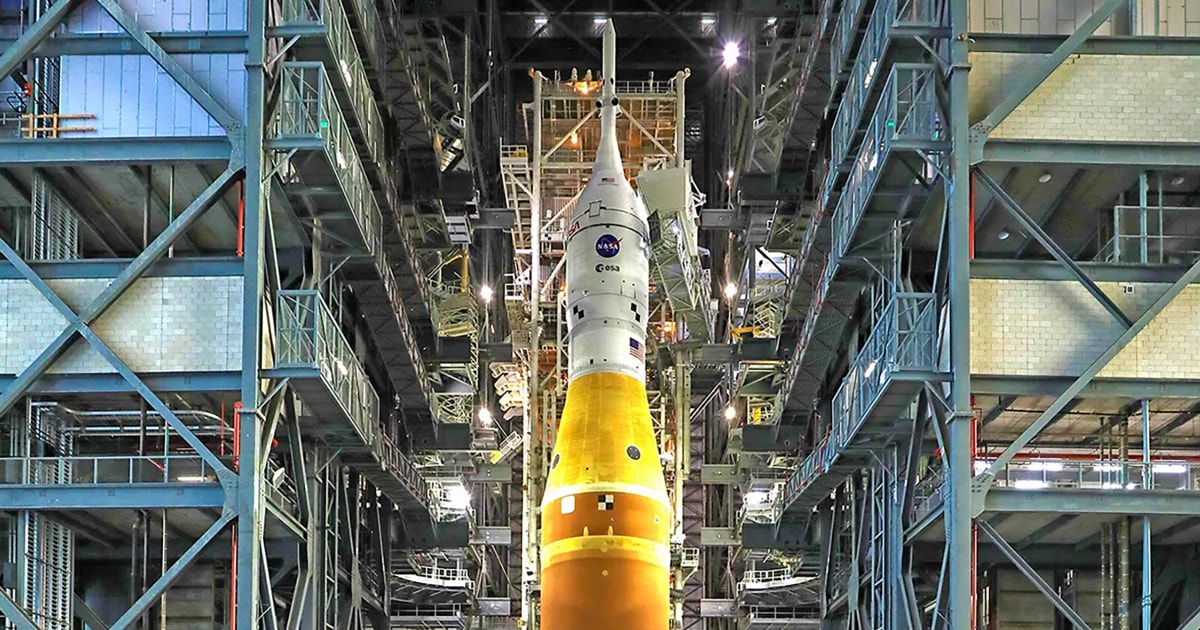
The Dawn of a New Lunar Era: Artemis II and Humanity's Return to the Moon
As NASA readies for a monumental step in its ambitious Artemis program, the world watches with bated breath. This Saturday, a titan of engineering—the 322-foot-tall, 11 million-pound Space Launch System (SLS) rocket—will be carefully rolled out to its launchpad, signaling a pivotal moment for the Artemis II mission. This isn't just another rocket rollout; it's a tangible stride towards humanity's renewed and sustained presence beyond Earth orbit, setting the stage for future lunar landings and eventually, Mars.
Artemis: A New Chapter in Space Exploration
The Artemis program represents NASA's bold strategy to return humans to the Moon, leveraging new technologies and international partnerships to establish a long-term presence. Unlike the Apollo missions, which were defined by quick visits, Artemis aims for sustainability. It seeks to build a lunar economy, foster scientific discovery at the Moon's South Pole where water ice is abundant, and perfect the capabilities needed for future interplanetary travel.
Artemis II, specifically, is designed to be the first crewed flight test of the Orion spacecraft and the SLS rocket. Four astronauts will embark on a historic journey, orbiting the Moon and returning to Earth, verifying critical systems and procedures before the program's ultimate goal: putting humans back on the lunar surface with Artemis III.
The Powerhouse: Space Launch System (SLS)
At the heart of the Artemis missions is the Space Launch System, currently the most powerful rocket in the world. Its sheer scale—standing taller than the Statue of Liberty and capable of lifting unprecedented payloads—underscores the ambition of the program. The Saturday rollout to the launchpad is a meticulously planned operation, a critical dress rehearsal that ensures all systems are go for a mission of such complexity and significance.
This rocket is not merely a vehicle; it's an emblem of human ingenuity and our relentless drive to push the boundaries of what's possible. It embodies decades of engineering expertise, a testament to the thousands of individuals who have contributed to its design, construction, and testing.
Beyond the Moon: Mars and Beyond
While the immediate focus is on the Moon, the vision of Artemis extends far beyond our nearest celestial neighbor. The technologies and operational experience gained through lunar missions are vital stepping stones for future human missions to Mars. Developing habitats, life support systems, and deep-space communication networks in the harsh lunar environment provides invaluable lessons for the even greater challenges of a Martian voyage.
The establishment of the Lunar Gateway, a small space station orbiting the Moon, will further facilitate this long-term strategy, serving as a re-fueling station and outpost for astronauts and scientific instruments, allowing for greater flexibility and reach into deep space.
A Collective Human Endeavor
The return to the Moon through Artemis is not solely an American endeavor. It is a collective human aspiration, involving international partners and commercial entities, all contributing to a shared future in space. As this colossal rocket makes its slow, deliberate journey to the launchpad, it carries not just the hopes of a nation, but the dreams of humanity for a new era of exploration, discovery, and ultimately, expansion into the cosmos.