The Greenland Gambit: Trump's Tariff Threat and the Redrawing of Geopolitical Lines
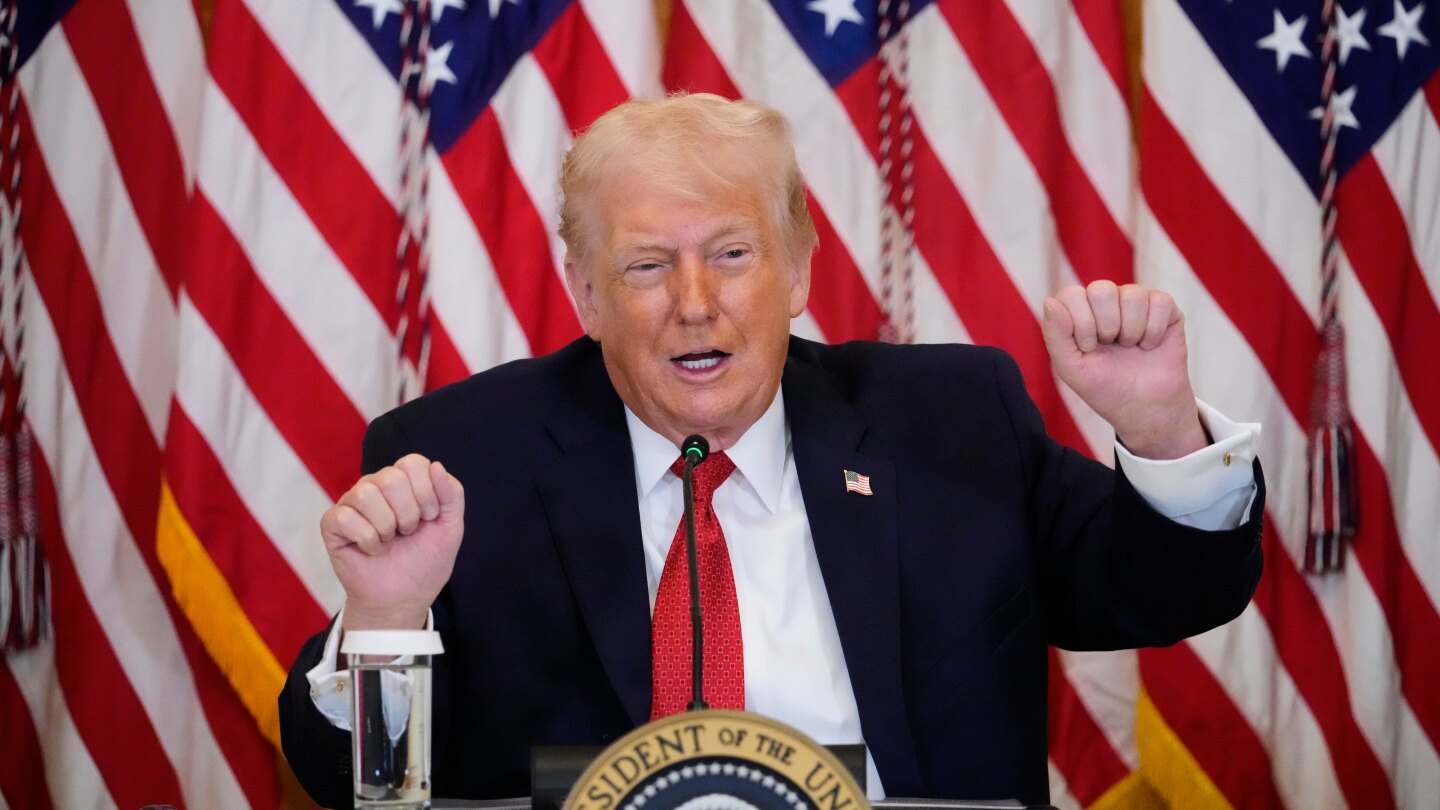
In a move that has sent ripples through international diplomacy, U.S. President Donald Trump has suggested the possibility of imposing tariffs on countries that do not support the United States' long-stated desire to control Greenland. This declaration, made without specific details, elevates a previously dismissed territorial ambition into a potential cornerstone of American economic foreign policy, challenging established norms and raising critical questions about sovereignty, alliances, and the future of global trade.
A Persistent Obsession: Trump's Greenland Ambition
For months, President Trump has openly mused about the United States acquiring Greenland, a vast, resource-rich, and strategically vital autonomous territory of Denmark. Initially met with widespread disbelief and even ridicule, particularly from Danish officials who emphatically stated Greenland was "not for sale," the idea now appears to be moving from hypothetical discussion to a leverage point in international relations. The White House's persistent interest underscores a deeper, long-standing strategic value attributed to the world's largest island.
Greenland's Geopolitical Chessboard Significance
Greenland is far more than a vast expanse of ice. Its strategic importance dates back to World War II, when it served as a crucial refueling stop and surveillance post. In the modern era, its significance has only magnified:
- Arctic Dominance: As Arctic ice melts, new shipping lanes and access to vast untapped natural resources (rare earth minerals, oil, gas) are opening up. Control of Greenland would grant the U.S. unparalleled access and influence in this increasingly contested region, where Russia and China are expanding their presence.
- Military & Security: Thule Air Base, the northernmost U.S. military installation, is already a critical component of North American and global missile defense systems. Direct control of Greenland would solidify U.S. military projection and early warning capabilities in the North Atlantic.
- Economic Potential: Beyond strategic minerals, Greenland possesses significant potential for fishing, tourism, and possibly hydroelectric power, offering long-term economic benefits.
- Climate Change Research: Greenland is at the forefront of climate science, with its ice sheet being a critical indicator of global climate change. Direct U.S. involvement could enhance research and monitoring efforts.
The Tariff Threat: An Unprecedented Diplomatic Weapon?
What makes President Trump's latest pronouncement particularly alarming is the proposed method of enforcement: tariffs. This is not a conventional diplomatic strategy for territorial acquisition. Traditionally, such matters are handled through treaties, purchases (as with Alaska), or, regrettably, conflict. The use of economic coercion to pressure sovereign nations into supporting a territorial claim sets a dangerous precedent:
- Erosion of Sovereignty: It implies that a nation's territorial integrity, or that of its autonomous regions, can be leveraged by external economic pressure, undermining fundamental principles of international law.
- Strained Alliances: The threat of tariffs against allies, particularly those within NATO or the EU, could severely strain existing relationships, creating divisions where unity is paramount. Denmark, a staunch U.S. ally, finds itself in an awkward and potentially hostile position.
- Global Trade Disruption: Expanding the scope of tariffs beyond trade imbalances to geopolitical 'support' risks further destabilizing the global trading system, which is already reeling from ongoing trade disputes.
- Dangerous Precedent: If the U.S. successfully employs tariffs to achieve territorial objectives, it could embolden other powerful nations to use similar tactics, leading to a more chaotic and coercive international landscape.
International Fallout and Future Implications
The international community is likely to react with a mix of concern and condemnation. Denmark, as the sovereign nation, is unlikely to capitulate to such pressure, potentially leading to a diplomatic standoff. European Union nations, already wary of U.S. trade policies, may see this as another attempt to fracture transatlantic relations. Russia and China, both keenly observing developments in the Arctic, could view this as either an opportunity to exploit Western disunity or a dangerous escalation of great power competition.
Domestically, the proposition has drawn bipartisan concern, suggesting that even within the U.S., the strategy is seen as unorthodox and potentially counterproductive to national interests. The long-term implications are profound: a shift towards a more transactional and less rules-based international order, where economic might can be wielded directly to redraw maps, rather than merely influence policy.
Conclusion: A New Era of Geopolitical Coercion?
President Trump's tariff threat over Greenland marks a significant departure from conventional diplomacy, pushing the boundaries of economic statecraft into the realm of territorial ambition. While the immediate outcome remains uncertain, the precedent it threatens to establish could fundamentally alter how nations interact, challenging the very concepts of sovereignty, alliance loyalty, and the sanctity of international agreements. The world watches to see if this represents an isolated, audacious gamble or the dawn of a new, more coercive era in global geopolitics.