The Silent Ascent: SpaceX's NROL-105 Mission Redefines National Security in Orbit
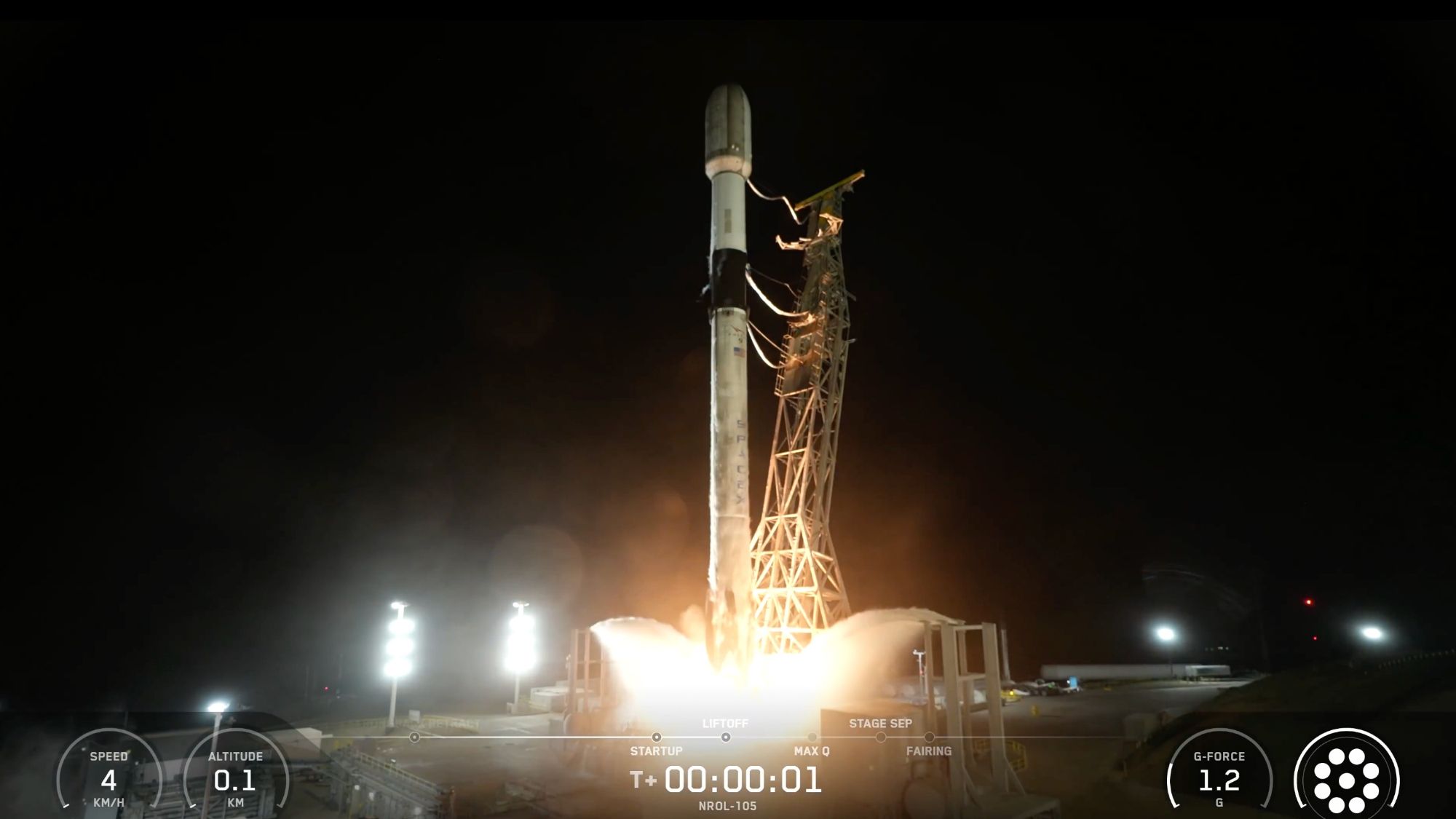
In a stark demonstration of evolving national security paradigms, SpaceX successfully launched its first national security mission of the year on Friday night (Jan. 16), deploying a crucial batch of U.S. spy satellites into orbit from California. The NROL-105 mission, executed with precision by a Falcon 9 rocket, marks another critical milestone in the deepening alliance between commercial space enterprises and governmental defense initiatives.
The New Frontier of Intelligence Gathering
The National Reconnaissance Office (NRO), responsible for operating the nation's reconnaissance satellites, continues to leverage the rapid innovation and launch capabilities of companies like SpaceX. This partnership transcends traditional procurement models, ushering in an era where agility and cost-effectiveness are paramount to maintaining a strategic advantage in space. The NROL-105 payload, though shrouded in the usual classified secrecy, represents the latest generation of orbital assets designed to provide invaluable intelligence, surveillance, and reconnaissance (ISR) capabilities for the United States and its allies.
SpaceX's Unrivaled Cadence: A Game Changer
The Falcon 9 rocket, now a workhorse of both commercial and governmental spaceflight, has proven its reliability and rapid launch cadence time and again. This frequent access to space is not merely a logistical convenience; it is a strategic imperative. In an era of escalating global tensions and rapidly advancing adversary capabilities, the ability to quickly replenish or enhance satellite constellations can be the difference between maintaining informational dominance and facing critical blind spots. SpaceX's vertically integrated model and reusable rocket technology significantly reduce the cost and time traditionally associated with such high-stakes missions, democratizing access to orbit even for the most sensitive payloads.
Beyond LEO: Implications for Global Geopolitics
While the specifics of the NROL-105 satellites remain classified, their deployment underscores a broader shift in geopolitical strategy. The proliferation of advanced sensing technologies and robust communication networks in Low Earth Orbit (LEO) transforms how nations gather intelligence, monitor treaties, and respond to crises. This mission reinforces the United States' commitment to maintaining its lead in space-based intelligence, directly impacting areas from military planning and counter-terrorism to environmental monitoring and disaster relief. The data gleaned from these orbital sentinels provides an unparalleled global perspective, shaping policy decisions and offering a critical edge in an increasingly complex world.
The Future of National Security in Space
Looking ahead, the collaboration between private innovators and national security agencies is poised to deepen further. This trend promises more resilient, dispersed, and sophisticated satellite architectures, less vulnerable to single points of failure or targeted attacks. However, it also raises complex questions regarding commercial control over critical infrastructure, cybersecurity vulnerabilities, and the potential for weaponization of space. NovaPress believes that open dialogue and robust international frameworks will be crucial to navigating this new frontier, ensuring that the advancements made by missions like NROL-105 serve the broader interests of global stability and peace.
SpaceX's NROL-105 mission is more than just another launch; it's a testament to a changing world where commercial prowess is now indispensable to national defense. As humanity continues its ascent into the cosmos, the security of nations will increasingly be decided not just on Earth, but among the stars themselves.