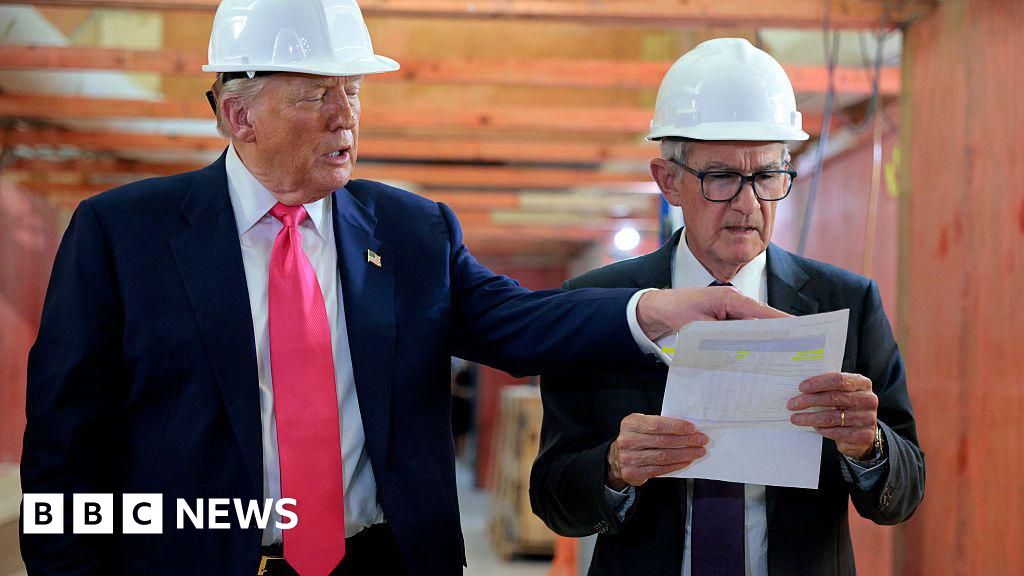
Trump vs. The Fed: A Dangerous Echo from History's Economic Graveyard
President Donald Trump's unprecedented public confrontation with the US Federal Reserve isn't merely a domestic political squabble; it's a chilling historical echo of leaders who challenged central bank independence, often with catastrophic economic consequences.
The bedrock of a stable economy in modern democratic nations often lies in the independence of its central bank. Tasked with managing monetary policy, controlling inflation, and ensuring financial stability, these institutions typically operate at arm's length from political whims to make decisions based on economic data, not electoral cycles. However, the current administration's relentless pressure on the Federal Reserve, particularly Chairman Jerome Powell, to lower interest rates and adopt specific policies, has frayed this crucial separation, prompting uncomfortable comparisons to less stable economies.
When Politics Trumps Prudence: A Global Pattern
History is replete with cautionary tales of political leaders attempting to dictate monetary policy. From Latin America to emerging markets, the pattern is disturbingly similar: a leader, often facing economic headwinds or seeking short-term boosts, demands that the central bank print money, lower rates, or ignore inflation to fuel growth. While seemingly attractive in the immediate term, such interventions almost invariably lead to disaster.
- Turkey under Erdoğan: President Recep Tayyip Erdoğan has famously declared himself an "enemy of interest rates," repeatedly firing central bank governors who resisted his calls for lower rates, even amidst soaring inflation. The result? A volatile lira, diminished investor confidence, and persistent economic instability.
- Argentina's Recurrent Crises: Argentina has a long and painful history of political interference in its central bank, leading to cycles of hyperinflation, defaults, and currency devaluations. Governments often resorted to printing money to finance deficits, eroding the public's trust in the currency and institutions.
- Venezuela's Economic Collapse: While influenced by many factors, the complete subjugation of the central bank to political will in Venezuela, coupled with unsustainable fiscal policies, contributed massively to its hyperinflationary spiral and societal breakdown.
These aren't isolated incidents. They underscore a fundamental truth: when central banks lose their independence, they lose their ability to act as a credible anchor for the economy. Markets react with fear, capital flees, and ordinary citizens bear the brunt through eroded savings and rising living costs.
The US Context: A Unique and Dangerous Precedent
The Federal Reserve, established in 1913, was deliberately designed to be independent, protecting monetary policy from the short-term pressures of electoral politics. Its dual mandate — to achieve maximum employment and stable prices — requires a long-term view that can sometimes be at odds with immediate political desires. Presidents have historically respected this firewall, even when disagreeing with Fed policy, understanding its crucial role in maintaining global confidence in the US economy and the dollar.
President Trump's approach marks a stark departure. His public excoriations of Chairman Powell, demands for specific interest rate cuts, and even reported discussions about removing the Fed chair, push the boundaries of presidential influence in unprecedented ways. This isn't merely about policy differences; it's about challenging the very institutional independence that has underpinned US economic stability for over a century.
The Perilous Path Ahead
The implications of this erosion of central bank independence are profound. Should the Fed be perceived as capitulating to political pressure, several adverse outcomes are possible:
- Loss of Credibility: Both domestic and international investors rely on the Fed's independence as a signal of policy predictability and stability. Undermining this could lead to capital flight and increased borrowing costs for the US government.
- Inflationary Pressures: A politically subservient central bank might be pressured to keep interest rates artificially low, potentially leading to overheating and inflation, eroding purchasing power.
- Market Volatility: Uncertainty about the Fed's independence and future policy direction could introduce significant volatility into financial markets, hindering investment and economic growth.
- Global Contagion: The US dollar's status as the world's reserve currency and the Fed's role in global finance mean that any instability could send ripples across the international economic system.
Safeguarding the Future
The "Fed fight" is more than a fleeting news cycle; it's a critical stress test for one of America's most vital institutions. While presidents are entitled to their opinions on economic policy, the norm has always been to respect the institutional boundaries designed to protect the long-term health of the economy from short-term political expediency. The challenge now is for the Federal Reserve to uphold its independence in the face of intense political pressure, and for the public and other political actors to recognize the grave dangers of allowing such a crucial pillar of economic stability to crumble. The historical echoes are too loud and too clear to ignore: compromise central bank independence, and you risk inviting economic chaos.