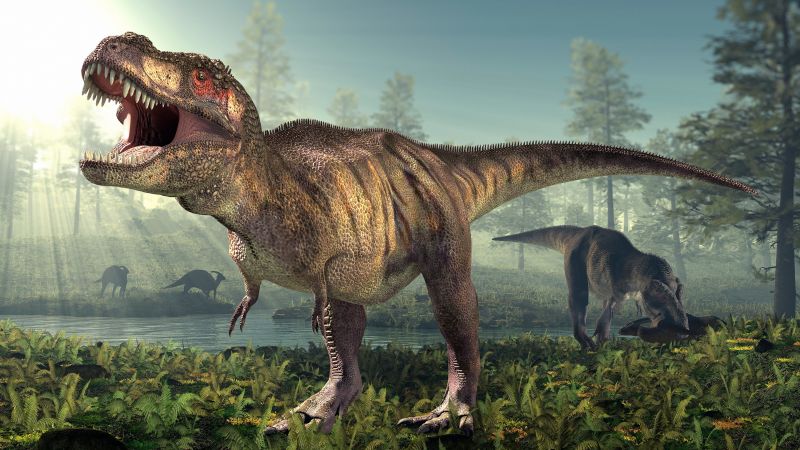
Beyond the Roar: How 35 Years Shaped the Apex Predator
NovaPress Exclusive: New Research Uncovers the True Lifespan and Growth Cycle of Tyrannosaurus Rex
For decades, the Tyrannosaurus rex has reigned supreme in our collective imagination as the ultimate predator—a creature of immense power and terrifying speed. Yet, despite its iconic status, much about its fundamental biology has remained a subject of intense scientific debate. A groundbreaking new study is now challenging long-held assumptions, revealing that the king of the dinosaurs lived significantly longer and took considerably more time to reach its maximum colossal size than previously thought. This revelation isn't just a footnote in paleontology; it fundamentally reshapes our understanding of T. rex's life cycle, its ecological role, and the very dynamics of the late Cretaceous period.
The Slow Burn of a Titan: Unveiling a Longer Lifespan
The common perception, often fueled by earlier scientific models, depicted a T. rex that grew rapidly, exploding in size over a relatively short period, and then dying comparatively young. This new research, however, paints a picture of a more measured, gradual growth trajectory, stretching over approximately 35 years for the creature to achieve its full adult proportions. This extended growth phase implies a longer overall lifespan, allowing the apex predator more years to dominate its ecosystem and reproduce.
This revised timeline has profound implications. A longer-lived T. rex was not merely a fleeting terror but a consistent, enduring force in its environment. It suggests a creature with potentially more complex social structures, extended parental care (if any), and a prolonged period of honing its hunting prowess. It also means individual T. rexes would have witnessed more seasonal changes, more prey migrations, and more inter-species interactions, accumulating a wealth of experience over their extended lives.
Reading the Bones: The Ingenuity of Paleontological Growth Rings
How do scientists arrive at such precise conclusions about creatures that died millions of years ago? The answer lies in the intricate structure of their fossilized bones. Much like trees, many vertebrates lay down annual growth rings within their bone tissue, a process known as osteohistology. These microscopic rings, visible under specialized examination, provide a chronological record of an animal's life, detailing periods of rapid growth and slower development.
Previous studies had utilized this technique, but advancements in methodology, coupled with a larger dataset of well-preserved Tyrannosaur fossils, have allowed researchers to refine their analyses. By carefully counting and measuring these rings in various T. rex specimens, scientists were able to piece together a more accurate growth curve, revealing the unexpectedly prolonged period required for these titans to reach their full, awe-inspiring size. This meticulous work underscores the sophistication of modern paleontology, transforming fossil bones from mere relics into detailed biological archives.
Ecological Domino Effects: Rewriting the Cretaceous Narrative
A T. rex that takes 35 years to mature significantly alters our understanding of its ecological role. For one, it suggests a substantial energy investment over a longer period to reach adulthood, implying a robust food chain capable of sustaining such slow-maturing giants. It also means that a fully grown T. rex would have been an active predator for many more years, exerting a consistent and powerful selective pressure on its prey populations.
This extended maturation period also raises questions about resource competition. Juvenile T. rexes, which might have occupied different ecological niches, would have spent a longer time in these transitional stages, potentially competing with smaller predatory dinosaurs before eventually ascending to the apex predator role. The slow growth could also be a strategy for attaining immense size, allowing for the development of bone density and muscle mass over an extended period, leading to a truly formidable adult.
The Future of Paleontology: Beyond the Bone Rings
This study serves as a powerful reminder that our scientific understanding of prehistoric life is continuously evolving. Each new discovery, each refinement in analytical technique, peels back another layer of mystery from these ancient worlds. The implications of this research extend beyond T. rex itself, encouraging similar osteohistological studies on other large theropods and colossal dinosaurs, potentially revealing similar patterns of prolonged growth and extended lifespans.
As technology advances and new fossil sites are discovered, we can expect even more surprises from the Mesozoic Era. The T. rex, once seen as a quickly maturing brute, is now understood to be a creature of gradual development and enduring power, a testament to the complex and dynamic life cycles that defined the age of dinosaurs. The king, it seems, took its time to truly earn its crown.