Azure Warning: The Sudden Blue Transformation of Earth's Largest Iceberg Signals a Deeper Climate Crisis
For decades, Iceberg A-23A was a quiet sentinel. Now, its vibrant blue hue screams a warning, echoing scientists' fears of a rapidly accelerating environmental shift.
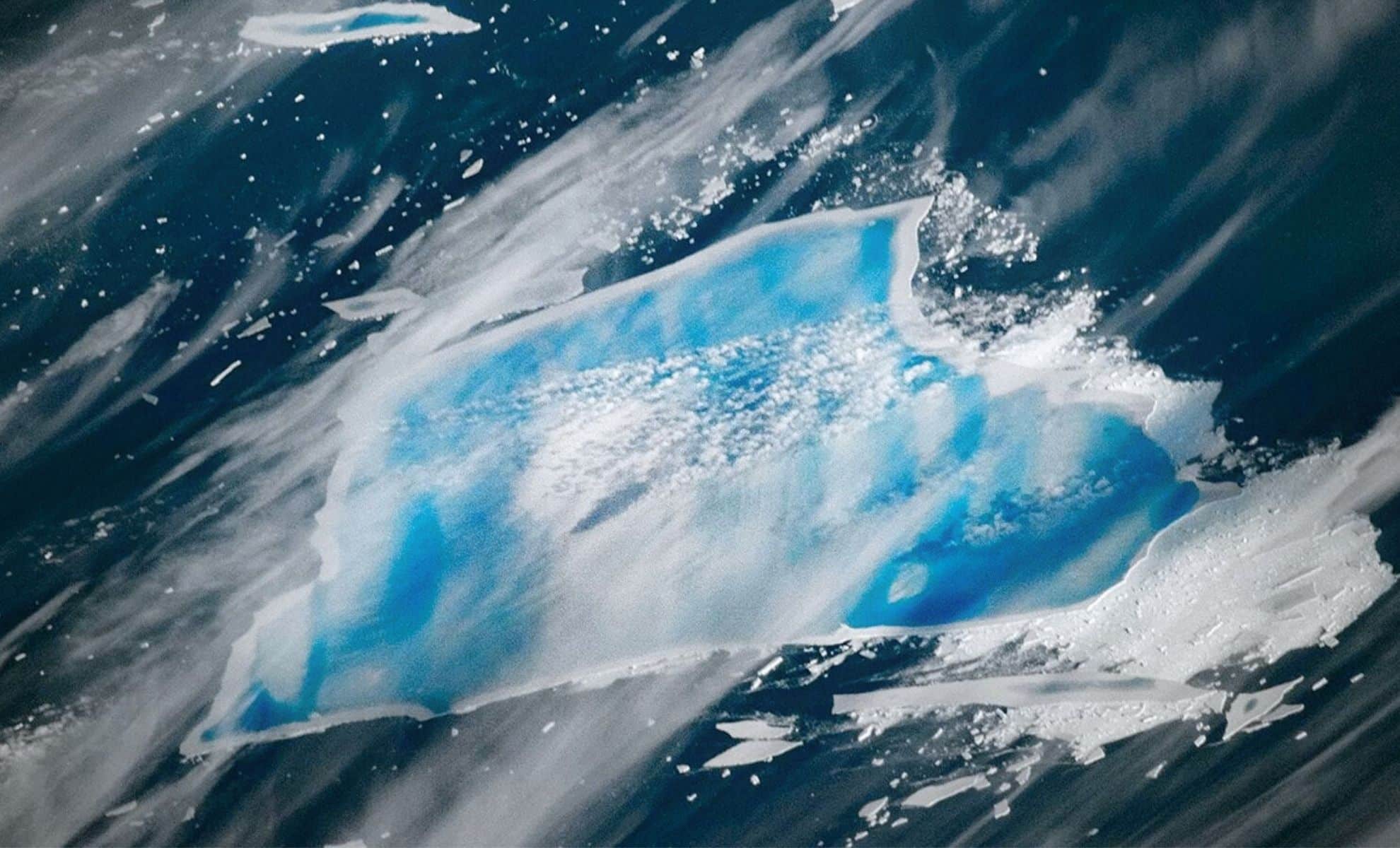
Once an obscure entry in scientific logs, a colossal slab of ice known as A-23A has seized global attention. For nearly 37 years, this behemoth, the world's largest iceberg at roughly 1,500 square miles (larger than some small countries), lay dormant, a steadfast fixture in the frigid embrace of Antarctic waters. But recent satellite imagery has unveiled a startling transformation: A-23A is no longer the familiar dull white. It has turned a brilliant, ominous blue, a change that scientists are interpreting not as a mere aesthetic shift, but as a potential harbinger of escalating environmental instability.
From Stagnation to Spectacle: The Journey of A-23A
Calved from Antarctica's Filchner Ice Shelf in 1986, A-23A quickly grounded itself in the Weddell Sea. Its immobility made it an anomaly, a persistent landmark rather than a drifting threat. It housed a Soviet research station until 1991, becoming a kind of icy island for human endeavor. Its long slumber ended in late 2020, when a combination of ocean currents and warming water began to gently nudge it free. What began as a slow drift has now accelerated, with A-23A embarking on a trajectory towards the Southern Ocean, an event that would be significant on its own. However, its recent dramatic color change elevates its story from a geographical curiosity to a profound environmental alert.
The Science Behind the Azure: A Cryogenic Warning
The mesmerizing blue of A-23A is not an arbitrary splash of color; it's a direct indicator of its structural state and the forces acting upon it. Standard icebergs appear white because their surface is typically porous, containing air bubbles that scatter all wavelengths of visible light equally. Blue ice, however, is significantly denser. It forms when snow is compressed under immense pressure over thousands of years, squeezing out trapped air and forming large, interlocking ice crystals. When sunlight penetrates this dense, air-free ice, the longer wavelength colors (red, yellow) are absorbed, while the shorter wavelength blue light is scattered and reflected, creating the striking azure hue.
For A-23A to turn blue suggests two critical processes: First, a significant portion of its surface has either melted away, exposing deeper, older, denser blue ice, or it has recently calved, exposing fresh, highly compressed interior ice. Second, and more alarming, it signals a substantial shift in the iceberg's structural integrity, likely due to increased interaction with warmer ocean waters. The meltwater created by this process can refreeze into clear, blue ice, or surface layers might be eroding rapidly to reveal older, purer ice underneath.
Beyond the Blue: Unpacking the Future Implications
The sudden transformation of A-23A is not an isolated phenomenon but a potent symbol within a broader, troubling narrative of accelerating climate change. Scientists are particularly concerned for several reasons:
- Accelerated Melting and Freshwater Influx: As A-23A moves into warmer waters, its rate of melting will intensify. While it won't directly contribute to sea-level rise (as it's already displaced water), the colossal volume of freshwater it releases can disrupt delicate ocean currents, particularly the thermohaline circulation which plays a crucial role in global climate regulation.
- Ecosystem Disruption: The massive release of freshwater and nutrients can impact marine ecosystems. The waters around melting icebergs are often rich in nutrients, potentially leading to plankton blooms, but the sheer scale of A-23A's melt could overwhelm local environments and alter the delicate balance of food webs supporting Antarctic wildlife.
- Indicator of Ice Shelf Instability: A-23A originated from the Filchner Ice Shelf, one of the largest in Antarctica. Its long-delayed and now accelerated movement, coupled with its dramatic color change, could indicate increased instability or melting at the margins of the parent ice shelf and other glaciers, potentially leading to more frequent and larger calving events. This has direct implications for future sea level rise, as land-based ice then flows faster into the ocean.
- Feedback Loops and Global Warming: The increased melting of Antarctic ice contributes to a positive feedback loop. Less ice means less sunlight reflected back into space (lower albedo), leading to more ocean warming, which in turn accelerates ice melt. A-23A's vibrant blue is a stark visual representation of this intensifying cycle.
A Global Call to Action
For decades, A-23A was a static, almost benign presence. Its current journey and startling blue hue transform it into an active, urgent messenger. Scientists warn that this dramatic shift is "the beginning of the end" for a stable cryosphere, hinting at a future where such extreme transformations become commonplace rather than exceptional. The implications are global, affecting everything from ocean ecosystems to coastal communities and global weather patterns.
The vibrant blue of A-23A is not merely a spectacle; it is a stark, visual alarm. It underscores the profound and accelerating changes occurring in Earth's polar regions, urging humanity to heed the scientific consensus and take decisive action against climate change before these silent sentinels become active catalysts for irreversible planetary shifts.