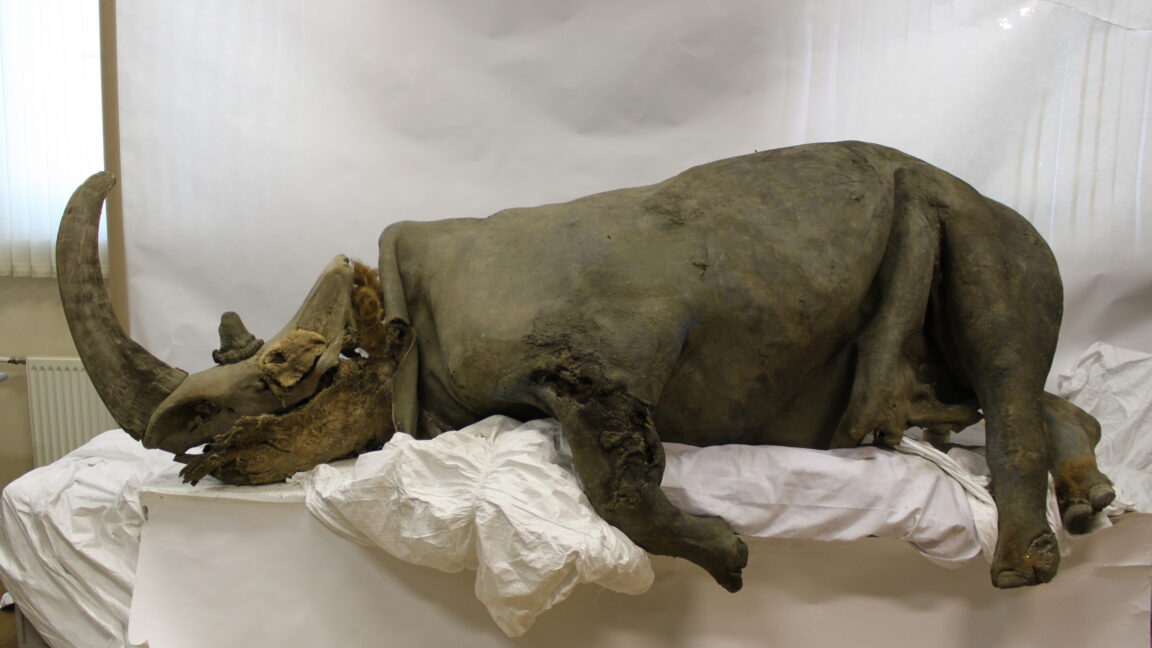
The Ultimate Time Capsule: How a Wolf's Stomach Revealed the Woolly Rhino's Genome
In a discovery that sounds more like a plot from a sci-fi thriller than real-world paleogenetics, scientists have successfully sequenced the complete genome of a woolly rhino – not from frozen permafrost or ancient bones, but from the stomach contents of a 14,400-year-old wolf. This remarkable feat, driven by both serendipity and cutting-edge technology, offers an unprecedented glimpse into the life and eventual extinction of one of the Ice Age's most iconic megafauna.
An Unlikely Archive: The Ancient Meal
The journey of this genetic treasure began millennia ago when a wolf puppy, likely in what is now Siberia, consumed a meal that included a woolly rhino calf. Fortuitously for science, young predators are not known for their meticulous chewing. This 'sloppiness' meant that fragments of the rhino's tissues – skin, muscle, or even internal organs – remained relatively intact, rather than being completely pulverized and digested. Over thousands of years, the remains of the wolf, along with its last meal, became preserved in the unforgiving cold, creating a perfectly sealed, albeit unconventional, biological time capsule.
When researchers unearthed the ancient wolf specimen, they initially sought insights into the wolf itself. However, the presence of well-preserved gut contents presented an extraordinary opportunity. The partially digested rhino remains, protected from environmental degradation by the wolf's stomach and the subsequent freezing conditions, harbored genetic material far superior in quality and quantity to what is typically recovered from bone or hair.
Unlocking Prehistory: The Power of Paleogenomics
Sequencing ancient DNA (aDNA) is an arduous task. Over millennia, DNA degrades into tiny, fragmented pieces, often contaminated by microbial DNA from the surrounding environment. To reconstruct a complete genome from such shattered remnants is a testament to the advancements in paleogenomics. Researchers employed sophisticated sequencing technologies and bioinformatics algorithms to painstakingly piece together the woolly rhino's genetic code, using the relatively pure and concentrated sample from the wolf's stomach.
What does a complete genome tell us? Everything. It provides a detailed blueprint of the animal, offering insights into its physical characteristics – the thickness of its fur, the size of its horn, its metabolic adaptations to extreme cold. More critically, it sheds light on its diet, its evolutionary relationships with modern rhinos, and potentially, the genetic vulnerabilities that contributed to its extinction roughly 10,000 years ago. Was it climate change, hunting pressure from early humans, or a combination of factors? The genome holds clues to these long-standing paleontological mysteries.
Beyond Rhinos: Broader Implications for Science
This discovery extends far beyond the woolly rhino itself. It opens new avenues for sourcing ancient DNA, challenging conventional wisdom about where viable genetic material can be found. The "wolf stomach" method suggests that previously overlooked biological samples, particularly those protected within predator digestive tracts, could serve as rich reservoirs for understanding ancient biodiversity. This could revolutionize the study of extinct species, enabling scientists to reconstruct the genomes of creatures previously thought impossible.
Furthermore, understanding the genetic makeup of megafauna like the woolly rhino provides invaluable data for comprehending past ecosystems and their responses to dramatic climatic shifts. As we face a new era of rapid environmental change, these genetic blueprints from the past can offer crucial lessons for conservation efforts aimed at protecting today's endangered species. Could understanding the woolly rhino's adaptations to a warming climate offer insights for modern rhinos?
The Future of De-Extinction and Beyond
While the concept of "de-extinction" – bringing back extinct species – remains highly controversial and fraught with ethical and practical challenges, a complete, high-quality genome is a fundamental prerequisite. The woolly rhino genome, now available, adds another compelling candidate to the list of species whose revival might theoretically be possible. However, the immediate impact is more grounded: a deeper, more nuanced understanding of Earth's past biological tapestry.
This singular discovery underscores the unpredictable nature of scientific breakthroughs and the incredible potential hidden in the most unexpected places. It's a vivid reminder that sometimes, the most profound answers to Earth's ancient past are found not in grand tombs or colossal fossils, but in the humble, poorly digested remains of a wolf's last meal, preserved by time and chance.