The Silent Sentinel: NASA's MAVEN Orbiter Falls Quiet, Leaving a Void in Mars Exploration
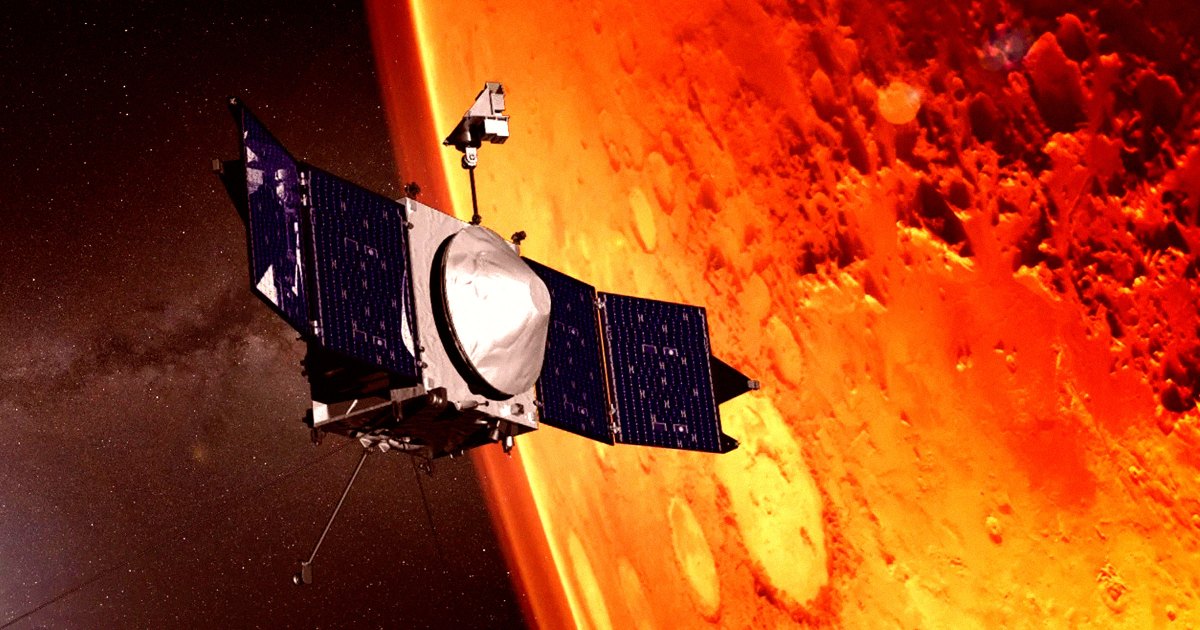
On December 6, a crucial eye peering into the mysteries of the Red Planet's atmosphere blinked out. NASA's Mars Atmosphere and Volatile EvolutioN (MAVEN) spacecraft, a tireless guardian of our understanding of Mars for over a decade, mysteriously went offline. The news, confirmed by NASA planetary science division director Louise Prockter, paints a grim picture: recovery is "very unlikely," signaling the end of a remarkable mission and leaving a significant gap in our ongoing quest to unravel Mars's ancient past and potential future.
A Decade of Discovery: MAVEN's Enduring Legacy
Launched in November 2013 and arriving at Mars in September 2014, MAVEN's primary objective was ambitious: to understand how Mars lost much of its atmosphere and water, transforming from a potentially habitable, wetter world billions of years ago into the arid, cold desert we know today. Its sophisticated suite of instruments was designed to study the planet's upper atmosphere, specifically focusing on the interaction with the solar wind – a stream of charged particles constantly emanating from the Sun.
Over its operational life, MAVEN delivered groundbreaking insights. It mapped the distribution of atmospheric gases, detected aurorae on Mars, and precisely measured the rate at which Mars's atmosphere is currently being stripped away into space. This data was instrumental in painting a clearer picture of Martian atmospheric escape, confirming theories about the role of solar storms in accelerating the process. It provided critical context for understanding the environmental changes that occurred over geological timescales, informing future missions and our understanding of planetary evolution across the cosmos.
The Unexplained Silence: A Mysterious End
The abrupt cessation of communication on December 6 remains shrouded in mystery. While space is an unforgiving environment, and all spacecraft eventually succumb to the rigors of age, radiation, or mechanical failure, the sudden nature of MAVEN's silence is notable. NASA engineers are undoubtedly working to understand what transpired, but Prockter's candid admission of the low probability of recovery underscores the severity of the situation. This isn't just a technical glitch; it appears to be a definitive farewell.
"We're very unlikely to recover it," Louise Prockter, NASA planetary science division director, stated, acknowledging the somber reality facing the agency and the scientific community.
The loss of MAVEN serves as a stark reminder of the inherent risks and incredible engineering feats involved in deep space exploration. Every mission operates on borrowed time, and even the most robust designs eventually yield to the inexorable forces of space.
A Void in Data: Implications for Future Mars Exploration
MAVEN wasn't merely a research satellite; it was a vital part of NASA's Mars infrastructure, providing invaluable atmospheric data and sometimes serving as a communication relay for surface assets like the Curiosity and Perseverance rovers. Its loss creates several significant implications:
- Scientific Data Gap: The continuous, long-term monitoring of Mars's upper atmosphere by MAVEN was unique. No other current orbiter is specifically designed to perform these detailed atmospheric escape measurements. This means a gap in tracking seasonal and solar cycle variations in atmospheric loss, potentially hindering our ability to refine climate models for Mars.
- Context for Surface Missions: Data from MAVEN helped scientists understand the atmospheric conditions impacting rovers and landers, from dust storms to radiation environments. While other orbiters provide some meteorological data, MAVEN's specific focus offered a deeper layer of understanding crucial for future human missions.
- Resource Allocation: The unexpected loss of a long-duration mission might necessitate a re-evaluation of priorities and resources within NASA's planetary science division, potentially accelerating plans for future atmospheric observation missions or shifting the focus of existing ones.
While the scientific community will feel MAVEN's absence keenly, Mars remains a bustling hub of international exploration. Missions like NASA's Mars Reconnaissance Orbiter (MRO) and Mars Odyssey, ESA's Mars Express, and China's Tianwen-1 orbiter continue to gather data, providing a multifaceted view of the planet. Surface assets like Perseverance, Curiosity, and the InSight lander (though inactive, its data is still invaluable) add to this rich tapestry of information. However, MAVEN's specialized role in atmospheric dynamics will be difficult to replace immediately.
Looking Ahead: The Resilient Spirit of Exploration
The silence from MAVEN is a moment of reflection and sadness for those who dedicated years to its success and benefited from its data. Yet, the spirit of Mars exploration is one of resilience and relentless curiosity. The insights MAVEN provided will continue to shape our understanding of planetary atmospheres, not just on Mars but potentially on exoplanets as well.
NASA and its international partners will undoubtedly adapt, leveraging existing assets and planning new missions to fill the void and continue the monumental task of decoding Mars's past, understanding its present, and preparing for humanity's eventual arrival. While MAVEN's mission has ended, its legacy of discovery will continue to inspire the next generation of Martian explorers.