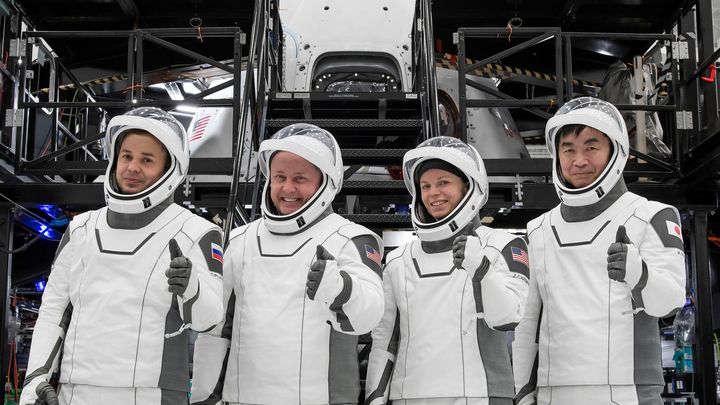
Crisis Above: Crew-11's Urgent Medical Evacuation Reaffirms the Peril and Progress of Spaceflight
January 13, 2026 – The vast, silent expanse of space is a frontier of dreams, but also one of profound challenges. Today, that reality came into sharp focus as NASA confirmed the urgent medical evacuation of astronauts from the International Space Station (ISS). The four members of SpaceX's Crew-11 mission are "go" for a critical departure aboard a SpaceX Dragon spacecraft on January 14, marking a rare and complex operation that underscores both the inherent risks of human spaceflight and the remarkable capabilities developed to mitigate them.
The Unforeseen Emergency: A Glimpse into ISS Protocols
While the specifics of the medical emergency remain undisclosed, the decision to initiate an immediate return highlights the robust, albeit rarely invoked, emergency protocols in place for the ISS. Astronauts undergo rigorous health screenings before, during, and after missions, but the unique environment of microgravity can present unexpected medical challenges. From radiation exposure and bone density loss to fluid shifts and the possibility of acute illness, the human body in space is a delicate system under constant stress.
For decades, any major medical issue on the ISS would have posed an existential dilemma, with limited return options. The advent of commercial crew programs, particularly with SpaceX's Dragon, has fundamentally reshaped this landscape. The Dragon, designed for crew transport, offers a more flexible and, crucially, a quicker return capability than previous systems, making an evacuation like Crew-11's a logistically complex but ultimately viable option.
SpaceX Dragon: The Lifeline from Low Earth Orbit
The reliance on the SpaceX Dragon for this critical mission is a testament to the maturation of commercial spaceflight. What began as a resupply vehicle has evolved into a reliable human-rated spacecraft, capable of autonomous docking, extended stays, and rapid returns. Its ability to undock and deorbit within hours, if necessary, provides a crucial safety net for astronauts.
- Rapid Response: Unlike traditional capsule systems that might require more extensive preparation, Dragon's readiness for departure significantly shortens the time from crisis detection to crew return.
- Comfort & Safety: While not designed as an ambulance, its pressurized capsule and life support systems are adequate for managing a patient during the relatively short journey back to Earth.
- Operational Flexibility: This event demonstrates the inherent flexibility of commercial vehicles to adapt to unforeseen circumstances, a cornerstone of sustainable space operations.
Implications for Future Deep Space Missions
The Crew-11 evacuation serves as a powerful case study for missions extending far beyond Low Earth Orbit. As humanity sets its sights on the Moon (Artemis program) and eventually Mars, the challenge of medical emergencies escalates exponentially. A rapid return from lunar orbit or a Mars transit would be impossible with current technology, requiring entirely new paradigms for onboard medical treatment, long-term health monitoring, and even autonomous surgical capabilities.
This incident will undoubtedly prompt further review and refinement of:
- Onboard Medical Facilities: Enhancing the scope and sophistication of diagnostics and treatment available in space.
- Autonomous Medical Systems: Developing AI-driven diagnostics and robotic assistants for situations where Earth-based doctors are too far away for real-time guidance.
- Crew Training: Increasing medical training for all astronauts to handle a wider range of emergencies.
- Redundant Return Systems: Exploring various methods for rapid egress, even from highly remote locations.
The Human Element: Bravery Under Pressure
Beyond the technology and protocols, this event highlights the incredible resilience and bravery of astronauts. Facing a medical crisis hundreds of miles above Earth, confined to a small module, requires immense mental fortitude. The swift and coordinated response from ground control, coupled with the professionalism of the Crew-11 members and their ISS colleagues, exemplifies the collaborative spirit essential for space exploration.
As the SpaceX Dragon prepares to undock, carrying its precious cargo back to Earth, the space community watches with bated breath. This medical evacuation, while a concerning event, ultimately reinforces the commitment to astronaut safety and serves as a vital learning experience, propelling us closer to a future where humanity can venture even further, more safely, into the cosmos.