The Million-Sun Enigma: Astronomers Grapple with a 'Mysterious Disruptor' and its Black Hole Heart
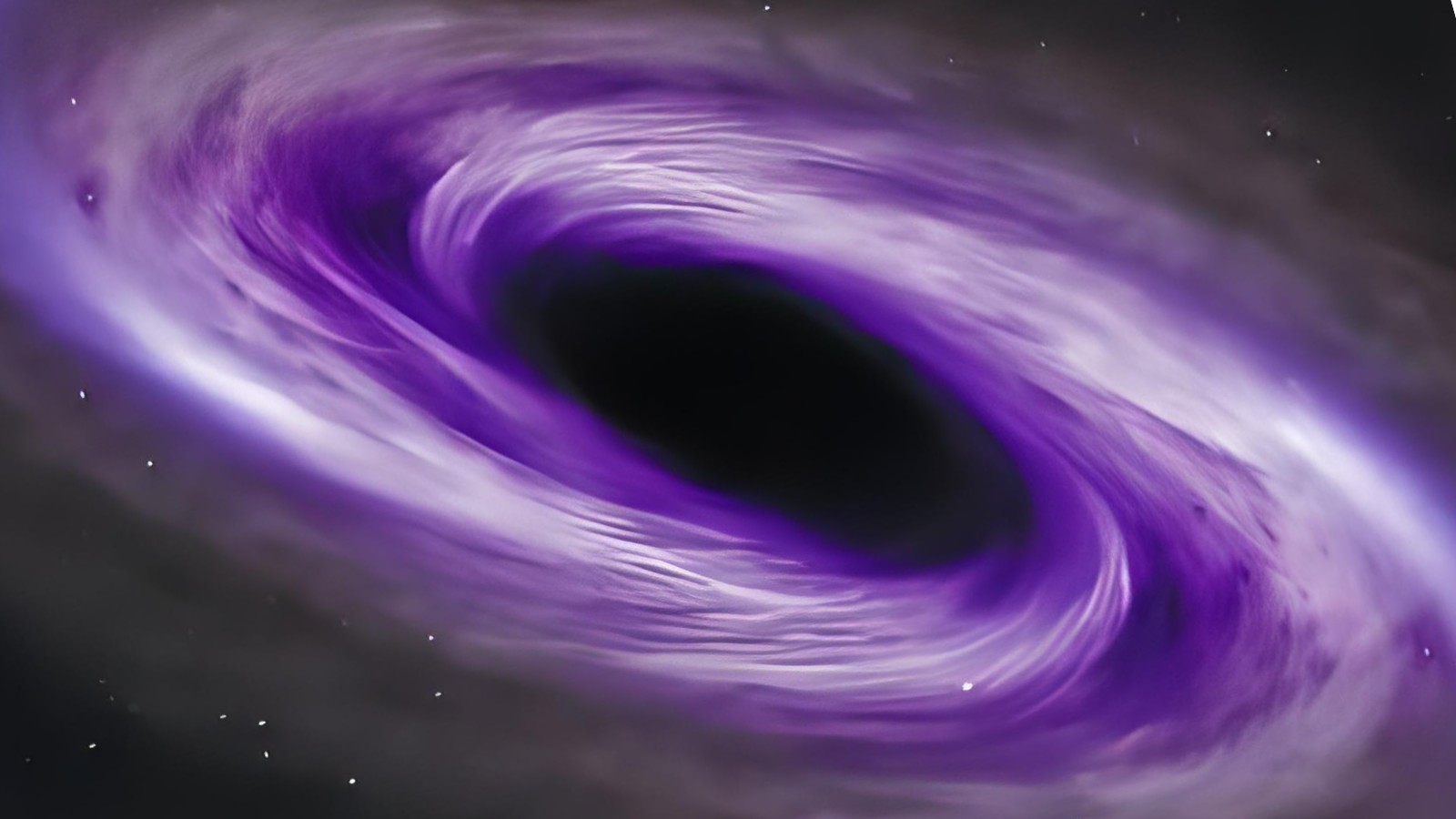
In the vast, inky canvas of the cosmos, where the familiar dance of stars and galaxies often tells a predictable story, a new protagonist has emerged that shatters established narratives. Astronomers are currently grappling with an astronomical anomaly so profound, so utterly unprecedented, that it has been dubbed a "mysterious disruptor." This colossal, completely dark body, boasting an unfathomable mass equivalent to one million suns and potentially harboring a black hole at its core, represents a cosmic riddle that continues to baffle and intrigue. The initial assessment is startling: "This is a structure we've never seen before, so it could be a new class of dark object." NovaPress delves into the heart of this enigma, exploring its implications for our understanding of the universe.
Unveiling the Unseen: The Initial Discovery and Its Peculiarities
The discovery of this celestial behemoth wasn't through the familiar glow of starlight, but rather through the subtle gravitational whispers it exerts on its surroundings. Unlike galaxies teeming with stars or even vast nebulae, this object emits virtually no light across the electromagnetic spectrum, rendering it effectively invisible to conventional telescopic observations. Its mass, estimated at a staggering one million times that of our Sun, places it firmly in the category of a supermassive structure, typically reserved for the central black holes of large galaxies or entire clusters of stars. Yet, its "dark" nature defies these classifications. Scientists are not merely observing a distant anomaly; they are witnessing a cosmic entity that challenges the very definitions of astrophysical objects we have painstakingly assembled over centuries.
A Black Hole Heart and the Dark Matter Conundrum
One of the most compelling, yet perplexing, features attributed to this disruptor is the strong possibility of a black hole at its core. While supermassive black holes are common at the centers of galaxies, their presence is usually heralded by the energetic accretion disks of gas and dust they consume, or the vigorous activity of surrounding star formation. This "disruptor," however, appears to be an isolated and silent titan. Its existence raises profound questions about the interplay between visible matter, dark matter, and black hole formation. Could this be a primordial black hole, formed in the very early universe, grown to immense proportions without accumulating luminous matter? Or is it a concentration of dark matter, hitherto unobserved, with a seed black hole at its heart, acting as a gravitational anchor? The "dark object" designation itself hints at a composition dominated by non-luminous material, potentially offering a direct observational window into the mysterious realm of dark matter.
Revisiting Cosmology: Implications for Galactic Evolution and Structure Formation
Should this object indeed represent a "new class of dark object," its implications for cosmological models would be nothing short of revolutionary. Current theories of galaxy formation rely heavily on the gravitational scaffolding provided by dark matter halos, within which luminous matter eventually coalesces into stars and galaxies. A million-sun dark object, especially one without an obvious galactic host, forces us to reconsider these foundational principles. Could there be an entire population of such "dark galaxies" or "dark structures" lurking in the cosmic void, hidden from our view? Its very existence suggests pathways for cosmic evolution that we have not yet accounted for, potentially reshaping our understanding of how structure formed in the early universe and how supermassive objects can exist in isolation.
The Path Forward: Advanced Observations and Theoretical Scrutiny
Unraveling the mystery of this disruptor will require a multi-faceted approach. Future investigations will likely involve sustained observations with advanced telescopes capable of detecting subtle gravitational lensing effects, analyzing precise stellar motions in its vicinity, and perhaps even searching for faint, unusual radiation signatures that might indicate exotic particle interactions within the object. Theoretical physicists will be tasked with developing new models that can accommodate such an entity, potentially revising our understanding of dark matter properties or the formation mechanisms of massive black holes. This "dark object" serves as a powerful reminder of how much remains unknown about our universe, pushing the boundaries of scientific inquiry and inviting humanity to look beyond the visible.
As NovaPress continues to monitor developments, the "mysterious disruptor" stands as a testament to the universe's boundless capacity for surprise. It is a beacon of scientific challenge, beckoning astronomers and cosmologists alike to venture into uncharted theoretical territories, promising discoveries that could redefine our cosmic address.