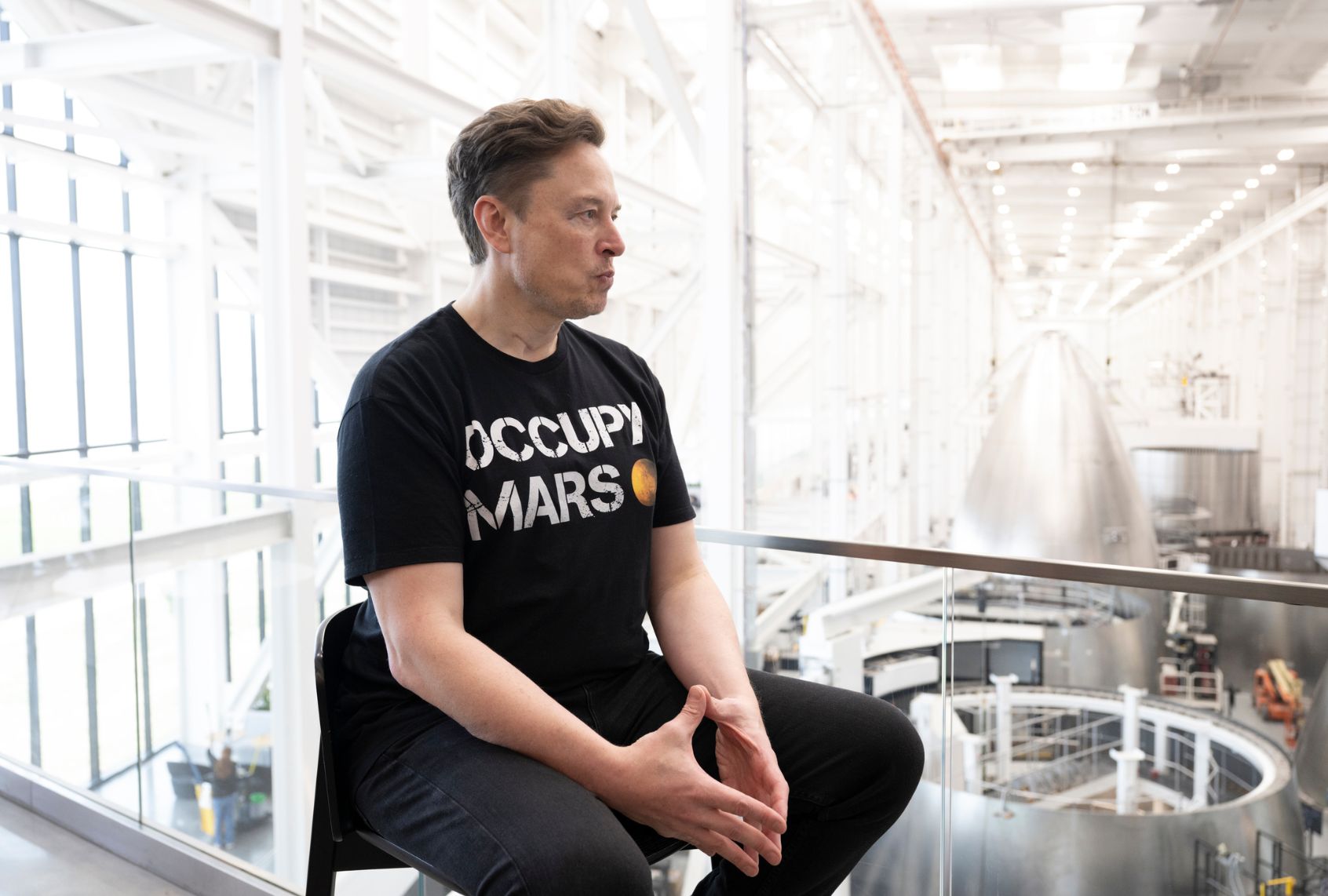
Above the Clouds, Below the Debris: The Unseen Peril SpaceX's Starship Poses to Commercial Air Travel
In the quest to conquer new frontiers, humanity often overlooks the immediate consequences on existing ones. While Elon Musk's SpaceX captivates the world with its audacious Starship project, aiming for Mars and beyond, an unsettling reality is unfolding much closer to home: the gargantuan rocket’s test flights are increasingly encroaching upon commercial aviation airspace, placing pilots, passengers, and crews at unprecedented and unwitting risk.
The Collision Course: Boca Chica and the Busiest Skies
SpaceX’s choice of Boca Chica, a remote outpost on the Texas Gulf Coast, seemed strategic for developing the 400-foot Starship – the most powerful rocket ever built. Yet, "remote" is a relative term. This region, while sparsely populated on the ground, lies beneath or adjacent to established commercial flight paths that crisscross the Gulf of Mexico, connecting major hubs in the U.S., Mexico, and the Caribbean. When Starship launches, these aerial highways become potential danger zones.
Pilots on Edge: "Too Close to the Debris"
The core of the concern, as voiced by numerous pilots and aviation safety experts, revolves around the sheer scale and unpredictable nature of Starship test failures. Unlike traditional orbital launches with more predictable flight profiles, Starship’s early test phases involve ambitious maneuvers and a high probability of "rapid unscheduled disassembly" – a euphemism for explosions. When these occur, thousands of pounds of shrapnel, insulation, and fuel fragments are flung across vast distances, often at high altitudes.
"We're too close to the debris," is a chilling sentiment echoing across flight decks. Pilots describe receiving NOTAMs (Notice to Air Missions) that close airspace, but often only after debris fields have already formed or extended beyond initial projections. The speed and altitude of modern commercial jets mean that a surprise encounter with even small fragments could lead to catastrophic engine damage, structural failure, or depressurization.
Unwitting Participants: Passengers Without Consent
Perhaps the most ethically troubling aspect is the involuntary participation of air travelers. While astronauts volunteer for the risks of spaceflight, commercial airline passengers and crew have no such choice. They board flights expecting a rigorously safe and regulated environment, unaware that their journey might intersect with a multi-ton rocket raining down fragments from the sky. This lack of informed consent raises profound questions about liability, public safety, and the limits of private enterprise in shared public domains.
Regulatory Lag: The FAA's Tightrope Walk
The Federal Aviation Administration (FAA) is tasked with both promoting space commercialization and ensuring the safety of the national airspace. This dual mandate creates an inherent tension. Critics argue that the FAA's current regulatory framework, designed for a different era of spaceflight, is struggling to keep pace with the rapid innovation and high-frequency testing schedule of companies like SpaceX.
Airspace closures and flight path alterations are common, but these reactive measures may not be enough. The dynamic nature of Starship failures, coupled with the vastness of potential debris dispersal, demands a more proactive and expansive approach. Aviation safety organizations are pressing for larger exclusion zones, real-time debris tracking, and more stringent pre-launch safety assessments that fully account for commercial air traffic.
Beyond Boca Chica: A Precedent for the New Space Age
The issues at Boca Chica are not isolated incidents but harbingers of a broader challenge facing the global aviation and space industries. As more private companies enter the space race, and launch sites proliferate, the intersection of air and space traffic will only become more complex. How governments and international bodies address these immediate safety concerns around Starship will set a critical precedent for future space endeavors worldwide.
- Developing sophisticated real-time tracking and prediction models for debris.
- Establishing clear, internationally recognized safety corridors and exclusion zones for all launch activities.
- Enhancing communication protocols between space operators and air traffic control.
- Revisiting and updating existing international aviation and space safety regulations.
Charting a Safer Course
Space exploration fuels human progress and ignites imagination. However, this progress must not come at the cost of established safety standards, particularly those protecting millions of innocent travelers daily. "NovaPress" believes it is imperative for SpaceX, the FAA, and international aviation bodies to collaborate on robust solutions that ensure the skies remain safe for everyone. The promise of Mars should not overshadow the responsibility to protect Earth's immediate atmosphere. The time for proactive dialogue and stringent measures is now, before a tragic incident forces a reckoning.