Beyond Aggression: How Bonobo Evolution Offers a Blueprint for a Non-Violent World
As humans, we often pride ourselves on our advanced civilization, complex morality, and capacity for both immense cruelty and profound compassion. We like to think we are one of a kind, charting a unique course among the species of Earth. But what if our closest relatives held a mirror to a path we largely overlooked, a fundamental instinct shaped by evolution that offers a startling counter-narrative to our often-violent history?
The Unprecedented Peace of the Bonobo
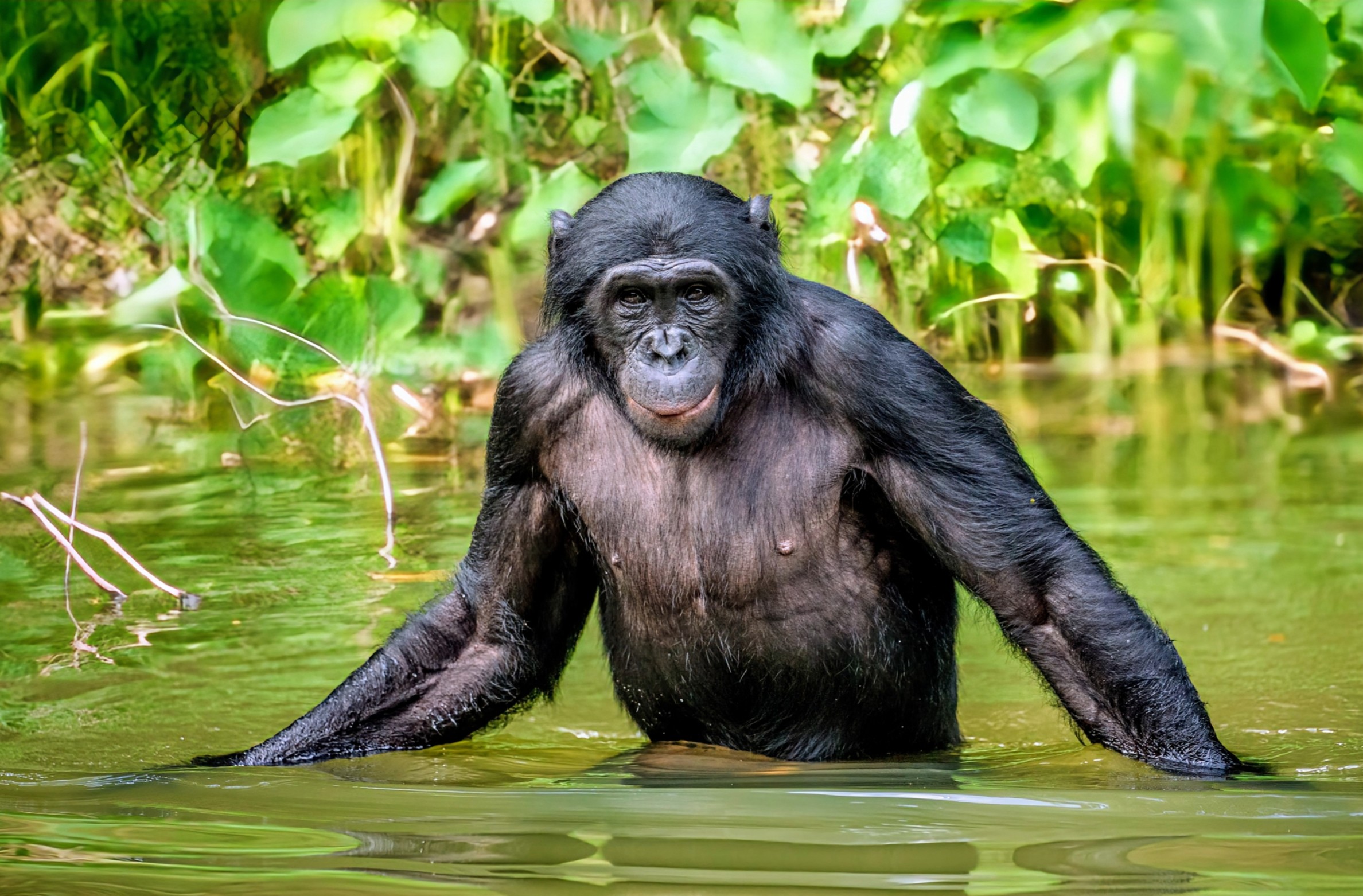
Enter the bonobo, Pan paniscus. While sharing a common ancestor and a striking genetic similarity with humans and chimpanzees, bonobos have diverged in a way that challenges our deeply ingrained assumptions about primate nature. They are, astonishingly, the only known primate species – humans and chimpanzees included – that does not kill its own kind. This isn't just a rare occurrence; it's an observed evolutionary trajectory towards an enduring peace within their species.
Evolution's Path to Harmony: A Bonobo Story
The source of this remarkable pacifism lies deep within bonobo evolution. Unlike their chimpanzee cousins, who often engage in inter-group violence and aggressive displays, bonobos developed a different response to environmental and social pressures. Their evolutionary journey reveals a powerful preference for bonding and group cohesion when faced with threats. Rather than escalating conflicts, bonobos consistently favor paths to finding peace instead of aggression.
This preference manifests in several unique behavioral adaptations. Bonobo societies are matriarchal, with females often holding more power than individual males, fostering a less aggressive social dynamic. Crucially, bonobos employ sexual activity not just for reproduction, but extensively for social bonding, conflict resolution, and stress reduction. These behaviors create intricate social safety nets, diffusing tension before it can escalate into lethal violence. Cooperation in food sharing and communal child-rearing further reinforces these peaceful tendencies, building strong, interconnected communities where aggression is maladaptive.
A Human Reflection: Instincts and Choices
The bonobo story compels us to look inward. If, as the source suggests, humans, "like every other species, run on instincts shaped by evolution," then what does the bonobo's path tell us about our own? Our species has certainly evolved capacities for both cooperation and conflict. The critical difference might lie in the pathways our ancestors took when faced with threats, and how those initial choices cemented certain behaviors over millennia.
While bonobos developed strategies for internal peace, humans have historically grappled with internal and inter-group violence. Yet, the bonobos offer a glimmer of hope, demonstrating that even within the primate lineage, evolution is not a one-way street towards aggression. It is a testament to the immense plasticity of nature and the potential for species to adapt towards coexistence.
Implications for Humanity: A Blueprint for Peace?
Can we, as conscious beings capable of introspection and societal restructuring, learn from our peaceful cousins? Understanding the evolutionary pressures and behavioral responses that led to bonobo harmony might provide insights into mitigating human aggression. It's not about mimicking their every action, but about recognizing that fostering strong social bonds, developing non-violent conflict resolution mechanisms, and prioritizing community well-being can be powerful evolutionary strategies for peace.
The bonobos remind us that while aggression may be an instinctual option, peace and cooperation are equally, if not more, potent forces in the evolutionary toolkit. Their existence challenges us to re-evaluate our own "instincts" and question whether the persistent narrative of human violence is truly an immutable part of our nature, or a path we have, perhaps unwittingly, chosen to reinforce. By studying these remarkable primates, we gain not just knowledge about another species, but a clearer lens through which to examine our own potential for a more harmonious future.
The bonobo's peace is not a utopian fantasy; it's a living reality, a testament to evolution's diverse paths. Perhaps, by embracing their lessons, humanity can consciously choose to write a new chapter in its own evolutionary story, one where peace becomes our most profound and enduring instinct.