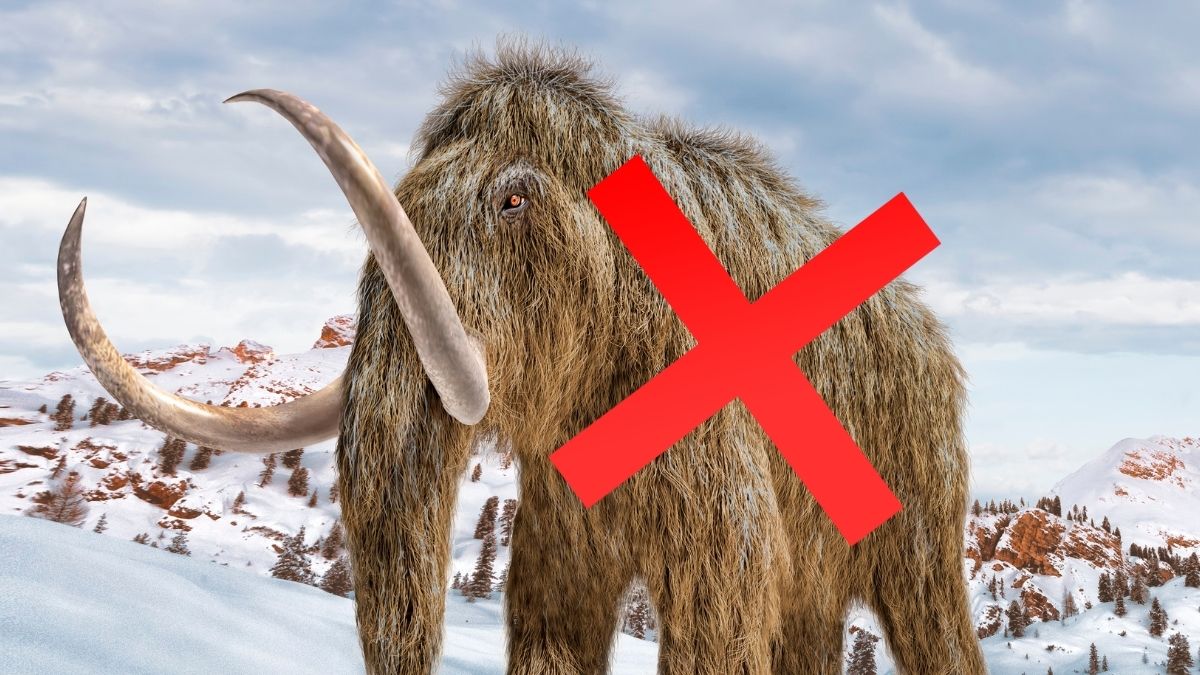
70-Year Mammoth Mystery Unravels: How a Museum's Prized Bones Revealed an Astonishing New Truth
For seven decades, a museum believed it held the fossilized remains of a majestic woolly mammoth. The recent revelation not only challenges this long-held assumption but sends ripples through our understanding of prehistoric life and the very nature of scientific discovery.
A Legacy of Misinterpretation: The Initial Discovery
The story begins with archaeologist Otto Geist, who uncovered these remarkable bones, specifically two epiphyses, many decades ago. In the context of the region and the prevailing scientific knowledge of the time, the identification as woolly mammoth seemed logical, almost inevitable. Woolly mammoths were iconic giants of the Ice Age, their remains common across vast swathes of ancient landscapes. It was a comfortable and understandable classification, one that stood unchallenged within the museum's collection for an astonishing seventy years.
Museums are not just repositories of history; they are often active research hubs. However, the sheer volume of specimens, coupled with the slow march of scientific advancement, means that some collections remain untouched for generations. These 'legacy collections' hold immense potential, sometimes concealing surprises that modern analytical techniques are uniquely positioned to uncover.
The Unveiling: A Modern Scientific Detective Story
The precise catalyst for the re-examination of these particular bones is not always dramatic; it can be a curious researcher, a new grant for collection re-evaluation, or simply the application of cutting-edge technology. What is clear is that a new investigation brought fresh eyes and sophisticated tools to bear on the old specimens. Gone are the days when purely morphological comparisons were the final word. Today, scientists can employ a battery of techniques: high-resolution 3D imaging, detailed comparative anatomy using vast digital databases, and, crucially, ancient DNA (aDNA) analysis where organic material permits.
The results were unequivocal and stunning: the bones were not from a woolly mammoth. Instead, they belonged to an entirely different and unexpected animal. While the specific identity of this newly recognized creature remains a tantalizing detail for the full report, the mere fact of such a fundamental misidentification for so long underscores a vital lesson: scientific understanding is an evolving tapestry, constantly being rewoven with new threads of evidence.
Beyond the Mammoth: Implications for Paleontology and Ecosystems
This revelation is far more than a simple correction of an inventory error. The shift from a woolly mammoth to a fundamentally different animal carries profound implications for paleontology and our understanding of prehistoric ecosystems. If the original identification was of a terrestrial megafauna, and the new one turns out to be, for example, a marine mammal, or an ancient reptile, or even a different type of terrestrial animal not previously thought to inhabit that specific region, the impact is significant.
- Redrawing Ancient Maps: A new identification can force paleontologists to reconsider the faunal composition of ancient environments, impacting models of climate, vegetation, and inter-species dynamics.
- Evolutionary Pathways: It might shed light on unknown migratory patterns, range expansions, or even previously unrecognized lineages of animals, potentially altering evolutionary timelines.
- Geological Context: The presence of a different animal might challenge or confirm specific geological strata or depositional environments, providing new insights into the formation of the fossil beds themselves.
The Enduring Role of Museums and the Imperative of Re-examination
This story serves as a powerful testament to the critical role museums play as living archives. Far from static collections, they are dynamic resources waiting for new questions, new technologies, and new generations of scientists. The "mammoth" revelation highlights:
- The Value of Legacy Collections: Older specimens, often collected with less advanced techniques, are goldmines for modern science.
- The Iterative Nature of Science: Science is not about infallible pronouncements but about continuous questioning, refinement, and self-correction. What was believed true yesterday can be disproven today by better evidence or methods.
- Resource Allocation: It underscores the importance of funding and resources for museum collections management, conservation, and ongoing research, not just for new fieldwork.
Looking Ahead: A Call for Renewed Scrutiny
The "mammoth" discovery is likely not an isolated incident. Across the globe, countless museum drawers and shelves hold specimens identified decades or even centuries ago. Each one represents a potential wellspring of new knowledge, a hidden truth waiting to be unveiled by the relentless curiosity of scientists and the ever-advancing toolkit of modern research.
This event should inspire a broader initiative within the paleontological and archaeological communities: a systematic re-evaluation of established collections. The next groundbreaking discovery might not lie buried in uncharted territory, but rather, silently waiting within the familiar confines of a museum's vault, a testament to the fact that even the oldest mysteries can yield the newest revelations.
NovaPress: Bringing you insights from the frontiers of knowledge.