A Glimmer of Hope Amidst the Rubble: Philippines Landfill Disaster Exposes Deeper Crisis
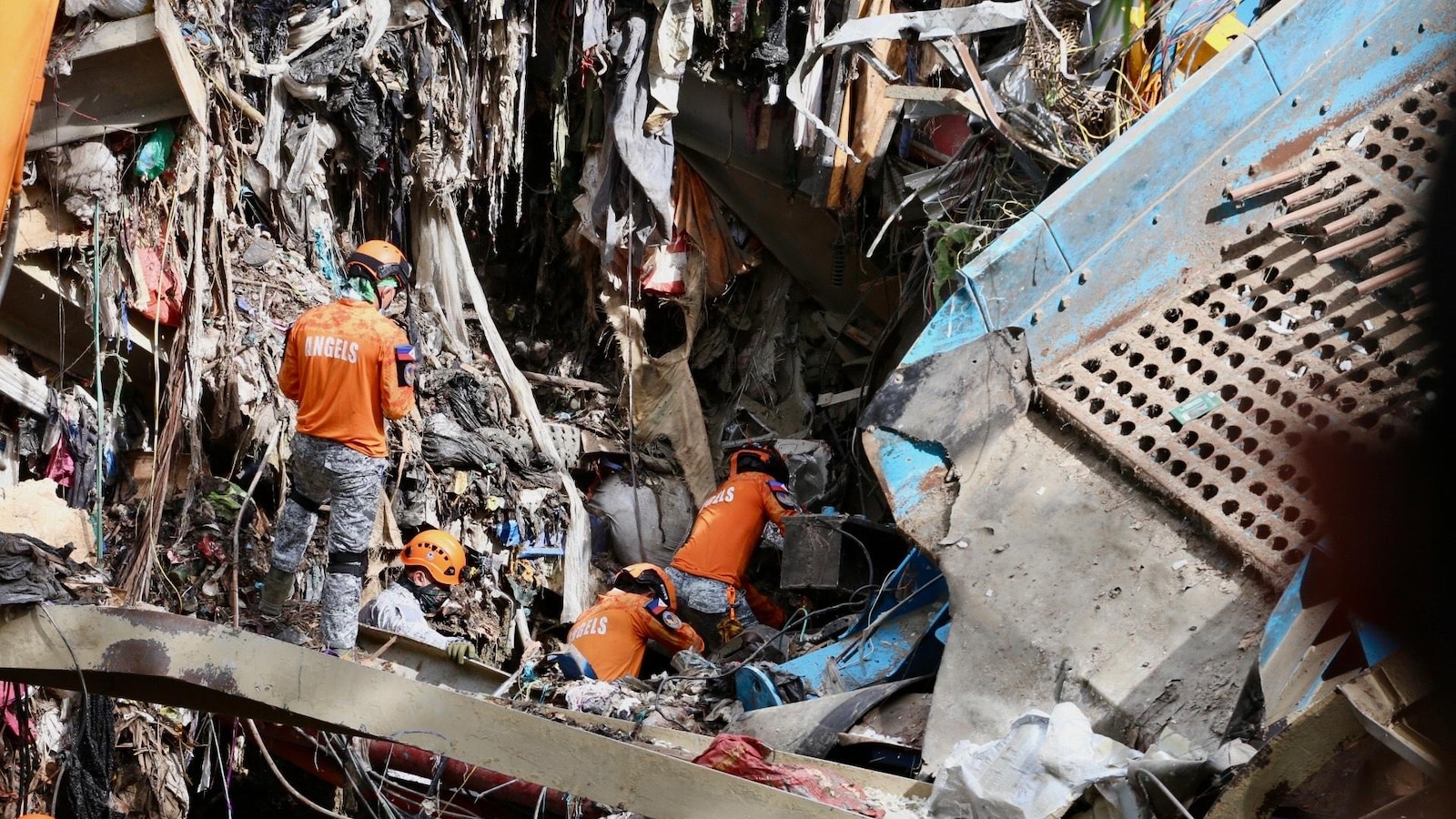
MANILA, Philippines – In the heart of a disaster zone, where a mountain of refuse had swallowed lives and hopes, a faint signal cut through the despair: "signs of life." This extraordinary detection amidst the devastation of a garbage avalanche in a central Philippines landfill has brought a fragile flicker of hope to a community grappling with unspeakable tragedy. While rescuers race against time, the incident casts a harsh light on the Philippines' ongoing struggle with urban waste, poverty, and the dire conditions faced by those living on the fringes of its rapidly expanding cities.
The Avalanche of Despair
The catastrophe struck without warning. A landfill, a colossal testament to the nation's burgeoning waste problem, gave way, unleashing a torrent of garbage that buried homes and people. Initial reports confirmed at least four lives lost, but the true horror lies in the more than 30 individuals still unaccounted for, swallowed by a shifting landscape of debris, plastic, and decay. For the informal settlers and waste pickers who called the perimeter of this toxic mountain home, these landfills are not just disposal sites; they are their livelihoods, their communities, and tragically, sometimes their graves.
A Race Against Time: The Search for Life
The detection of 'signs of life' by rescuers has injected a renewed urgency into an already frantic operation. Working in perilous conditions, where the ground itself is unstable and the air thick with hazardous fumes, search teams are meticulously sifting through tons of compacted waste. Specialized equipment, including ground-penetrating radar and listening devices, are crucial in locating potential survivors trapped beneath the rubbish. Every faint tap, every muffled cry, every anomaly on a sensor becomes a beacon of hope, fueling the tireless efforts of firemen, soldiers, and volunteers.
The challenges are immense. The sheer volume and heterogeneous nature of the debris make rescue efforts incredibly complex and dangerous. The threat of secondary collapses, the difficulty of accessing deeper layers, and the deteriorating health conditions of anyone trapped contribute to a harrowing scenario. Yet, the human spirit, both of the rescuers and those holding onto life beneath the refuse, proves remarkably resilient.
Beneath the Surface: A Deeper Crisis Uncovered
This latest landfill disaster is more than just a tragic accident; it's a symptom of systemic failures in urban planning, environmental governance, and social equity in the Philippines. Rapid urbanization, fueled by economic migration to metropolitan centers, has outpaced the country's capacity to manage its waste effectively. Many landfills are often poorly engineered, hastily constructed, and lack the necessary infrastructure to prevent such catastrophic failures, especially during the heavy monsoon rains that frequently affect the archipelago.
The Invisible Economy of Waste
Moreover, the incident highlights the plight of thousands of "waste pickers" – individuals and families, often impoverished and marginalized, who eke out a living by scavenging recyclable materials from dumpsites. These dangerous environments become their homes and workplaces, a testament to the desperate search for survival where formal employment opportunities are scarce. They are the invisible workforce of the waste economy, bearing the brunt of its dangers while contributing to the informal recycling chain.
Policy Gaps and Future Implications
The disaster serves as a stark reminder of the urgent need for comprehensive and sustainable waste management policies. This includes transitioning from open dumpsites and inadequately managed landfills to modern sanitary landfill facilities, investing in recycling and waste-to-energy technologies, and crucially, creating social safety nets and alternative livelihoods for waste pickers. Without such systemic reforms, these tragic events will continue to punctuate the narrative of development in countries like the Philippines, where the environmental burden disproportionately falls on the most vulnerable.
From Tragedy to Transformation?
As the world watches the harrowing rescue efforts unfold, the hope is that this tragedy will ignite a renewed commitment to addressing the root causes of such disasters. The 'signs of life' found in the rubble are not just about individual survival; they are a metaphor for the possibility of a better future – one where dignity, safety, and sustainable living are not privileges but rights, even for those who live and work at the bottom of the waste hierarchy. The voices from beneath the garbage mountain call for action, demanding a transformation that moves beyond immediate relief to lasting systemic change.