Space's Stark Reality: Urgent ISS Medical Evacuation Puts SpaceX Dragon on Standby, Redefining Orbital Emergency Response
By NovaPress Editorial Board | January 10, 2026
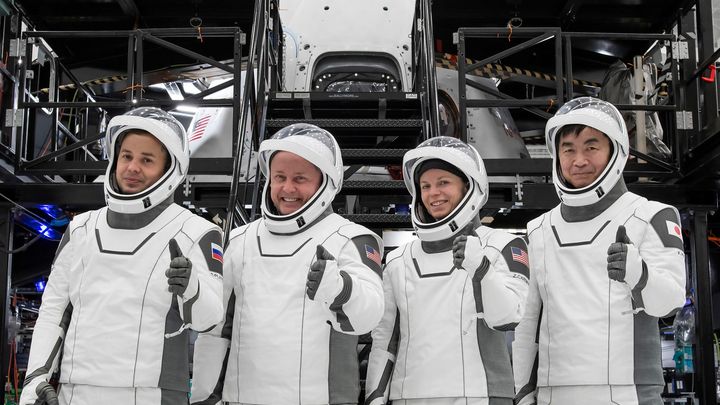
In a stark reminder of the inherent risks of human spaceflight, the International Space Station (ISS) is bracing for a critical medical evacuation. As of Saturday, January 10, 2026, all eyes are on a SpaceX Dragon spacecraft, which has been readied for an urgent return to Earth carrying one of the four Crew-11 astronauts requiring immediate medical attention. This incident underscores not only the fragility of human life in the harsh vacuum of space but also the remarkable evolution of emergency response protocols driven by cutting-edge commercial space capabilities.
The Unforeseen Crisis: A Medical Emergency Above Earth
While specific details regarding the astronaut's condition remain private, the declaration of a medical emergency on the orbiting laboratory triggers a cascade of well-practiced, yet extraordinarily complex, procedures. The ISS, a beacon of international collaboration, is home to a rotating crew of astronauts and cosmonauts who live and work hundreds of miles above Earth. Despite rigorous health screenings and continuous monitoring, the unique physiological stresses of microgravity and radiation exposure mean that medical events, while rare, are always a possibility – and always a severe challenge.
For decades, emergency medical returns from space have been a theoretical cornerstone of mission planning. However, the advent of commercially developed and operated crew transportation systems, particularly SpaceX's Dragon, has dramatically altered the landscape of practical execution. The readiness of the Dragon spacecraft, already docked at the ISS as part of the Crew-11 mission, signifies a pivotal moment in space rescue capabilities.
SpaceX's Dragon: The Orbital Lifeline
The Falcon 9 rocket and Dragon spacecraft have revolutionized access to low-Earth orbit, proving their reliability in ferrying both cargo and crew for NASA and private clients. This current situation, however, elevates its role from routine transport to critical medical transport. The Dragon's capability to deorbit and splashdown, offering a relatively gentle re-entry compared to older capsule designs, is crucial when a patient's condition requires careful handling.
The speed and efficiency with which SpaceX and NASA have prepared for this evacuation highlight robust mission planning and agile response systems. It's a testament to years of development, testing, and the deep integration of commercial partners into the very fabric of national space programs. This rapid response capability, turning a standard crew vehicle into an emergency ambulance, is a monumental technological achievement.
Beyond the Immediate: Future Implications for Space Exploration
This incident, while challenging, offers invaluable lessons for the future of human spaceflight, especially as ambitions turn towards sustained lunar presences and ultimately, missions to Mars.
Refining Space Medicine and Healthcare Protocols
A medical evacuation from the ISS forces a re-evaluation of on-orbit diagnostic tools, treatment capabilities, and the thresholds for emergency return. For future deep-space missions, where a rapid return to Earth is not an option, the development of advanced in-situ medical facilities, tele-medicine capabilities with greater autonomy, and even surgical capabilities will become paramount. This event will likely spur further investment and research into these critical areas.
The Indispensable Role of Commercial Space
SpaceX’s pivotal role in this emergency solidifies the indispensable contribution of private companies to national space endeavors. Their innovation, cost-effectiveness, and operational flexibility are not just enhancing access to space but are now fundamental to ensuring the safety and resilience of human operations in orbit. This partnership model will undoubtedly be crucial for ventures like NASA's Artemis program and other future exploration initiatives.
Emergency Preparedness for Lunar and Martian Journeys
While the ISS is relatively close to Earth, a medical emergency during a mission to the Moon or Mars presents exponentially greater challenges. The lessons learned from this Crew-11 evacuation – particularly concerning rapid vehicle readiness, communication protocols, and medical triage in space – will directly inform the development of emergency systems for these more distant and arduous journeys. It highlights the need for modular spacecraft designs capable of adapting to diverse mission requirements, including emergency returns.
Conclusion: A Testament to Human Ingenuity and Resilience
The ongoing medical evacuation from the ISS is a sobering reminder of the constant vigilance and ingenuity required to push the boundaries of human presence in space. Yet, it is also a powerful testament to our collective capacity for problem-solving under extreme pressure, and the remarkable technological advancements that are making space travel safer and more robust. As the Crew-11 astronaut prepares for their journey home, the incident solidifies a new chapter in orbital emergency response – one where advanced commercial spacecraft stand ready as the ultimate lifeline, guiding humanity deeper into the cosmos, one resilient step at a time.