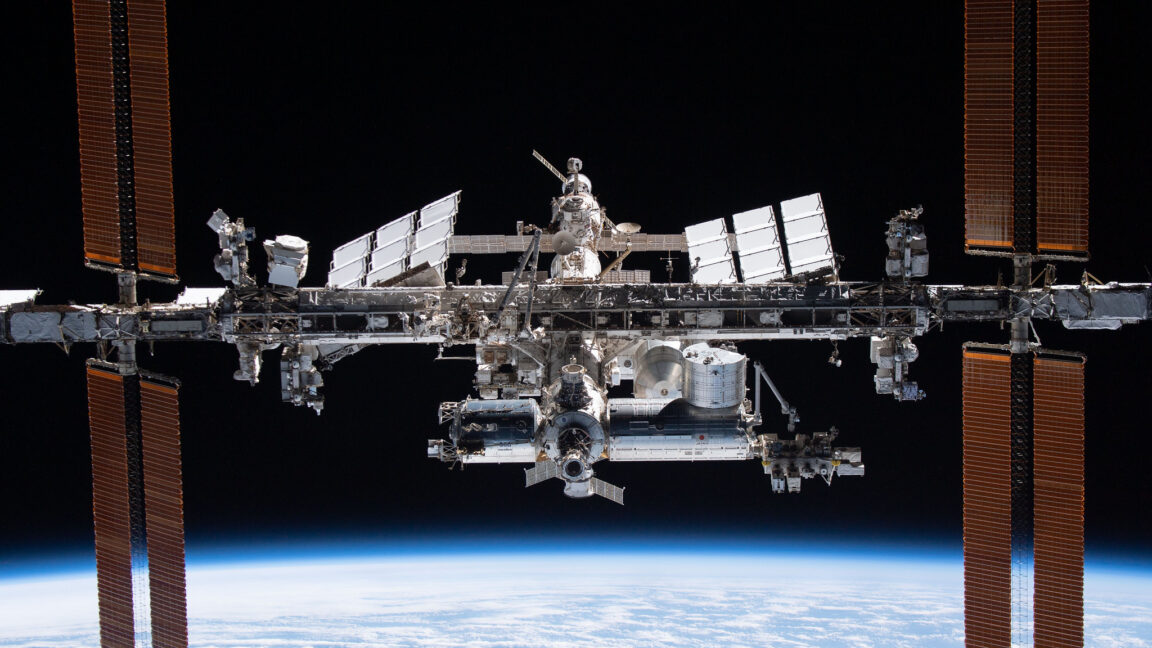
Emergency in Orbit: NASA's Unprecedented Controlled Medical Evacuation from the ISS Signals a New Era for Space Safety
The quiet hum of the International Space Station (ISS) was recently punctuated by an extraordinary directive: a “controlled medical evacuation.” While specific details remain closely guarded by NASA and its international partners, this rare event underscores the inherent risks of human spaceflight and highlights the incredible preparedness of our astronauts and ground teams. The incident, which saw highly trained crew members immediately coming to the aid of their colleague, offers a profound glimpse into the realities of orbital living and the meticulous protocols safeguarding human life 250 miles above Earth.
Beyond the Headlines: Understanding a “Controlled Medical Evacuation”
When discussing medical emergencies in space, it's crucial to differentiate between a routine ailment and an event warranting a “controlled medical evacuation.” This isn't a frantic rescue mission born of sudden catastrophe, but rather a meticulously planned, high-stakes operation. It implies a situation where an astronaut’s medical condition, while perhaps stable, is serious enough to require advanced diagnostic tools, specialized treatment, or prolonged recovery facilities available only on Earth. The ISS is equipped with a comprehensive medical kit, a robust telemedicine system, and crew members trained in advanced first aid, but it is not a fully-fledged hospital capable of addressing every conceivable medical crisis.
The Crucible of Space: Medical Challenges in Orbit
Living and working in microgravity presents a unique array of physiological challenges. Astronauts contend with bone density loss, muscle atrophy, cardiovascular deconditioning, fluid shifts that affect vision, and exposure to increased radiation. Any of these factors can complicate even a minor illness or injury. Medical protocols on the ISS are designed to manage common ailments, provide basic emergency care, and monitor long-term health. However, the decision to initiate an evacuation signifies that the on-orbit capabilities, even with the expert guidance of flight surgeons on the ground, were deemed insufficient for the patient's optimal care.
A Testament to Training: Crew's Immediate Response
The description provided – “The crew is highly trained, and they came to the aid of their colleague right away” – speaks volumes about the rigor of astronaut preparation. Every crew member undergoes extensive training in emergency medical procedures, acting as their own first responders and medical assistants. This intrinsic capability is critical when professional medical help is literally an ocean and an atmosphere away. Such incidents not only test the human element of spaceflight but also validate the countless hours spent preparing for contingencies, demonstrating the cohesion and professionalism essential for survival in the extreme environment of space.
The Mechanism of Return: How an Evacuation Unfolds
While the specifics of this recent event are not public, a controlled medical evacuation typically involves a multi-stage process. First, a thorough on-orbit assessment by the crew, guided by flight surgeons and specialists at mission control, determines the severity and urgency of the condition. If a return to Earth is deemed necessary, preparations would involve utilizing one of the docked spacecraft, such as a SpaceX Crew Dragon or a Soyuz capsule, which serve as lifeboats. The decision involves complex logistical planning, including adjusting the station's schedule, preparing the spacecraft for departure, and ensuring the returning astronaut is as comfortable and medically stable as possible for the journey back through Earth's atmosphere. This delicate dance requires seamless coordination between multiple international space agencies.
Looking Beyond Low Earth Orbit: Implications for Deep Space
This ISS incident, while challenging, occurred in low Earth orbit, where a return journey can be accomplished within hours to a few days. The implications for future deep-space missions – to the Moon under the Artemis program or eventually to Mars – are profound. These missions will be hundreds of thousands or millions of miles from Earth, making a “quick return” impossible. A medical emergency on a Mars transit, for instance, would necessitate on-board treatment for months, if not years. This stark reality drives intense research into advanced autonomous medical systems, compact diagnostic equipment, potential robotic surgical assistants, and enhanced pharmacological capabilities tailored for long-duration missions. The ISS incident serves as a crucial case study, pushing engineers and doctors to innovate solutions for scenarios where Earth's hospitals are simply out of reach.
Innovating for the Inevitable: The Future of Space Medicine
The recent evacuation will undoubtedly spur further investment and research into a host of space medicine advancements. This includes developing more robust artificial intelligence for real-time medical diagnostics, improving telemedicine capabilities to account for significant communication delays in deep space, and engineering advanced countermeasures against the adverse effects of microgravity and radiation. Furthermore, the psychological impact of medical emergencies on isolated crews in deep space demands new approaches to mental health support and team cohesion. Each such event provides invaluable data, shaping the future of human exploration and reinforcing the need for continuous evolution in our ability to keep astronauts safe and healthy, no matter how far they venture.
Conclusion
The recent controlled medical evacuation from the ISS serves as a poignant reminder of the fragility of human life even amidst the technological marvels of space. Yet, it also stands as a powerful testament to human resilience, meticulous planning, and the unwavering dedication of those pushing the boundaries of exploration. While the challenges of spaceflight are immense, humanity's drive to explore the cosmos remains undeterred. As we set our sights on distant cosmic horizons, such events reinforce the critical importance of evolving our understanding and capabilities in space medicine, ensuring that safety remains paramount as we journey further into the unknown.