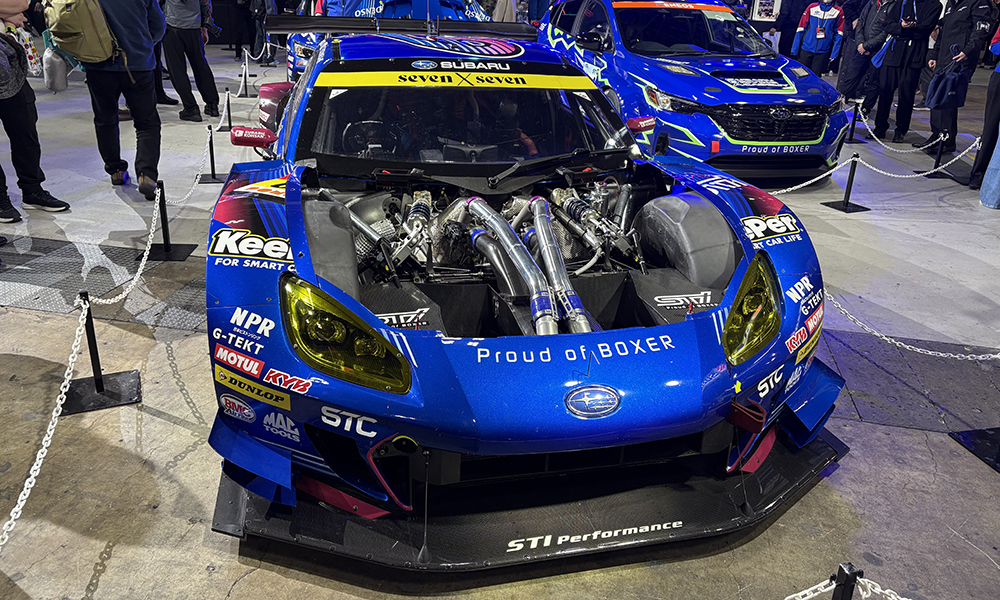
Subaru's Roaring Reinvention: A Deep Dive into the New GT300 Engine and Its Title Ambitions
The roar of a new era is set to echo through the SUPER GT paddock. Subaru, a name synonymous with flat-four prowess and underdog spirit, has officially unveiled the successor to its legendary EJ20 engine – a potent six-cylinder twin-turbo unit destined for its 2026 GT300 challenger. This isn't merely an engine swap; it's a strategic declaration, a bold bet aimed at reclaiming the GT300 title that has eluded the brand since 2021.
The End of an Icon: Remembering the EJ20
For decades, the EJ20 flat-four engine was the beating heart of Subaru's performance division, both on the rally stages and, more recently, in the cutthroat GT300 class. Famed for its distinctive thrum, robust construction, and ability to punch above its weight, the EJ20 powered countless rally victories and secured Subaru's last GT300 championship in 2021 with the BRZ GT300. Its retirement marks the end of an extraordinary chapter, but also highlights the relentless march of automotive technology and the escalating demands of top-tier motorsport.
While successful, the EJ20 faced growing challenges. Its design, while iconic, presented limitations in terms of ultimate power potential, thermal management in high-boost applications, and compliance with ever-tightening regulatory frameworks. In a category where every horsepower and every millisecond counts, standing still is a recipe for falling behind.
A New Heartbeat: The Twin-Turbo Six-Cylinder
The revelation of a newly-developed six-cylinder twin-turbo engine at the Tokyo Auto Salon was met with significant anticipation. While specific technical details beyond its configuration are still under wraps, the move to a six-cylinder platform, likely a horizontally-opposed boxer engine given Subaru's heritage, brings a host of potential advantages:
- Enhanced Power & Torque: More cylinders generally equate to higher displacement potential and a smoother power delivery, crucial for optimal acceleration out of corners. Twin-turbocharging allows for massive power gains across a wider rev range, mitigating the lag often associated with single, large turbos.
- Improved Thermal Management: A larger engine block and increased surface area can aid in better heat dissipation, a critical factor in endurance racing like SUPER GT where engines are pushed to their limits for extended periods.
- Greater Flexibility for Tuning: The new architecture offers engineers more headroom for optimization, allowing finer control over engine mapping, boost pressure, and fuel delivery to extract maximum performance within GT300's stringent balance of performance (BoP) regulations.
- Modern Design: Being a 'newly-developed' unit, it will undoubtedly incorporate the latest advancements in materials science, combustion efficiency, and electronic control systems, offering a cleaner sheet design compared to the decades-old EJ20 architecture.
The Road to 2026: Implications for GT300
The decision to field this sophisticated new engine is a clear statement of intent from Subaru. The GT300 class is incredibly competitive, featuring a diverse array of machinery from global manufacturers. To truly challenge for a championship, a team needs not just a fast car, but a durable, adaptable, and powerful engine at its core.
Balancing Performance with Reliability
While the new engine promises more power, the integration process will be complex. Engineers will face the immense task of perfecting the engine's performance characteristics, ensuring optimal power delivery through the chassis, and crucially, maintaining bulletproof reliability over grueling race distances. The testing phase leading up to the 2026 season will be paramount in ironing out any unforeseen issues.
Competitive Landscape
The twin-turbo six-cylinder places Subaru in a more direct technological rivalry with other leading manufacturers in GT300. It opens up new avenues for aerodynamic optimization and chassis balance that might have been constrained by the previous engine's characteristics. A lower center of gravity, if it is indeed a boxer six, could provide a significant handling advantage.
Beyond the Track: The Future Vision
For Subaru, motorsport isn't just about winning races; it's a vital proving ground for future road car technologies. The development of a modern, high-performance twin-turbo six-cylinder engine for GT300 could hint at broader strategic shifts within the company's powertrain roadmap. Lessons learned from the extreme conditions of SUPER GT – particularly concerning efficiency, durability, and forced induction management – could eventually trickle down into future production vehicles, benefiting everyday drivers.
Conclusion: High Stakes, High Hopes
The retirement of the EJ20 and the introduction of the new twin-turbo six-cylinder engine represent a pivotal moment for Subaru in SUPER GT. It's a clear statement of renewed ambition and a commitment to staying at the forefront of motorsport engineering. With advanced technology, a proven team, and the hunger for victory, Subaru is setting the stage for a thrilling 2026 season. All eyes will be on their new challenger as it aims to roar its way back to the top of the GT300 podium, proving that some legends evolve, rather than simply fade away.