NovaPress Exclusive: 1.4-Billion-Year-Old Air Unveils Earth's Dynamic Past, Defying Expectations
For eons, a vast stretch of Earth's history, spanning from 1.6 to 0.8 billion years ago, has been dubbed the 'Boring Billion'. This period, known as the Mesoproterozoic Era, was long characterized by a seemingly stagnant environment: low and stable oxygen levels, minimal climatic fluctuations, and a slow, almost glacial pace of biological evolution. Textbooks painted a picture of a planet idling, waiting for the dramatic shifts that would usher in complex life. But what if this narrative, cemented in our understanding for decades, was fundamentally flawed?
Unlocking Ancient Secrets: Breathing the Mesoproterozoic
A groundbreaking new study is poised to shatter this long-held perception. An international team of researchers has achieved the near-impossible: they successfully retrieved and analyzed microscopic samples of air trapped in ancient crystals, dating back a staggering 1.4 billion years. The findings, as the scientific community is rapidly discovering, are anything but boring.
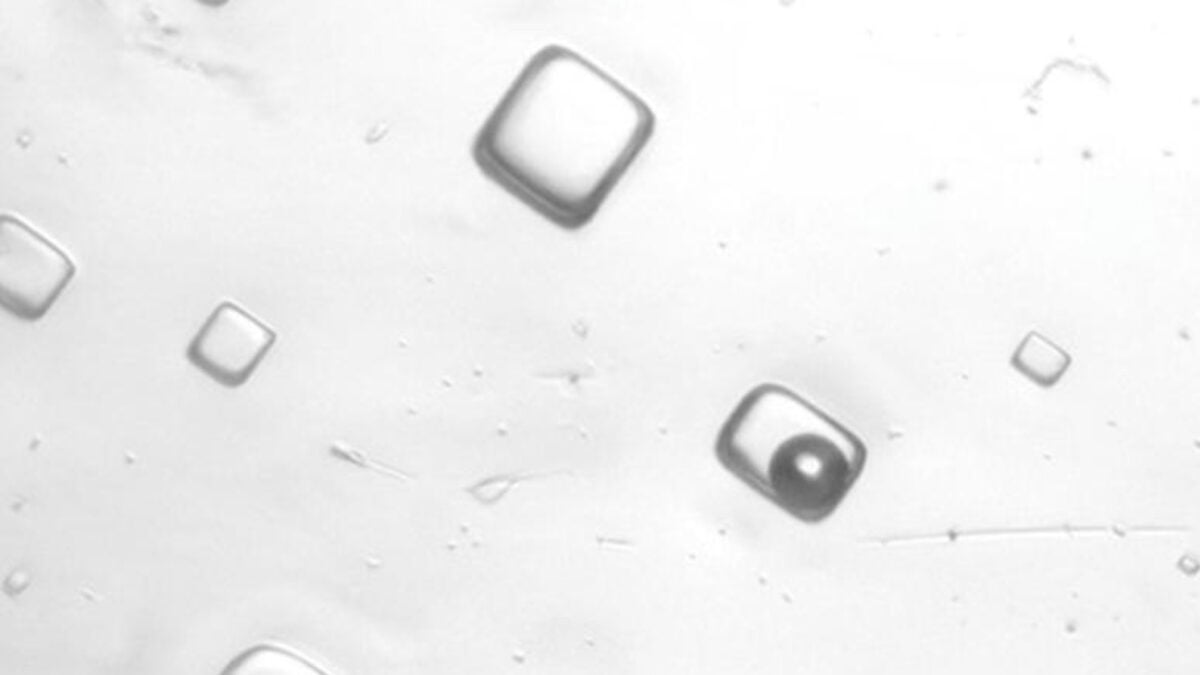
The methodology itself is a marvel of paleoscientific ingenuity. Within certain minerals, such as quartz, tiny bubbles known as fluid inclusions can form, encapsulating minuscule pockets of the atmosphere or water from the time of the crystal's growth. These inclusions act as pristine, time-capsuled archives, preserving the exact chemical composition of the ancient world. Extracting and analyzing these samples requires cutting-edge spectroscopic techniques and an unwavering commitment to precision, offering an unprecedented glimpse into Earth's primordial breath.
A Dynamic Planet: Beyond Stagnation
The core revelation from these billion-year-old air samples is a testament to Earth's inherent dynamism. Far from stable and low, the atmospheric composition during the Mesoproterozoic, particularly in terms of oxygen, appears to have been significantly more variable and potentially higher than previously assumed. While specific details on the exact oxygen percentages await the full publication, the very notion of a fluctuating, rather than static, oxygen regime during this era is a game-changer. This implies a more active interplay between geological processes, volcanic activity, and early photosynthetic life than the "Boring Billion" theory allowed.
Rewriting the Story of Life and Atmosphere
The implications of this discovery ripple through multiple scientific disciplines. For atmospheric scientists and geochemists, it necessitates a re-evaluation of models describing Earth's ancient climate and the factors that governed its evolution. A more dynamic oxygen profile suggests periods where conditions might have been more conducive to the diversification and complexity of life than previously thought. This could potentially push back the timeline for the emergence of more sophisticated eukaryotic life forms or even explain cryptic evolutionary bursts that have puzzled biologists for years.
Furthermore, understanding these ancient atmospheric fluctuations provides crucial context for the two major oxygenation events that shaped our planet: the Great Oxidation Event and the Neoproterozoic Oxygenation Event. If the Mesoproterozoic was indeed more dynamic, it implies a more nuanced and episodic oxygenation history, rather than a slow, linear progression. This paradigm shift encourages researchers to explore other "boring" periods in Earth's deep past with fresh eyes, seeking hidden dynamics and overlooked complexities.
Future Frontiers: Echoes in Exoplanets
This pioneering work not only redefines our planet's past but also opens new avenues for future research. Scientists will undoubtedly race to find more such ancient crystal archives, seeking to build a more granular timeline of atmospheric changes across different geological epochs. The insights gained from deciphering Earth's complex oxygenation history are also invaluable for the burgeoning field of exoplanetary science. By understanding how our own planet's atmosphere evolved and became habitable, we gain better tools to identify potentially life-sustaining conditions on worlds beyond our solar system.
Conclusion: A Vibrant Past Unveiled
The revelation that the 'Boring Billion' was, in fact, far from boring is more than just a scientific curiosity; it's a profound reorientation of our understanding of Earth's deep history. It underscores the constant interplay of geological, atmospheric, and biological forces that have continuously shaped our world. With every new sample of ancient air, we breathe new life into the story of our planet, revealing a past far more vibrant and complex than we ever dared to imagine. NovaPress remains committed to bringing you these cutting-edge discoveries that redefine our place in the cosmos.