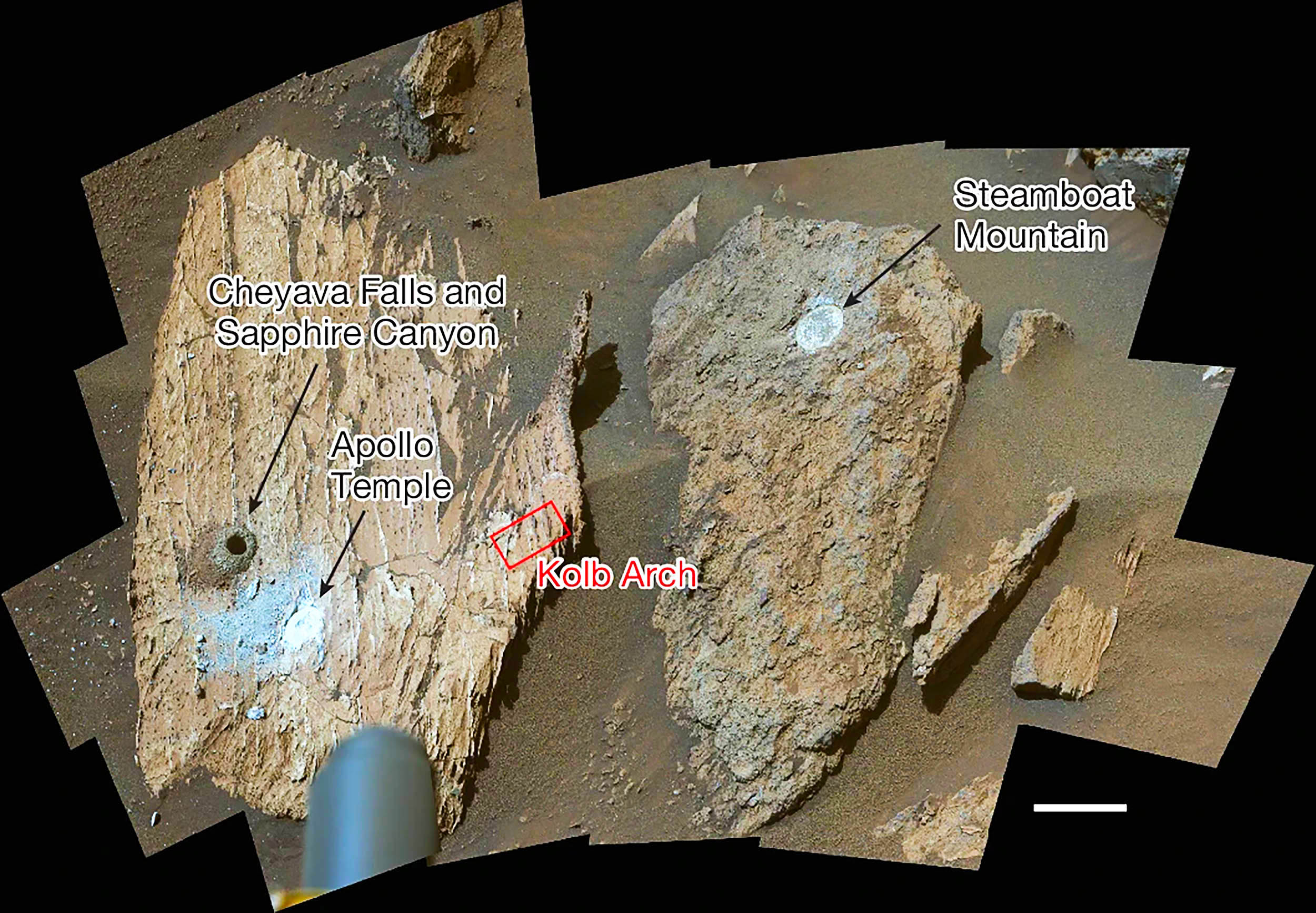
The relentless pursuit of life beyond Earth has taken a significant leap forward, thanks to NASA’s Perseverance rover. In a pivotal moment for astrobiology, the rover’s recent analysis of a mudstone core from Mars' Sapphire Canyon has unveiled a compelling suite of mineralogical clues — vivianite, greigite, and sulfur — strongly consistent with potential biosignatures. This discovery, announced in July 2024, rekindles the age-old question: are we alone?
Perseverance's Ongoing Quest: Unpacking Jezero Crater's Past
NASA’s Perseverance rover, having successfully landed in Mars' Jezero Crater in February 2021, has systematically explored an ancient river delta system. This region is a prime candidate for preserving signs of past microbial life due to its history of persistent water and sediment deposition. The rover’s overarching mission involves not only detailed in-situ analysis but also the critical task of collecting and caching rock and soil samples, destined for eventual return to Earth. This monumental endeavor is designed to provide definitive answers about Mars' habitability and its potential biological history, far beyond what current on-board instrumentation can achieve.
The Sapphire Canyon Breakthrough: A Mineralogical Milestone
The latest and most compelling evidence stems from a core sample extracted from the Sapphire Canyon mudstone in July 2024. This particular geological formation represents a critical window into Mars' watery past, offering insights into environmental conditions billions of years ago. The detection of three specific minerals within this core — vivianite (an iron phosphate mineral), greigite (an iron sulfide mineral), and elemental sulfur — is profoundly significant. On Earth, the formation of these minerals is often tied to specific environmental conditions crucial for life, or even as direct metabolic byproducts of microbial activity.
Vivianite, Greigite, and Sulfur: What They Mean for Martian Life
The presence of vivianite typically indicates an anaerobic (oxygen-poor), water-logged environment, often in the presence of organic matter and microbial activity that facilitates the reduction of iron. Similarly, greigite is an iron sulfide mineral that commonly forms in anoxic conditions, frequently through reactions involving iron and sulfur, often mediated by sulfur-reducing bacteria. The inclusion of elemental sulfur further suggests ongoing geological or potentially biological sulfur cycling within the ancient Martian environment. Together, this trio paints a vivid picture of a past Martian environment that was not only wet but also chemically active in ways that could readily support microbial life, potentially fostering complex microbial ecosystems.
These terrestrial analogues provide strong inferences for Mars. While minerals can form abiotically, the specific combination and context of vivianite, greigite, and sulfur in a mudstone environment, which is known to preserve organic material, significantly strengthens the case for a potential biosignature. It suggests a reactive subsurface environment where water-rock interactions and energy gradients could have been exploited by early life forms.
Implications and the Road Ahead: Unlocking Mars' Deepest Secrets
While these findings are not definitive proof of life, they elevate Sapphire Canyon to a site of paramount interest for astrobiological research. The evidence strongly suggests that if life ever existed on Mars, its fossilized remnants or chemical signatures might be preserved within these very rocks. The next critical step will be the highly anticipated Mars Sample Return mission. Once these precious core samples are brought back to Earth, advanced laboratory analyses — far more sophisticated than anything capable on a rover — will be employed to search for organic molecules, isotopic fractionations indicative of biological processes, and even microfossils that would serve as irrefutable evidence of past Martian life.
This discovery energizes the international scientific community, reinforcing the fundamental rationale for continued and intensified exploration of Mars. It provides crucial guidance for future missions, informing where and how we search for life, not just on Mars, but across the vast expanse of the cosmos. It pushes the boundaries of our understanding of planetary habitability and the potential prevalence of life beyond Earth.
Conclusion: A Whisper from the Red Planet
The Sapphire Canyon mudstone core represents more than just a rock sample; it's a profound whisper from Mars' ancient past, suggesting a world potentially teeming with microbial activity. While the final, definitive verdict awaits the meticulous analysis of returned samples, Perseverance has undeniably sharpened our focus and brought humanity closer than ever to answering one of its most enduring and existential questions: are we alone in the universe? The anticipation for what these samples will reveal is palpable, as the red planet continues to slowly, tantalizingly, give up its secrets.