Beyond the Auroras: Solar Orbiter's Record Vigil and Earth's Struggle Against Solar Fury
The captivating auroras that painted the skies in May 2024 were a breathtaking spectacle, a testament to the raw power of our nearest star. Yet, beneath the shimmering beauty lay a stark reminder of Earth's vulnerability: the most severe geomagnetic storm in over two decades, capable of disrupting radio communications, straining power grids, and threatening our satellite infrastructure. Now, new revelations from the European Space Agency's (ESA) Solar Orbiter mission shed light on the origin of this celestial drama, revealing an unprecedented 94-day continuous observation of the very solar region responsible – a record vigil that promises to reshape our understanding of solar fury and enhance our planet's defenses.
The Heart of the Storm: A Sunspot Region Unleashed
The May 2024 storm originated from an intensely active solar region, a sprawling cluster of sunspots and magnetic activity on the Sun's surface. These 'active regions' are essentially magnetic pressure cookers where colossal amounts of energy can be stored and then explosively released in the form of solar flares – intense bursts of radiation – and Coronal Mass Ejections (CMEs) – vast clouds of magnetized plasma hurled into space. When directed towards Earth, CMEs can trigger geomagnetic storms, compressing Earth's magnetic field and inducing currents that can cause widespread disruption.
What made this particular region so potent, and its associated storm so severe, was its prolonged and extreme activity. It wasn't a fleeting event but a sustained period of solar volatility that scientists observed with unprecedented diligence.
Solar Orbiter's Unprecedented Vigil: A 94-Day Record
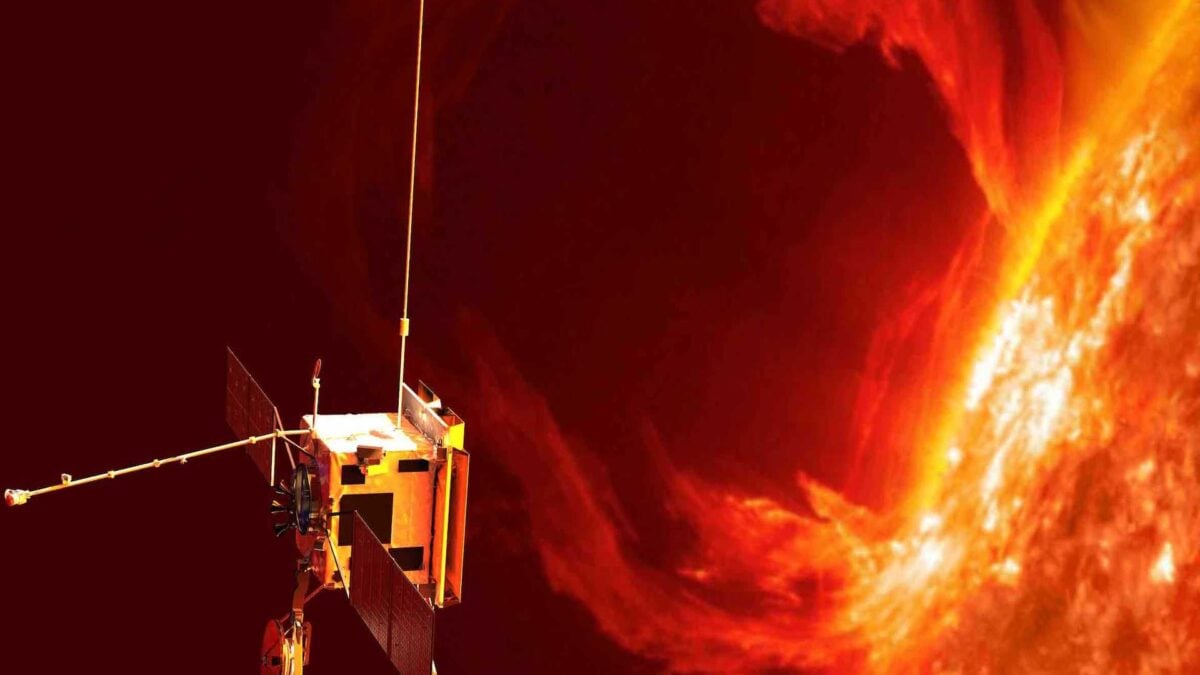
Enter Solar Orbiter. Launched in 2020, this cutting-edge spacecraft is designed to study the Sun up close, providing humanity with its most detailed views of our star's polar regions and the processes that drive space weather. Its mission brought it into a unique position to witness the unfolding drama of the May 2024 storm's genesis.
For a staggering 94 consecutive days, Solar Orbiter maintained an uninterrupted gaze upon the active solar region responsible for the geomagnetic storm. This observation period is not merely a long stretch; it's a monumental achievement in space-based solar astronomy. Previous missions often captured snapshots or shorter observation windows as the Sun rotates, but Solar Orbiter's orbital mechanics allowed for a sustained, direct view, offering scientists a continuous, high-resolution dataset of the region's evolution.
This continuous monitoring is critical. It allows researchers to track the subtle changes in magnetic field lines, the emergence and decay of sunspots, and the precursors to solar flares and CMEs in real-time. Understanding the full lifecycle of an active region, from its nascent stages to its peak fury and eventual dissipation, is key to developing more accurate predictive models for space weather.
Earth's Vulnerability in the Digital Age
The May 2024 event served as a stark reminder of how deeply integrated, and therefore vulnerable, our modern technological society is to space weather. Radio blackouts, particularly in high-frequency bands, disrupted communication systems. GPS signals, vital for navigation and timing across countless industries, experienced degradation. And while power grids largely held thanks to mitigation efforts and protective measures, the potential for wider outages remains a significant concern, reminiscent of historical events like the 1859 Carrington Event, which caused telegraph systems to fail and sparked auroras visible even in tropical latitudes.
Satellites, too, are directly in the line of fire. Increased radiation can damage sensitive electronics, affect orbital mechanics due to atmospheric drag changes, and interfere with communication links. As Earth's orbit becomes increasingly crowded with vital infrastructure for communication, navigation, and Earth observation, protecting these assets from the unpredictable temper of the Sun becomes paramount.
Forecasting the Future: A Glimmer of Hope
The data gathered by Solar Orbiter during its record-breaking vigil is invaluable. By providing an unprecedented, uninterrupted view of an active region's entire lifecycle, it offers a goldmine for scientists seeking to refine space weather forecasting models. Better predictions mean more lead time for critical infrastructure operators to take preventative measures, from reorienting satellites to adjusting power grid loads.
Moreover, the mission's close-up observations allow for a deeper understanding of the fundamental physics governing solar eruptions. How do magnetic fields spontaneously reconnect? What triggers a flare versus a CME? Answering these questions brings us closer to a future where solar storms, while still powerful, are less disruptive thanks to advanced warning systems and robust planetary defenses.
Conclusion: Our Ongoing Dance with the Sun
The May 2024 geomagnetic storm, amplified by Solar Orbiter's groundbreaking observations, underscores a profound truth: our technologically advanced society is inextricably linked to the unpredictable behavior of our Sun. The record 94-day vigil represents a monumental leap in our capacity to monitor, understand, and ultimately mitigate the risks posed by space weather.
As we venture deeper into space and become more reliant on orbital and terrestrial technologies, missions like Solar Orbiter are not just scientific endeavors; they are vital guardians, providing the insights needed to protect our planet and ensure a resilient future in the face of our star's magnificent, yet sometimes formidable, power.