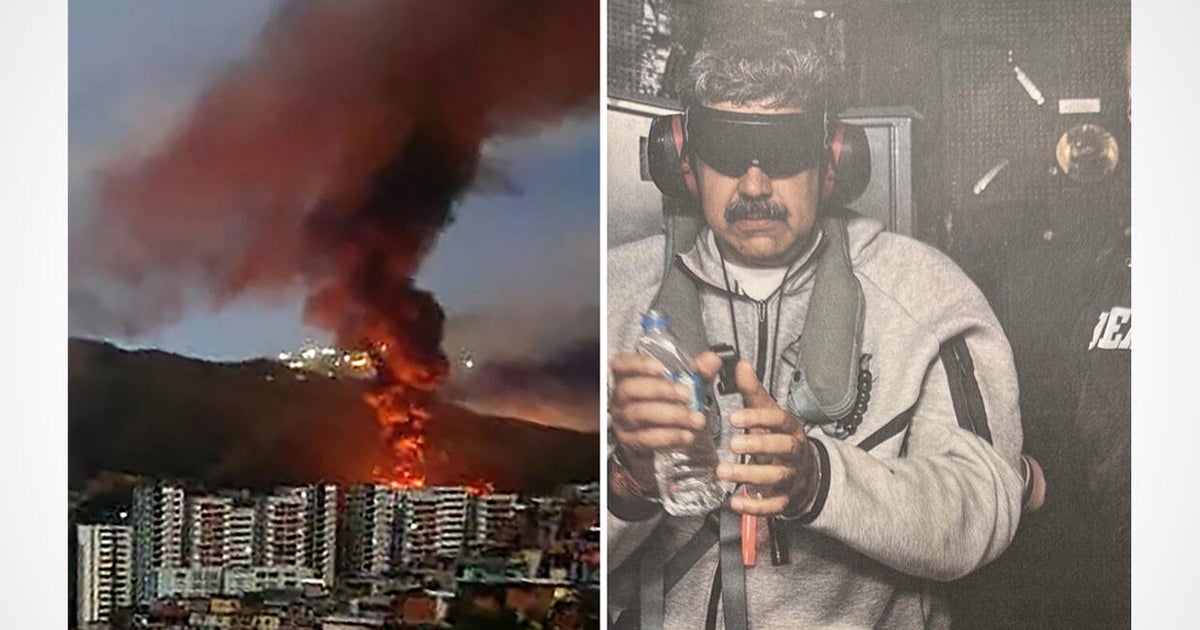
The Caracas Crossroads: Trump's 'In Charge' Declaration, Maduro's Indictment, and the Perilous Dance with International Law
In a dramatic escalation of an already fraught relationship, the United States has thrown down the gauntlet to Venezuela. President Donald Trump's unequivocal declaration that the U.S. is now 'in charge' of Venezuela coincides with an unprecedented federal indictment against Venezuelan President Nicolas Maduro and his wife, alleging their involvement in drug trafficking and collaboration with designated terrorist organizations. This high-stakes maneuver, however, is not without its critics, with prominent voices in Congress already labeling the operation as 'clearly illegal under international law,' signaling a profound global debate on sovereignty, intervention, and the limits of power.
The Indictment: A Net Cast Wide
The U.S. Justice Department's charges against President Maduro are extensive, painting a picture of a state deeply entangled in illicit drug trade. Federal prosecutors allege that Maduro, alongside several high-ranking officials within his government and military, utilized Venezuela as a narco-state, facilitating the passage of cocaine from Colombia through Venezuela to the United States. These charges aren't merely about drug trafficking; they explicitly include working with groups designated as terrorist organizations, like the FARC, escalating the severity of the accusations to 'narco-terrorism.' The expectation that Maduro and his wife would face these federal charges on a Monday underscores the gravity and immediacy the U.S. government is placing on this issue.
Trump's Declarations: A Bold Claim of Authority
President Trump's statement that the U.S. is 'in charge' of Venezuela marks a significant rhetorical shift, even for an administration known for its assertive foreign policy. This declaration can be interpreted in several ways: as a forceful assertion of intent to facilitate regime change, an expression of the U.S.'s perceived moral authority, or a direct warning to the Maduro government. Historically, such declarations from a major world power about another sovereign nation have often preceded or accompanied significant interventionist actions, raising alarms across the international community about potential infringements on national sovereignty and self-determination.
International Law in the Crosshairs: A Dangerous Precedent?
Perhaps the most contentious aspect of this unfolding drama is the legal and ethical quandary it presents on the global stage. Rep. Jim Himes, the top Democrat on the House Intelligence Committee, was swift and blunt in his assessment, stating that the operation to capture Maduro is 'clearly illegal under international law.' This criticism highlights a fundamental tension: while the U.S. may view Maduro as a criminal and an illegitimate leader, the direct pursuit and attempt to capture a sitting head of state on foreign soil without explicit international mandate or consent from the host nation deeply challenges established norms of sovereignty and non-intervention. Critics argue that such actions, however well-intentioned, risk setting dangerous precedents, potentially legitimizing similar unilateral interventions by other powerful nations in the future.
"Thin… [+2081 chars]" – The original source hint at a longer discussion. NovaPress dives deeper into the 'thin' line the U.S. is treading.
The Broader Implications: A Tenuous Balance
- For Venezuela: The indictments and aggressive U.S. posture could either weaken Maduro's grip by demoralizing his allies or, conversely, rally nationalistic support around him as a victim of foreign aggression.
- For Regional Stability: Venezuela's instability has profound impacts on its neighbors, particularly Colombia, which bears the brunt of the refugee crisis and the drug trade. Escalation could further destabilize an already volatile region.
- For International Norms: This move tests the boundaries of international law, potentially weakening the principle of non-intervention and the sovereign equality of states, cornerstones of the UN Charter.
- For U.S. Foreign Policy: The effectiveness of such a direct and legally controversial approach will be scrutinized. While it signals a strong stance against illicit regimes, it also risks alienating allies who prioritize international legal frameworks.
Conclusion: A Crossroads of Justice and Geopolitics
The U.S.'s decision to indict Nicolas Maduro and overtly declare its intent in Venezuela represents a pivotal moment in international relations. It is a bold assertion of power, an attempt to enforce justice against alleged criminals, and a profound challenge to the conventional understanding of state sovereignty. As Maduro faces the specter of federal charges and the U.S. presses its advantage, the world watches to see whether this aggressive strategy will lead to a resolution that upholds justice and respects international law, or if it will simply plunge the region into deeper uncertainty, eroding the very principles meant to govern global conduct. The implications extend far beyond Caracas, potentially reshaping the landscape of international diplomacy for years to come.