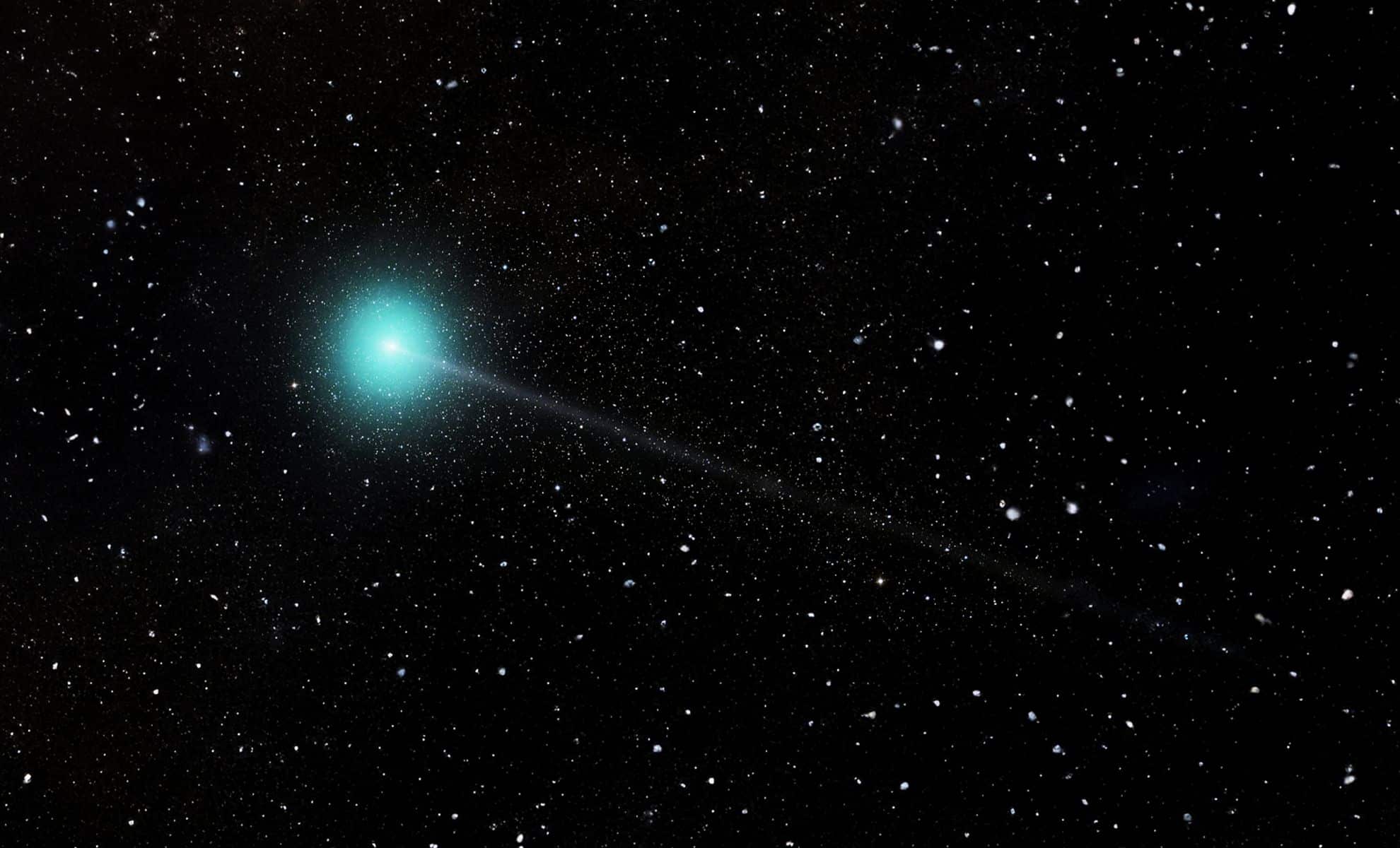
The Unseen Voyage: Is 2026's Sun-Bound Comet the Next 'Skywatcher's Dream'?
NovaPress deep dives into the cosmic phenomenon poised to captivate the world in two years.
In the vast, silent expanse of our solar system, a newly discovered celestial wanderer is making its way towards the sun, igniting a spark of excitement among astronomers and space enthusiasts alike. This long-period comet, identified as a potential 'skywatcher's dream' for 2026, is currently little more than a distant glimmer, yet its trajectory and predicted brightness are already generating significant buzz. As humanity looks to the stars, the promise of a spectacular cosmic show is a powerful draw, albeit one tempered by the inherent unpredictability of these icy visitors.
The Anatomy of a Long-Period Comet
Unlike their short-period cousins, which orbit the sun relatively frequently (every 200 years or less), long-period comets emerge from the distant reaches of the Oort Cloud, a vast theoretical shell of icy objects far beyond Neptune's orbit. These comets can take thousands, even millions, of years to complete a single orbit around the sun. Their arrival is often a once-in-a-lifetime, or even once-in-a-civilization, event, offering a pristine glimpse into the primordial material from which our solar system formed over 4.5 billion years ago. The comet currently generating interest falls into this enigmatic category, making its potential visibility in 2026 all the more extraordinary.
The 2026 Promise: What Makes This Comet Special?
While specific identifiers remain under observation, early indications suggest that this particular comet possesses characteristics that could lead to remarkable brightness. Its size, composition (particularly the volatile ice content), and its perihelion distance (the closest point to the sun) are critical factors. As a comet approaches the sun, solar radiation causes its icy nucleus to sublimate, releasing gas and dust to form a luminous coma and, eventually, a magnificent tail. The more material it sheds, the brighter and more expansive its display. Astronomers are meticulously tracking its progress, using advanced telescopes to refine orbital parameters and estimate its potential light curve – a graph predicting its brightness over time. If current projections hold, 2026 could indeed offer a truly memorable celestial spectacle, visible possibly even to the naked eye.
A History of Cosmic Expectations and Realities
The history of comet-watching is replete with both awe-inspiring triumphs and humbling disappointments. Comets like Hale-Bopp in 1997 captivated millions, gracing the night sky for months. Conversely, Comet Kohoutek in 1973, once hailed as the 'comet of the century,' ultimately faded to a faint smudge, failing to live up to its initial hype. This checkered past underscores the inherent challenge in predicting a comet's performance. Factors such as fragmentation of the nucleus, unexpected changes in gas production, or even simply the viewing conditions from Earth can drastically alter perceived brightness. The 'wild card' nature of comets is precisely what makes their potential appearances so thrilling and nerve-wracking for scientists and enthusiasts alike.
Implications Beyond the Visual Spectacle
Beyond its potential as a visual marvel, the arrival of such a long-period comet carries significant scientific weight. Studying its volatile composition through spectroscopic analysis can provide crucial insights into the chemical makeup of the early solar system. Comets are often described as 'dirty snowballs' – cosmic time capsules preserving the original material from the nebular cloud that collapsed to form the sun and planets. Data gathered from this 2026 comet, if it becomes sufficiently bright and stable for detailed observation, could help refine our understanding of planetary formation, the delivery of water to early Earth, and even the origins of life itself.
Preparing for the 'Dream': What Comes Next?
For now, the focus remains on diligent observation. Astronomers will continue to monitor its approach, refining predictions and eagerly awaiting the critical stages of its solar passage. For the public, the anticipation builds. Should this comet fulfill its promise, 2026 will undoubtedly be a year marked by collective stargazing, shared wonder, and a profound connection to the grandeur of the cosmos. As NovaPress continues to track this evolving story, we encourage our readers to stay tuned – the universe, it seems, is preparing for a show, and we're all invited to witness its unfolding drama.