From Riches to Reality Check: A New Study Reassesses the Asteroid Mining Dream
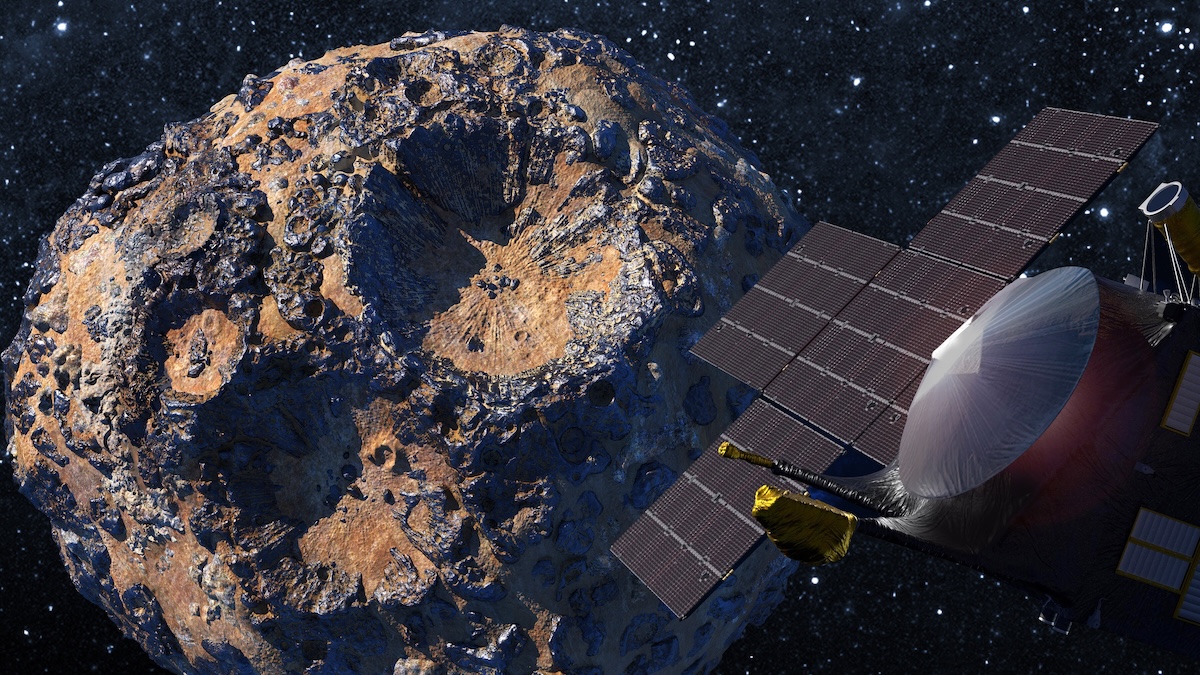
A few short years ago, the prospect of extracting untold wealth from celestial bodies captivated imaginations and investment alike. Asteroid mining wasn't just a sci-fi fantasy; it felt like an impending industrial revolution, poised to unlock trillions in rare metals and water ice. But as the initial fervor cools, a groundbreaking new study prompts us to ask: how feasible is this cosmic gold rush, really?
The Promise and the Hype: Why Asteroids Became the Next Frontier
The allure was undeniable. Imagine tapping into asteroids rich in platinum group metals (PGMs) – rhodium, palladium, platinum – vital for electronics and catalytic converters, whose terrestrial supplies are dwindling and costly. Or consider water ice, a critical resource for future deep-space missions, serving as propellant, life support, and even a building material. With a burgeoning commercial space sector – SpaceX, Blue Origin, and countless startups pushing boundaries – the narrative quickly shifted from 'if' to 'when'. Visionaries spoke of trillion-dollar industries, permanent lunar bases, and orbital manufacturing fueled by extraterrestrial resources.
A Sobering Gaze: What the New Research Reveals
However, the recent study, detailed in a forthcoming scientific journal, injects a much-needed dose of analytical rigor into the discussion. Moving beyond optimistic projections, researchers meticulously modeled the technical, economic, and logistical hurdles inherent in asteroid resource utilization. Their findings suggest that while technically plausible, the commercial viability, at least in the near-to-mid term, faces considerably steeper challenges than previously acknowledged.
Technical Hurdles: More Than Just Getting There
- Rendezvous and Capture: Precisely intercepting and stabilizing a target asteroid, often tumbling and irregularly shaped, requires unprecedented autonomous navigation and control systems.
- Extraction and Processing: Developing robust, space-hardened mining equipment capable of operating in zero-G, extreme temperatures, and radiation environments is a monumental engineering feat. Furthermore, efficient on-site processing to refine raw materials – a crucial step to reduce return mass – remains largely theoretical.
- Return Logistics: Transporting significant quantities of refined materials back to Earth orbit or lunar depots presents immense propulsion and re-entry challenges, especially when considering cost-effectiveness.
The Economic Conundrum: When Does It Make Sense?
Perhaps the most challenging aspect highlighted by the study is the economics. The initial capital expenditure for a full-scale asteroid mining operation would be astronomical – billions, if not trillions, of dollars. The research indicates that for many high-value resources, the cost of extracting and delivering them from space would vastly outweigh their current market value on Earth. This "break-even" point is pushed further out when factoring in the sheer volume required to impact terrestrial markets significantly.
The study suggests that water ice for in-space refueling and life support might be the most immediate viable target, given the high cost of lifting water from Earth. However, even this requires a robust in-space economy to create sufficient demand to justify the initial investment.
Regulatory and Ethical Quagmires
Beyond the technical and economic, the study implicitly touches upon the nascent regulatory framework. The 1967 Outer Space Treaty declares space as "the province of all mankind" and prohibits national appropriation. While some nations have passed domestic laws regarding resource ownership for their citizens, an international consensus on commercial rights remains elusive. Moreover, ethical considerations regarding potential environmental impacts in space (e.g., increased debris, altering celestial bodies) and the fair distribution of resources add layers of complexity.
Future Implications: A Reset, Not a Retreat
Does this new study spell the end of the asteroid mining dream? Far from it. Instead, it serves as a critical course correction. Rather than discouraging the endeavor, it provides a clearer roadmap of the monumental challenges ahead. It underscores the need for:
- Incremental Development: Focusing on smaller, more manageable steps, perhaps starting with lunar resource extraction or near-Earth asteroid reconnaissance.
- Technological Breakthroughs: Investing in foundational research for advanced robotics, AI-driven mining, in-situ resource utilization (ISRU), and novel propulsion systems.
- International Cooperation: Establishing a robust international legal and ethical framework for space resource governance.
- Market Creation: Developing an actual demand for space-derived resources within an evolving space economy.
Conclusion: The Long Road to the Stars
The dream of asteroid mining remains a powerful one, essential for humanity's long-term expansion into the cosmos. This new study is not a death knell but a beacon, illuminating the rigorous path ahead. It reminds us that while space offers unimaginable potential, harnessing it requires patience, vast investment, relentless innovation, and a clear-eyed understanding of the formidable obstacles. The asteroid gold rush may not be imminent, but with continued dedication, the rewards could still be astronomical.