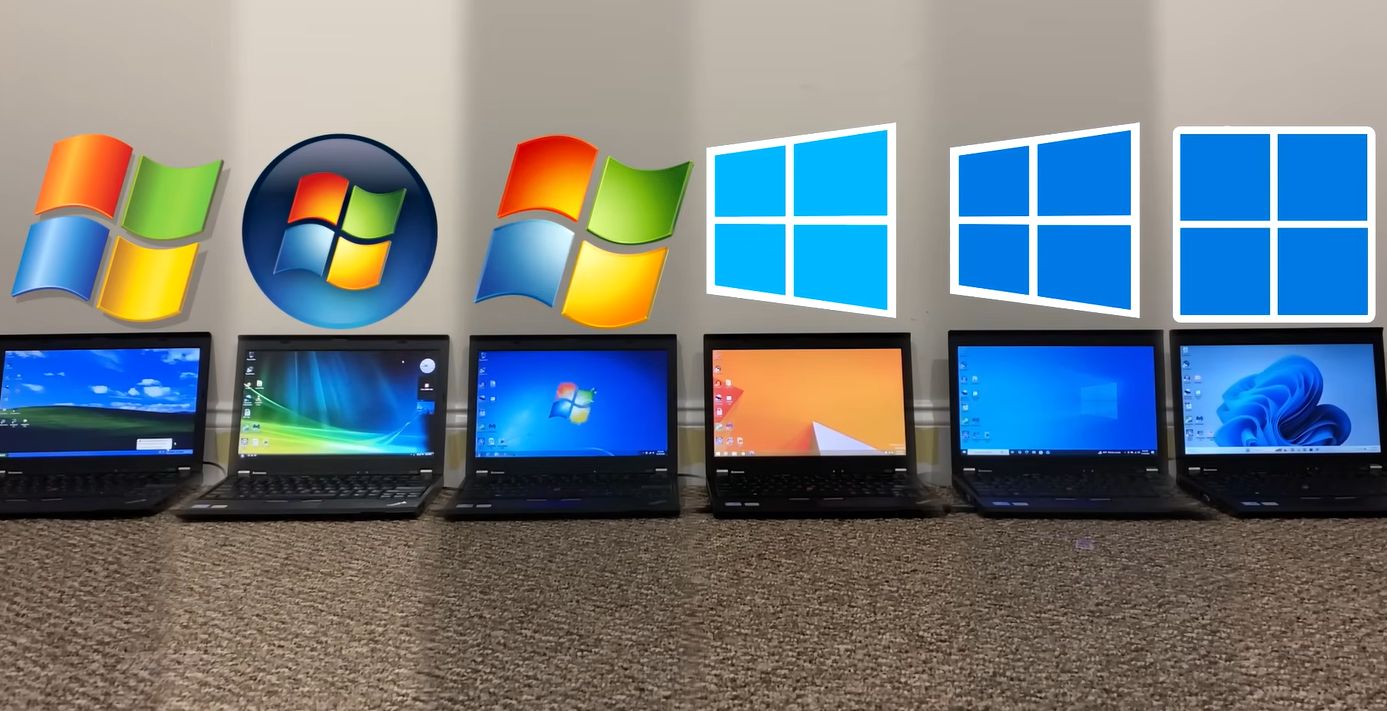
Decoding the Windows Performance Paradox: Why Faster Hardware Doesn't Always Mean a Faster OS Experience
It's a familiar feeling for many long-time PC users: you upgrade to the latest, most powerful hardware—a cutting-edge CPU, heaps of lightning-fast RAM, and a screaming NVMe SSD—only to find that your shiny new Windows 11 machine doesn't feel significantly snappier than the Windows XP or Windows 7 rig you fondly remember from two decades ago. This persistent intuition, once dismissed as mere nostalgia, is now being quantified by rigorous benchmarking, revealing a fascinating and somewhat troubling paradox at the heart of modern operating system design.
The Illusion of Progress: Quantifying the Stagnation
The premise is simple yet profound: despite exponential leaps in computing power, the perceived user experience of Windows has remained remarkably consistent. A recent deep dive by researchers sought to benchmark various iterations of Windows, from the venerable XP to the contemporary Windows 11, across identical, or at least comparable, hardware. The results, while still emerging in detail, affirm what many have suspected: raw hardware advancements are not translating into a proportionally faster or more responsive operating system for the average user.
Consider the sheer power differential: a modern desktop CPU boasts clock speeds, core counts, and instruction sets that dwarf its early 2000s counterparts. RAM capacity and speed have skyrocketed, and traditional spinning hard drives have given way to solid-state drives with orders of magnitude faster read/write capabilities. Yet, boot times, application launch speeds, and general UI responsiveness often feel eerily similar. This isn't just about loading a complex game; it's about the everyday interactions that define our computing experience.
The Software Bloat Elephant in the Room
So, where does all that extra power go? The answer lies largely in the ever-growing complexity of the operating system itself. Modern Windows is a sprawling behemoth, laden with features, security layers, background processes, telemetry, and a vast array of services designed to support everything from cloud integration to advanced graphics APIs. Each new iteration of Windows adds layers of abstraction and functionality, often without ruthlessly optimizing or shedding legacy baggage.
- Security Overheads: Modern security protocols, while essential, introduce computational overheads that were nonexistent in simpler OS versions. Antivirus, firewalls, and advanced threat protection constantly scan and monitor, consuming CPU cycles and memory.
- UI/UX Complexity: Contemporary graphical user interfaces are more intricate, animated, and resource-intensive than the more utilitarian designs of XP or even Windows 7. Transparency effects, dynamic tiles, and complex rendering all demand processing power.
- Background Processes: A plethora of background services, from automatic updates and cloud syncing to driver checks and system diagnostics, continuously run, vying for system resources even when the user is idle.
- Hardware Abstraction Layers: The need to support an increasingly diverse range of hardware means more complex drivers and abstraction layers, which can add latency and reduce direct hardware access efficiency.
The Implications for Microsoft and Users
This performance plateau presents a significant challenge for Microsoft. If users perceive diminishing returns on hardware investments, the incentive to upgrade frequently wanes. For Microsoft, the imperative is clear: find a way to make future Windows iterations feel genuinely faster and more responsive, not just functionally richer. This could involve:
- Aggressive Optimization: A renewed focus on lean code, efficient resource management, and ruthless culling of unnecessary features.
- Modular Design: A more modular OS approach, allowing users to install only the components they need, reducing the system footprint.
- AI-driven Resource Management: Leveraging AI to intelligently prioritize tasks and allocate resources, proactively anticipating user needs.
For users, the takeaway is perhaps to recalibrate expectations. While raw benchmarks will always show a modern CPU outperforming an older one, the real-world 'feel' of the OS is a different metric altogether. This paradox highlights the evolving relationship between hardware potential and software execution, underscoring that raw power alone isn't enough to deliver a truly transformative user experience.
Looking Ahead: A Return to Efficiency?
The benchmarking study serves as a crucial wake-up call, pushing the tech industry to re-evaluate the trajectory of operating system development. As hardware innovation continues apace, the challenge for software architects is to harness that power effectively, to strip away the unnecessary, and to deliver an OS that not only offers cutting-edge features but also feels truly fast, light, and intuitive. Perhaps the next generation of Windows won't just be about new features, but about a long-overdue return to core efficiency and responsiveness.